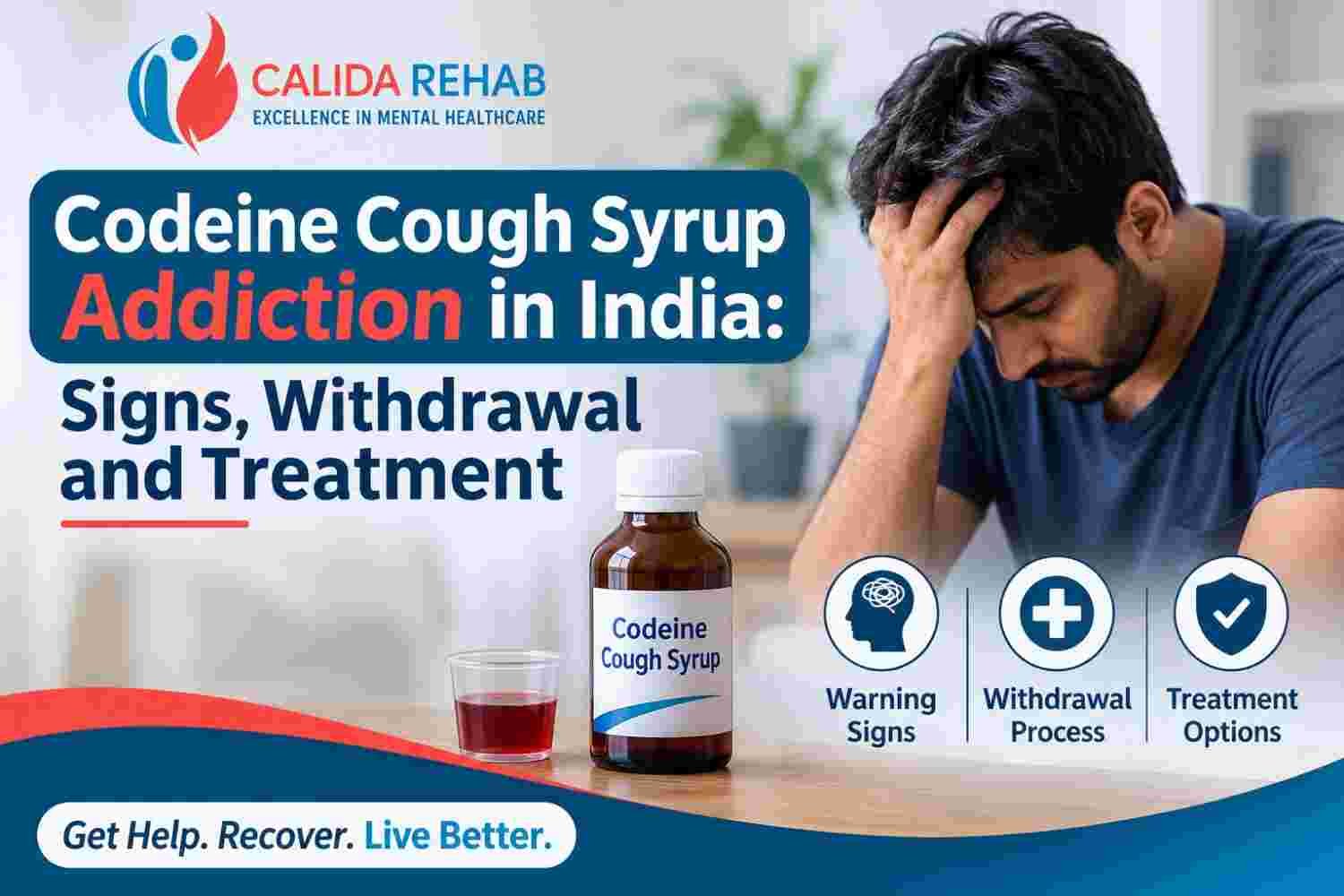

A cough should last a week or two. Sometimes the bottle outlasts the cough. A person finishes the prescription, buys another, then another, and one day realises the syrup is no longer for the cough at all. It is for the calm, the sleep, or simply to avoid feeling unwell without it.
Many cough syrups sold in India contain codeine, an opioid. That one ingredient is the reason these syrups can cause dependence, and why stopping them suddenly is harder than most families expect.
This guide explains how codeine cough syrup addiction develops, the warning signs, the hidden risks, what withdrawal feels like and how supervised treatment works. It is written for the person using the syrup and for the family trying to understand what is happening.
Short answer: Yes, cough syrups that contain codeine can cause physical dependence and addiction, because codeine is an opioid. Regular use brings tolerance, cravings and withdrawal symptoms when the syrup is stopped. Treatment is medically supervised detox followed by therapy and relapse-prevention support, and people do recover.
What is codeine cough syrup, and is it addictive?
Yes, it can be addictive. Codeine is an opioid. In the body it is partly converted into morphine, which is why it calms a cough, dulls pain and can produce a relaxed, drowsy feeling. Brands such as Corex and Phensedyl combine codeine with an antihistamine such as chlorpheniramine, although the exact formula differs by brand and by version, so always read the label.
Taken for a few days at the dose a doctor prescribes, codeine syrup is usually manageable. The trouble starts with regular use over weeks or months, or with use for reasons other than a cough. The brain adapts, needs more for the same effect and begins to feel wrong without it.
| At a glance | What to know |
|---|---|
| Active drug | Codeine phosphate, an opioid, usually combined with an antihistamine such as chlorpheniramine |
| Common examples | Corex, Phensedyl and similar codeine syrups (formulas vary by brand) |
| Legal status | Prescription-only medicine in India |
| Can it cause dependence? | Yes, with regular use over weeks or months |
| Withdrawal begins | Roughly 8 to 24 hours after the last dose |
| Withdrawal is hardest | Around days 2 to 4 |
| Treatment | Supervised detox, therapy, relapse prevention and family support |
Two terms are worth separating:
- Physical dependence means the body has adapted to the drug and reacts when it is stopped. It can happen even to someone who follows a prescription, if the syrup is taken for long enough.
- Addiction (opioid use disorder) is a pattern of compulsive use: cravings, loss of control over how much is taken, and carrying on despite harm to health, work, money or relationships.
Dependence alone is not addiction, but the longer and heavier the use, the more likely both become. If you recognise this pattern with another opioid, our guides on opioid addiction and tramadol addiction cover the same ground.
Why do people get hooked on cough syrup?
There is rarely one reason. Most stories follow one of a few routes.
- A cough that turned into a habit. The syrup was prescribed, the cough settled, but the person kept using it because it made them feel better, not only because they were coughing.
- Sleep and calm. Codeine is sedating. People who struggle with sleep, stress or anxiety begin using a night-time dose to switch off, and the dose creeps up.
- Easy to get. These syrups are meant to be sold only against a prescription, yet some people find they can get bottles without a fresh one, through repeat refills on an old prescription or through friends and contacts.
- Swapping one substance for another. Someone cutting down on alcohol, tramadol or another opioid reaches for syrup because it feels milder or less obvious. It is not.
- Experimenting with friends. Young people sometimes try it for the high without realising it is an opioid, and that regular use can lead to dependence.
- Work and routine. Long shifts, night work and heavy physical labour can turn a once-in-a-while dose into a daily one.
Underneath, there is often something else: untreated anxiety, low mood, chronic pain or trauma. When that is missed, treatment tends to fail, which is why a proper assessment matters. Our article on abnormal psychology and addiction disorders explains why addiction and mental health so often travel together.
Is codeine cough syrup legal in India?
Codeine cough syrups are prescription-only medicines. A chemist should not sell them without a valid prescription from a registered doctor. Selling, stocking or transporting them for intoxication rather than medical use can attract action under India’s narcotics law, the NDPS Act, and courts have treated diverted syrup as a serious offence.
For a person who is struggling, the legal picture is one more reason not to wait. For questions about your own situation, speak to a lawyer. For questions about privacy in treatment, read our article on whether rehab is confidential.
Warning signs of codeine cough syrup addiction
One sign on its own proves nothing. Several together point to a problem worth a proper assessment.
Changes in behaviour
- Using the syrup when there is no cough, or long after the cough has gone
- Taking more, or more often, than the label or the doctor advised
- Going through bottles faster than expected
- Hiding bottles, or throwing away empties where no one will see them
- Visiting several chemists or doctors to keep the supply going
- Becoming irritable, anxious or restless when a dose is late
- Trying to cut down and not managing it
- Spending money meant for other things on syrup
- Losing interest in work, study, family or things they used to enjoy
Changes in the body
- Drowsiness, slurred speech or “nodding off” during the day
- Constipation, nausea or itching
- Small pupils, or a dull, distant look
- Sweating, restlessness, yawning and a runny nose when a dose is missed
- Mood swings, low motivation and poor concentration
What families usually notice first
- A sweet, medicinal smell, or sticky bottles and spoons around the house
- Money going missing or unexplained spending
- Sleeping at odd hours and being hard to wake
- Defensiveness when the syrup is mentioned: “It is just cough medicine”
For more on spotting substance use at home, see our guide to hidden drug addiction signs.
The hidden risks of long-term cough syrup use
People often assume that a medicine sold in a pharmacy must be safe. Regular heavy use is not.
- Slowed breathing. Codeine slows breathing, and the risk rises sharply when it is combined with alcohol, sleeping pills or benzodiazepines. This combination is behind many opioid overdoses. Our benzodiazepine addiction case study shows how sedatives can pile up.
- Effects of the other ingredients. Antihistamines such as chlorpheniramine can cause confusion, agitation, a racing heartbeat, blurred vision and, in large amounts, hallucinations or seizures.
- Overdose after a break. Tolerance drops quickly when someone stops for a few days. Going back to the old amount can then be dangerous.
- Constipation and stomach problems. Opioids slow the gut, and this can become severe with long-term use.
- Sugar load. Many syrups are sweet, which matters for anyone with diabetes.
- Accidents. Drowsiness and slowed reactions make driving or working with machinery risky.
- Children. Codeine is not recommended for cough in children under 12, and some people break codeine down into morphine unusually fast, which can cause toxic effects. Keep bottles locked away from children.
A person who also uses alcohol or other drugs faces a higher risk still. Our guide to stages of alcoholism and delirium tremens explains why mixing substances needs medical care.
Codeine withdrawal: what it actually feels like
Codeine withdrawal usually begins 8 to 24 hours after the last dose, is hardest around days 2 to 4 and settles over roughly a week to ten days. Cravings, low mood and poor sleep can last much longer.
Most people describe it as a severe flu with anxiety on top:
- Restlessness, yawning and a runny nose
- Sweating, chills and goosebumps
- Muscle aches and bone pain
- Stomach cramps, nausea, vomiting and diarrhoea
- Trouble sleeping
- Anxiety, irritability and low mood
- Strong cravings
A rough timeline (it varies from person to person)
| When | What usually happens |
|---|---|
| First 8 to 24 hours | Restlessness, yawning, sweating, runny nose and anxiety as the last dose wears off |
| Days 2 to 4 | Usually the hardest stretch: aches, cramps, nausea, diarrhoea, poor sleep and intense cravings |
| Days 5 to 10 | Physical symptoms ease. Tiredness, low mood and disturbed sleep remain |
| Week 2 onwards | Sleep, mood, anxiety and cravings can take weeks to settle |
Opioid withdrawal is rarely dangerous on its own in an otherwise healthy adult, but it is miserable, and the cravings send many people straight back to the bottle. Medical supervision matters most when someone has been using large amounts, also uses alcohol or sedatives, or has a heart, liver or mental health condition. Withdrawal from alcohol or benzodiazepines can cause seizures, so those need a doctor involved from the start.
How treatment works
Treating codeine cough syrup addiction is more than getting the drug out of the body. It happens in stages.
- Assessment. A doctor reviews how much, how long and how often the syrup has been used, whether alcohol, tramadol, sedatives or other drugs are involved, and whether anxiety, depression, sleep problems or pain sit underneath.
- Medically supervised detox. Withdrawal is managed with monitoring, hydration, rest and medicines for the symptoms. Where it is appropriate, doctors may use medication-assisted treatment. Read how detoxification works.
- Therapy. Cognitive behavioural therapy helps a person understand triggers and change habits. Motivational interviewing builds the person’s own reasons for change, and relapse prevention therapy prepares them for the risky moments ahead.
- Family involvement. Family therapy repairs trust and teaches relatives how to support recovery without enabling the habit.
- Treating what is underneath. Sleep problems, anxiety, low mood or pain need their own plan so the syrup is not simply replaced by another habit.
- Aftercare. The first months are the riskiest for relapse, so recovery continues after discharge with follow-up and support. Our guide to relapse in addiction recovery explains what to expect.
To see how a recovery journey can unfold, read our drug abuse case study and tramadol addiction case study, which cover opioid dependence in a real-world style.
Codeine cough syrup addiction treatment in Mumbai and Pune
Calida Rehab provides residential care: a supervised inpatient stay, followed by structured follow-up after discharge. Our centres serve families across Maharashtra.
- Mumbai, Navi Mumbai, Thane and nearby areas: see our rehabilitation centre in Mumbai page, our drug rehabilitation centre in Mumbai page and our Karjat centre.
- Pune and surrounding areas: see our rehabilitation centre in Pune page and our drug rehabilitation centre in Pune page.
Whichever city you choose, a few questions are worth asking any centre before admission:
- Is the centre registered? Our guide shows how to verify a rehab centre is licensed in Maharashtra.
- Is detox medically supervised, with a doctor available?
- Is treatment confidential, and how are family visits handled? See our article on family visits and rules inside rehab.
- How long is the programme? Our 30, 60 and 90 day programme guide explains what each stage involves.
- What does it cost, and does insurance help? Read about the cost of rehab in India and insurance cover for rehab.
- Does the team treat anxiety, depression or trauma alongside the addiction? Our guide to how to choose a rehabilitation centre in Mumbai and our checklist for choosing a centre in Pune go through the full list.
How to help someone who is hooked on cough syrup
- Choose the moment. Not when they are drowsy, high or in withdrawal. A calm, private time works best.
- Talk about what you have seen, not labels. “You have been going through a bottle every two days and sleeping through the afternoon” lands better than “you are an addict”.
- Do not throw the supply away overnight. A sudden stop after heavy use brings withdrawal and a strong urge to find more. Involve a doctor.
- Expect denial. “It is only cough syrup” is the most common reply. Stay calm and keep the door open.
- Look after yourself too. Families carry a lot. Our article on how to convince someone to go to rehab has practical conversation tips, and our guide to codependency and enabling in addiction explains how to support without making it worse.
When it is an emergency
Call 112 or get to the nearest hospital straight away if someone who uses codeine syrup:
- Breathes very slowly or shallowly, has blue or grey lips, or cannot be woken
- Has a seizure
- Is confused, hallucinating, has a very fast heartbeat or a high fever
- Has taken a large amount, especially with alcohol or sleeping pills
Odd sleepiness after a big dose is not something to “sleep off”. Our guide on when to go to hospital in an addiction emergency covers what to do while you wait for help.
Staying well after treatment
Recovery does not end at discharge. In the first months, the same bottle on the same shelf at the same chemist can pull a person back. What helps:
- A written relapse-prevention plan with named triggers, such as poor sleep, a cough, stress or old friends
- A doctor who knows the history, so codeine-containing medicines are avoided whenever possible
- A clear plan for treating any cough, pain or insomnia without opioids
- Regular follow-up and contact with the treatment team
- Support from family, and from groups such as Alcoholics Anonymous or Narcotics Anonymous
A slip is not the end. Our article on relapse in addiction recovery explains how to respond to it.
Frequently asked questions
Can you get addicted to cough syrup?
Yes. Cough syrups that contain codeine can cause dependence and addiction because codeine is an opioid. The risk rises with regular use, higher amounts and use for reasons other than a cough. Syrups without codeine do not carry the same risk of opioid dependence.
How many bottles a day count as addiction?
The number is not what defines addiction. The pattern is: using more than intended, cravings, failed attempts to stop, withdrawal when the syrup is missed, and continued use despite harm. Anyone using codeine syrup daily for more than a few weeks should speak to a doctor.
How long does codeine withdrawal last?
Physical symptoms usually peak around days 2 to 4 and settle over roughly a week to ten days. Low mood, poor sleep and cravings can last for weeks.
Is it safe to stop codeine cough syrup suddenly?
After a few days at a normal dose, usually yes. After weeks or months of regular use, speak to a doctor first so withdrawal can be managed, especially if you also use alcohol or sedatives.
How long does codeine stay in your system?
Codeine is usually detectable in urine for a day or two after the last dose, sometimes up to three days, depending on the amount, how long it has been used and the type of test. Our guide on how long drugs and alcohol stay in your system explains how test windows work.
Can I buy codeine cough syrup without a prescription in India?
No. It is a prescription-only medicine, and a chemist should not sell it without a valid prescription from a registered doctor.
Is codeine syrup the same as tramadol?
No. Both are opioids, but they are different drugs with different risks. Tramadol carries a higher seizure risk and can affect serotonin. Our tramadol addiction guide explains the differences.
Can cough syrup addiction be treated?
Yes. Treatment combines medically supervised detox, therapy, treatment of any underlying anxiety, sleep or mood problem, family involvement and aftercare. Many people recover fully with the right support.
How long should someone stay in rehab for cough syrup addiction?
It depends on how long and how heavily the syrup was used, and on any other substances or mental health conditions. Programmes usually run 30, 60 or 90 days, and the treating doctor advises on the right length.
Is treatment confidential?
Reputable centres treat it that way. Read how it works in our article on whether rehab is confidential.
Getting help
If you recognised yourself or someone you love in this article, you do not need to wait for a crisis. A confidential conversation with a specialist can help you work out whether treatment is needed and what kind of care fits.
Calida Rehab offers confidential guidance to families across Mumbai, Navi Mumbai, Thane and Pune. Explore our rehabilitation centre in Mumbai and rehabilitation centre in Pune pages, or contact us for a private conversation.
Medical disclaimer: This article is for general education and does not replace advice from a qualified doctor. Do not stop or change a prescribed medicine without medical advice. If someone is in immediate danger, call 112 or go to the nearest hospital.
Sources: MedlinePlus, “Codeine”; U.S. FDA Drug Safety Communication on codeine and tramadol use in children; National Institute on Drug Abuse, Opioids; Drugs and Cosmetics Rules, 1945, and Narcotic Drugs and Psychotropic Substances Act, 1985 (India).