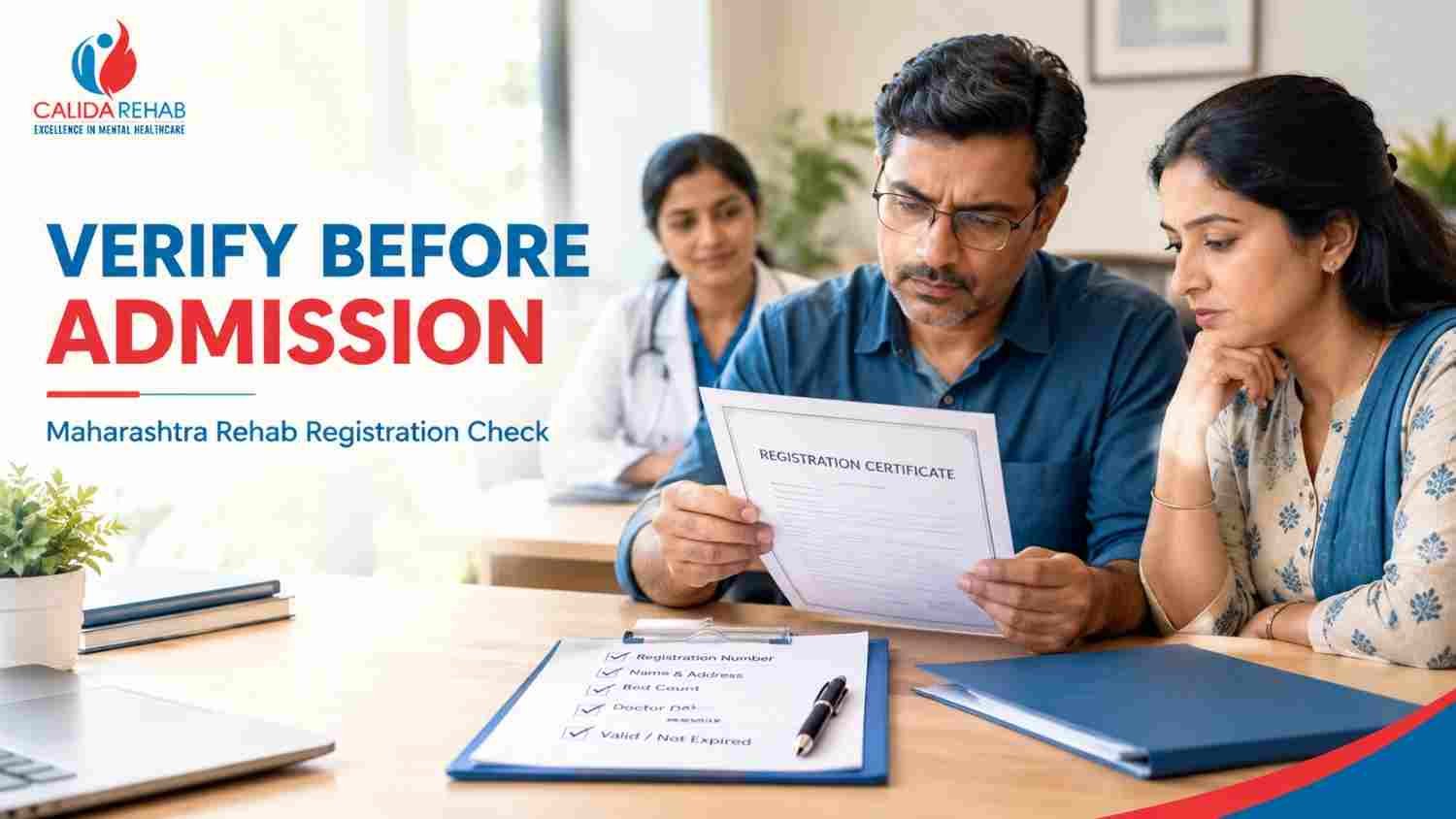

Short answer: A rehab or de-addiction centre that admits patients overnight must be registered with the Maharashtra State Mental Health Authority (MSMHA) under the Mental Healthcare Act, 2017. To confirm a rehab centre registered in Maharashtra, ask for the registration certificate before you pay, match its name, address, bed count and named doctor to the place you are visiting, check that it has not expired, and ask the Authority to confirm the registration number in writing.
The check matters because unregistered centres are common. A December 2022 Free Press Journal report said only about one in ten of roughly 150 de-addiction centres in the Mumbai Metropolitan Region was registered with the state health department. The figure is from 2022 and may have changed, but it shows why a brochure or a website badge is not enough.
If the person has seizures, severe confusion, heavy shaking or has taken an overdose, go to the nearest hospital or call 112 first. Do the registration check afterwards.
Registration rules in Maharashtra at a glance
| Question | Answer |
|---|---|
| Which law applies? | The Mental Healthcare Act, 2017, which covers substance use disorder as a mental illness. |
| Who registers centres in Maharashtra? | The Maharashtra State Mental Health Authority (MSMHA), the State Authority under the Act. |
| Which centres must register? | Mental health establishments, meaning places that provide in-patient care for mental illness, including de-addiction and rehab centres. Outpatient-only psychiatric services fall outside the definition (Section 2(p), as explained in a state authority FAQ). |
| What kinds of registration exist? | Provisional registration, valid for 12 months and renewable, and permanent registration once the Authority's standards are met (Section 66). |
| What is the penalty for running without registration? | ₹5,000 to ₹50,000 for a first contravention, decided by the State Authority. A professional who knowingly works in an unregistered establishment can be penalised up to ₹25,000 (Section 107). |
| Is there a public record? | The Act requires the Authority to publish the particulars of establishments after provisional registration (Section 66(6)), so you can ask for them. |
In everyday speech, people say licence, nasha mukti kendra or rehab centre. Legally, the document to ask for is a certificate of registration for a mental health establishment. The same requirement applies whatever name the centre uses.
What to check on a registration certificate
A certificate is only useful if it matches the place you are standing in. Check these six details and note why each one matters.
| Detail | Why it matters | Red flag |
|---|---|---|
| Registration number and year | It is the reference the Authority uses to find the exact record. Maharashtra certificates carry a number and a year of issue. | Number missing, written in later, or the centre refuses to share it |
| Name of the establishment | Registration belongs to a named establishment. A brand name or parent company can be a different legal entity. | The name on the certificate differs from the one on your admission form |
| Address | Registration covers one site. It does not extend to another branch or a city enquiry office. | Certificate is for a different location from where the patient will stay |
| Type and date | A provisional certificate lasts 12 months and must be renewed, so an old one may no longer be current. | Provisional certificate more than 12 months old with no renewal, or "applied for" instead of issued |
| Number of beds | This is the capacity the Authority registered. Patients beyond it mean the centre is operating outside its registration. | Visibly more patients than the approved beds |
| Medical professional named | The certificate names the doctor the registration relies on, so you should be able to meet them and ask who covers nights and weekends. | The named doctor is never available or does not work there |
How to confirm the registration with the Authority
A photocopy can be old, edited or issued for another site. Confirmation takes a few days and removes that risk.
- Photograph the certificate with the number, date, name, address and bed count visible, so the details cannot be changed later.
- Write to the MSMHA or your district health office and ask whether registration number X is valid for establishment Y at address Z. A written question gets a written answer you can keep.
- Look for a published list. The Act requires the Authority to publish particulars of registered establishments, so a list may exist. If you find one, match every detail. If you do not, do not treat absence as proof either way, and rely on the Authority's written reply.
- If there is no reply, file an RTI application asking for the registration status of the named centre. Public authorities must respond to RTI requests within 30 days.
- Keep the reply with your admission papers. It is your evidence if there is a dispute later.
A centre that is registered has no reason to resist this. Pressure to pay today or to skip verification is itself a warning sign.
Claims that are not registration
Centres often show other credentials. These can be genuine and still not answer the question of whether the centre may legally admit patients.
- ISO 9001 certification. It certifies a management system. It does not authorise a centre to treat patients.
- "Govt. recognised" or "licensed" with no number. Without a registration number there is nothing to verify.
- Trust, society, NGO, 12A or 80G status. These describe the organisation and its tax position, not the treatment facility.
- GST, shop licence, company registration, FSSAI or a fire certificate. They are business or safety permits that may be needed as well, but they do not replace registration under the Mental Healthcare Act.
- Government grant or scheme links. The Central Mental Health Authority's 2025 classification lists integrated rehabilitation centres for addicts among standalone de-addiction centres, so a funded centre still falls within the registration framework.
- "Registration in process." Applying is not the same as holding a certificate. Ask for the issued document.
Is the centre approved for the care your family member needs?
Standards framed under the Act sort de-addiction centres into three types: short-term treatment including detoxification (under one month), long-term rehabilitation (one month or more), and treatment centres for addiction together with other mental disorders. A certificate may not state the type, so ask the centre in writing which services it is approved to run and include that in your question to the Authority.
This matters most for alcohol and sedative dependence, where stopping suddenly can cause seizures. Medical detox needs doctors and nursing on site, as explained in our guides to alcohol withdrawal symptoms and detoxification programmes.
Why an unregistered centre is a safety risk, not a paperwork issue
Registration is what brings a centre under the audits in Section 67 and the inspections and complaint inquiries in Section 68. Without it, there is no regulator watching staffing, records or how patients are treated.
The Free Press Journal report described unregistered Mumbai-region centres operating without qualified psychiatrists, emergency arrangements or nursing care, and alleged that some used sedatives and buprenorphine to control patients without a psychiatric evaluation. It also found unregistered centres at both ends of the price scale, from ₹6,000 programmes to resort-style centres charging up to ₹5 lakh. A high fee or a luxury setting is therefore not evidence of registration.
The penalties in Section 107 fall on whoever runs the establishment and on professionals who knowingly work in it. The patient carries the medical risk, which is why the check belongs before admission.
Mumbai and Pune: where families get misled
The law and the Authority are the same in both cities. What differs is how listings and addresses are presented.
Mumbai
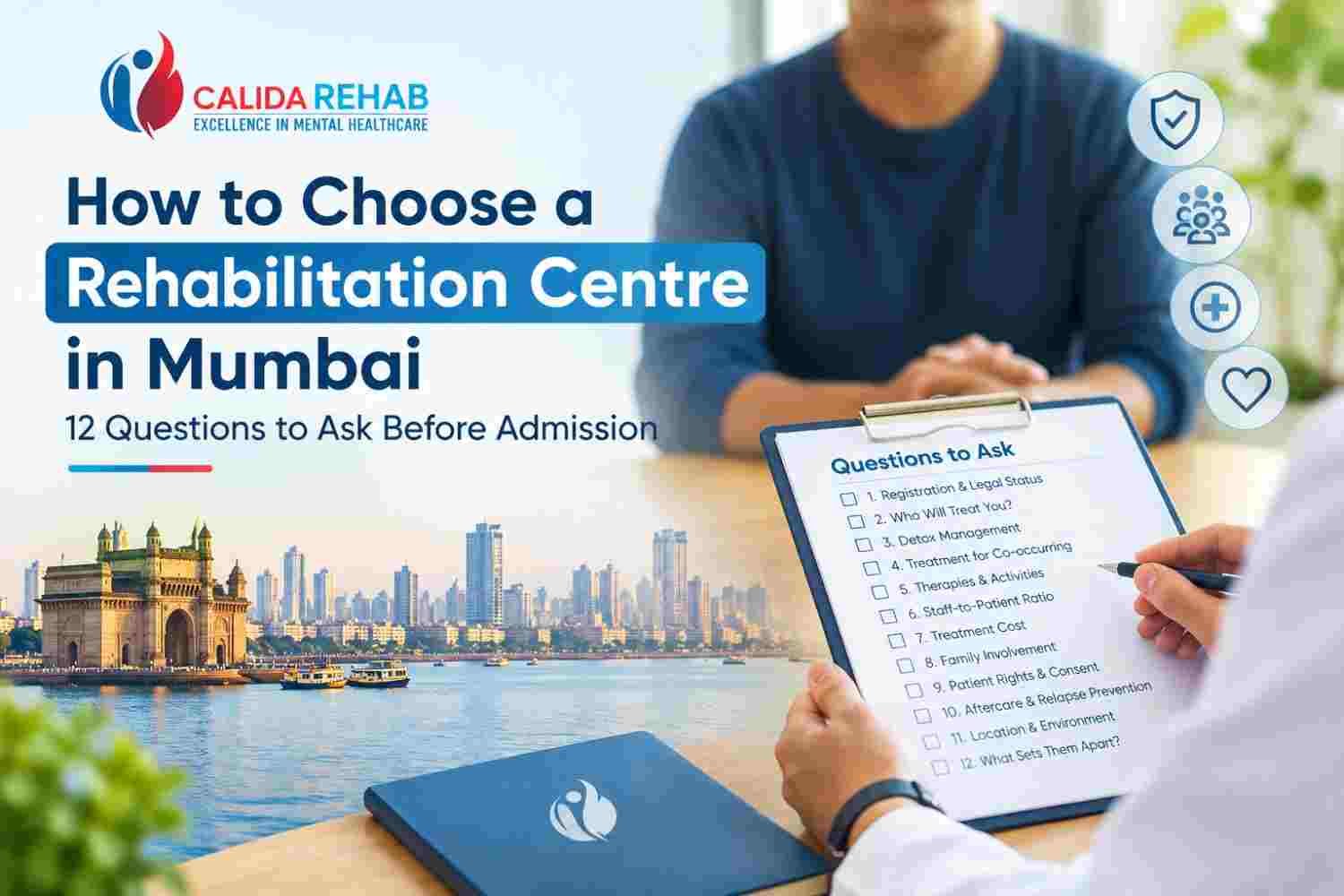
The 2022 report described centres in the Thane, Panvel and Vasai-Virar belt that attract Mumbai families and keep patients in secluded locations. A centre can therefore advertise a Mumbai address and treat patients elsewhere. That is acceptable only if the certificate covers the place where the patient will actually stay. Our rehabilitation centre in Mumbai page is an example of listing the consultation office and the treatment campus separately, and our guide on how to choose a rehabilitation centre in Mumbai covers the questions to ask after registration is confirmed.
Pune
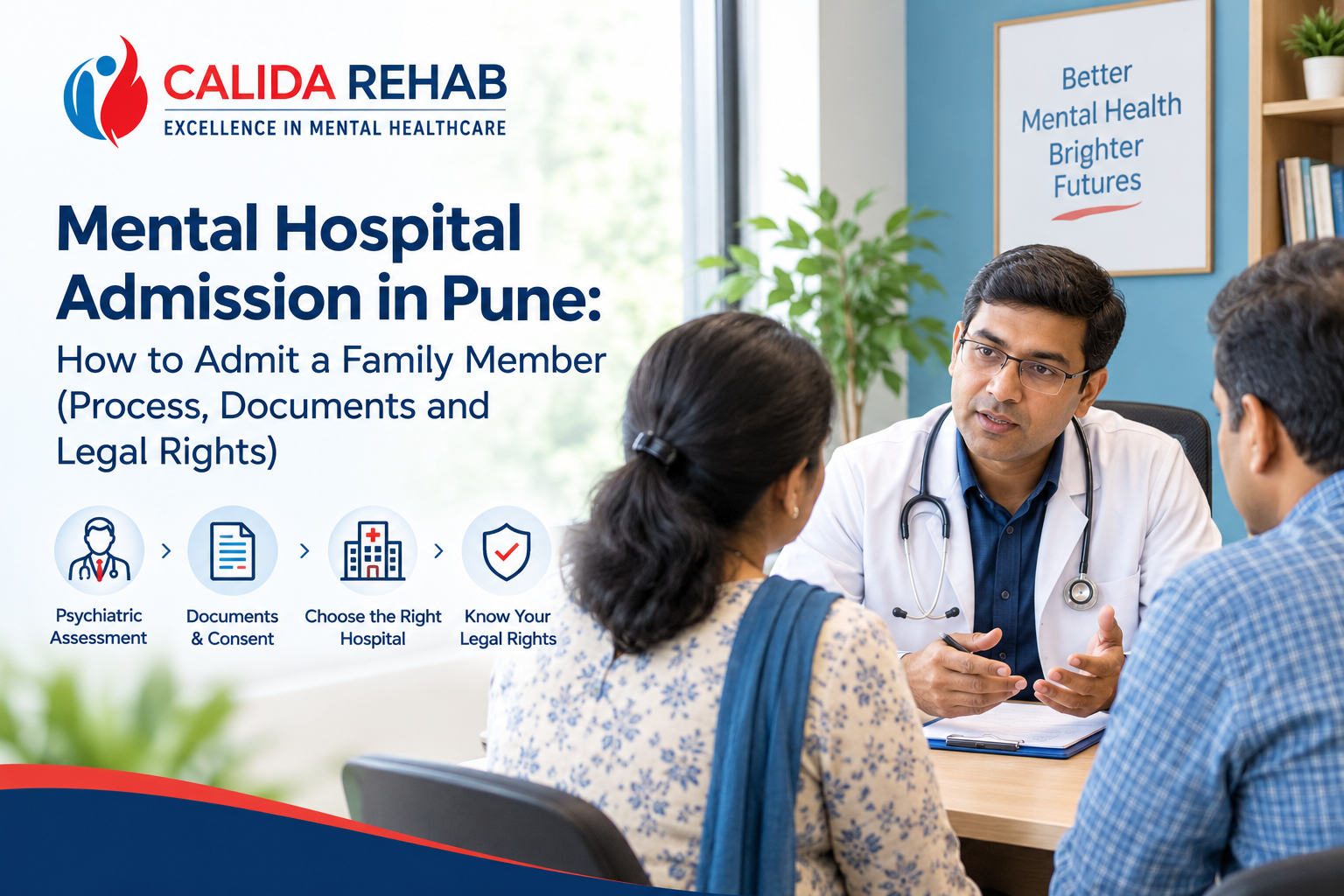
A listing that says "Pune" can still describe a site in the wider district, so compare the full postal address on the certificate with the address you are given for admission. If you would rather not rely on a private centre you cannot verify, public hospitals are another route, covered in government de-addiction centres vs private rehab. For the Pune options and the process of admission, see our rehabilitation centre in Pune page, the Pune checklist for families and the guide to mental hospital admission in Pune.
What to do if a centre is not registered or will not show proof
Before admission: do not pay or sign. Ask for the certificate in writing. If the centre cannot produce it, choose another one.
After admission: ask for the registration details in writing and verify them with the Authority. If the centre is unregistered, ask a psychiatrist how to move the patient safely to a registered facility. Do not remove someone from alcohol or sedatives abruptly without medical advice.
If patients are mistreated: complain to the MSMHA, which can inspect on a complaint under Section 68 and penalise under Section 107. If someone is being confined, beaten or denied food, call 112 or the local police at once. For guidance on mental health services, Tele MANAS runs a 24-hour helpline on 14416.
Registration is a legal minimum, not a quality rating. Once a centre passes this check, compare its doctors, detox arrangements, fees and aftercare using our guide to rehab vs psychiatric hospital and the article on the Mental Healthcare Act and patient rights in rehab.
Frequently asked questions
Ask for its Maharashtra State Mental Health Authority registration certificate before paying. Match the name, address, bed count and named doctor to the centre, check the type and date, then ask the Authority or your district health office to confirm the registration number in writing.
Under the Mental Healthcare Act, 2017, it is a place that provides in-patient care for mental illness, and the Act counts substance use disorder as mental illness. De-addiction centres, rehab centres and psychiatric hospitals therefore need registration. Outpatient-only services fall outside the definition.
In everyday language, yes. Legally the Mental Healthcare Act uses registration, and the document to ask for is the certificate of registration issued by the State Mental Health Authority. A trust, GST or ISO certificate is not a substitute.
Yes. Nasha mukti kendra is the common Hindi name for a de-addiction centre. If it admits patients for treatment or residential rehabilitation, it falls under the same registration requirement as any other rehab centre.
A provisional registration is valid for 12 months and must be renewed (Section 66). For a permanent certificate, read the validity terms printed on it and confirm them with the Authority, because they are stated on the certificate itself.
No. Registration shows the centre has legal standing and has met the Authority requirements. It does not rate the quality of care, so also check the treating doctors, detox arrangements, fees in writing and aftercare.
Section 107 penalises the person who runs an unregistered establishment and professionals who knowingly work in it. It does not name families, but the patient bears the safety risk, so verify before admission.
Sources and editorial note
- Mental Healthcare Act, 2017 (India Code)
- Section text: Section 65, Section 66 and Section 107
- Free Press Journal, 19 December 2022: unlicensed rehab centres in Mumbai
- SCC Times, 14 August 2025: classification of mental health establishments
- State Mental Health Authority FAQ on the definition of a mental health establishment
Published by Calida Rehab, which runs centres registered with the MSMHA in Karjat (serving Mumbai) and Pune. Our certificates are on our licences and certificates page, and every check above applies to us as well. This article is general information, not legal advice. Contact details for the Authority can change, so confirm them on the Maharashtra health department website. Last reviewed 28 October 2026.