Calida Rehab recovery centre near Mumbai
MSMHA-registered · De-addiction & mental health care

Rehabilitation Centre in Mumbai Consult in Colaba. Residential care in the quiet, green surroundings of Karjat.

Alcohol, drug and mental health recovery with round-the-clock medical supervision. Consultation takes place at our Colaba office in Mumbai, and residential care in the calm, green surroundings of our Karjat centre.

Request a free callback

Confidential. We use your details only to call you back. Prefer WhatsApp? Chat now

Thank you. We have your request.

Our team will call you back soon. For a faster reply, message us on WhatsApp too.

Continue on WhatsApp
  • MSMHA Reg. No. 60/2023Permanent registration, Karjat
  • Registered hospitalMental Healthcare Act, 2017
  • 24/7 carePsychiatrist supervision
  • 10,000+Patients treated
  • ConfidentialStigma-free admission
Quick answer: What is Calida Rehab, and how does treatment work?
Quick answer

What is Calida Rehab, and how does treatment work?

Calida Rehab is a psychiatrist-led de-addiction and mental health care provider. Assessment and admission planning happen at our Colaba office in Mumbai, and residential treatment takes place at our Karjat centre.

  • Where: consultation office in Colaba, Mumbai; residential centre in Karjat, about 80 km (around 2 hours) away.
  • Registration: MSMHA Permanent Registration No. 60/2023 under the Mental Healthcare Act, 2017.
  • Programmes: residential, 30, 60 or 90 days, set after clinical assessment.
  • Cost: starts from ₹50,000 (typical range ₹50,000 to ₹1,50,000), confirmed after assessment.
  • Emergencies: severe medical emergencies need a hospital, so call 112. For an urgent psychiatric admission, call +91 84529 40789.

Medically reviewed by Dr. Prashant Dasud, Consultant Psychiatrist and Director. Last updated . Sources and editorial note

Speak to our team in confidence

Your first conversation is free and private. We explain your options, what to expect and the right level of care.

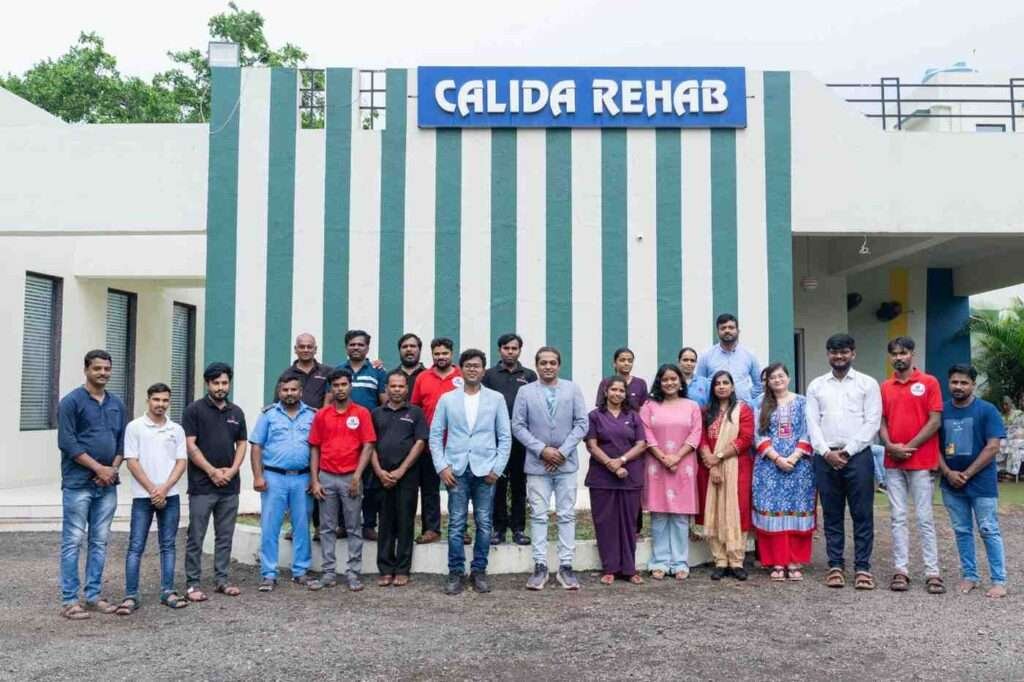
Calida Rehab care team and facility
10,000+patients treated
24/7Medical supervision
30-60-90Day programmes
~2 hrsColaba to Karjat
About Calida Rehab

An MSMHA-registered, psychiatrist-led addiction and mental health care centre

Calida Rehab is a registered psychiatric hospital and rehab centre for Mumbai families, with MSMHA Permanent Registration No. 60/2023. Through our Colaba office and Karjat centre we serve families from Mumbai, Andheri, Borivali, Thane, Navi Mumbai, Panvel and Kalyan, with round-the-clock clinical care at Karjat.

We treat alcohol addiction, marijuana addiction and drug dependency, along with depression, anxiety, bipolar disorder, schizophrenia and dementia.

Care is led by our directors Dr. Prashant Dasud and Dr. Santosh Pawar, with an on-site team of psychiatrists, psychologists, nurses and counsellors. Medication, psychotherapy and behavioural therapy work together, backed by family counselling, aftercare planning and follow-up calls at 30, 60 and 90 days after discharge.

What we treat

Rehab centre in Mumbai for addiction and mental health care

Every plan starts with a clinical assessment, so treatment is planned around the person. Use the arrows to see every condition we treat.

Dual diagnosis

When addiction and a mental health condition occur together, both are treated in one coordinated plan.

Not sure what applies?

Describe the situation and our team will guide you to the right level of care.

Talk to our team

Our Facilities for Safe and Comfortable Recovery

World-class amenities and comfortable spaces designed to support your healing journey

Inside Calida Rehab: Daily Life, Mental Care & Psychiatric Support System in Mumbai

At our rehabilitation centre in Mumbai, we invite you to recharge through yoga, meditation, group therapy, music therapy, dance therapy, and expressive arts therapy. Our expert team of psychiatrists, psychologists, nurses, nutritionists, and counsellors supports you 24/7 throughout your addiction recovery story.

Stay engaged with indoor games, recreational spaces, wellness activities, and structured daily programs. Enjoy healthy, nutritious meals tailored to your individual dietary needs. Reside on a secure, monitored centre with 24/7 emergency support. Choose from clean AC rooms, deluxe rooms, shared rooms, and dorm-style accommodations available at our rehab centre in Mumbai.

Our Mumbai Clinical Team of Expert Psychiatrists

A dedicated team of qualified psychiatrists and mental health specialists guides every patient at Calida Rehab in Mumbai, providing evidence-based treatment and continuous support throughout the recovery story.

Therapies

Evidence-based therapies used at Karjat

Medication, psychotherapy and behavioural therapy work together, alongside yoga, meditation, mindfulness, nutrition support and life-skills training.

Used to change unhealthy habits and reactions.

Used for depression, anxiety, OCD and addiction.

Used to manage intense emotions and impulsive urges.

Used to handle triggers and stay sober after treatment.

Used for safe, supervised alcohol and drug withdrawal.

Used to rebuild trust and support recovery at home.

Used to learn from peers and reduce isolation.

Used for one-on-one work on triggers, stress and goals.

Used to accept cravings and hard emotions and act on personal values.

Used to challenge harsh self-talk and rigid thinking behind cravings and anger.

Used for depression linked to grief, conflict and life changes.

Used to release stress through guided movement.

Used to express emotions through art and music.

Condition-wise care

Addiction and dual-diagnosis care in detail

What each condition involves, what makes it risky, and how care is organised at Karjat. Each card links to our detailed page for that condition.

Alcohol addiction

Alcohol dependence is a medical condition, not a lack of willpower, and harmful alcohol use is a major cause of illness worldwide[6]. After years of heavy drinking, stopping suddenly can bring tremor, sweating, anxiety, seizures or delirium tremens, so the first step is a doctor’s assessment and, where needed, supervised detox[3]. After detox, a psychiatrist may add medicines such as acamprosate or naltrexone to reduce craving, alongside therapy[3]. At Karjat, care combines detox, psychiatric care, relapse-prevention work and family counselling.

Opioids, sedatives and other drugs

This covers opioids such as heroin (brown sugar) and prescription painkillers, as well as sedatives, stimulants and other substances. Opioid withdrawal is intensely uncomfortable but rarely dangerous on its own. The bigger risk comes later: tolerance falls during detox, so returning to the old dose can cause overdose[2]. Sedative withdrawal can cause seizures and needs supervision[2]. Where a psychiatrist advises, medicines such as buprenorphine or naltrexone are used[1], together with therapy and a long-term relapse-prevention plan.

Marijuana (cannabis)

Regular heavy use can lead to dependence. Withdrawal, such as irritability, poor sleep, low appetite and anxiety, usually lasts days to a few weeks and is rarely dangerous, but it often triggers relapse. No medicine is approved specifically for cannabis use disorder, so treatment relies on psychological therapies such as CBT and motivational approaches[7]. Cannabis can also worsen anxiety, low mood and psychosis in people who are vulnerable to them[7], so a psychiatric review matters.

Dual diagnosis

Addiction often occurs together with depression, anxiety, bipolar disorder, PTSD or psychosis. NIDA’s guide says treatment must address both[1], and NICE publishes separate guidance on coexisting severe mental illness and substance misuse[4]. Treating only one tends to leave the other driving relapse, so assessment covers both and psychiatric and addiction care run side by side from the start.

Mental health conditions we treat

Clinical approach

How treatment works at a rehab centre in Mumbai: what the evidence supports

Our programmes follow principles that national and international guidance describe: assess first, supervise withdrawal, use medicines where indicated, treat co-occurring conditions together and plan care beyond discharge. Numbers in brackets link to the sources listed at the end of this page.

Assessment comes first

A doctor reviews substance use, withdrawal risk, physical health and mental health, including depression, anxiety, psychosis and suicide risk, using standard diagnostic criteria such as WHO’s ICD-11[8]. WHO’s mhGAP guidance likewise starts from assessment of substance use alongside physical and mental health[2]. The result decides whether you need supervised detox, residential rehab or hospital care first.

Withdrawal needs medical supervision

Stopping alcohol or sedatives such as benzodiazepines suddenly after long-term heavy use can cause seizures, confusion and delirium tremens[3][2], so withdrawal needs supervision, not a home attempt. Detox is only the first stage: NIDA notes that on its own it does little to change long-term drug use[1]. Read our guides on detoxification and alcohol withdrawal symptoms.

Medicines where indicated

For some people, a psychiatrist may prescribe medicines that reduce craving or help prevent relapse. For alcohol dependence, NICE recommends acamprosate or naltrexone alongside a psychological intervention after detox[3]; for opioid dependence, medicines such as buprenorphine or naltrexone may be used[1]. See medication-assisted treatment. Medicines are not a stand-alone cure and work best alongside therapy.

Psychotherapy

NIDA lists cognitive behavioural therapy, motivational enhancement and contingency management among the evidence-based behavioural approaches[1]. Our programme includes CBT, DBT and ACT, with peer and individual counselling.

Co-occurring conditions treated together

Depression, anxiety, bipolar disorder, trauma and psychosis often occur together with addiction. NIDA’s guide says treatment must address both[1], and NICE has separate guidance on assessing and managing coexisting severe mental illness and substance misuse[4]. Treating only one tends to leave the other driving relapse, so psychiatric and addiction care run together. Read more on dual diagnosis.

Enough time, and care after discharge

NIDA reports that most people need at least three months in treatment to significantly reduce or stop drug use, and that recovery is a long-term process that often takes more than one episode of treatment[1]. That is why our most comprehensive programme runs 90 days, and why family counselling, a discharge plan and follow-up calls at 30, 60 and 90 days continue after discharge. See family therapy and what the first week of rehab looks like.

Which level of care fits which situation?

Level of careWhen it usually fits
Medically supervised detoxDaily heavy drinking, sedative or opioid dependence, or past withdrawal seizures or delirium.
Residential rehab (30, 60 or 90 days)Repeated relapse, a home environment full of triggers, or addiction together with a mental health condition.
Psychiatric hospital care firstSuicidal thoughts, psychosis, severe mania or violence. Treat as urgent, and call 112 if someone is in immediate danger.

This is general guidance, not a diagnosis. A doctor's assessment decides the right level of care for each person. See also rehab vs psychiatric hospital.

Residential programmes

30, 60 or 90 days at our Karjat centre

Duration is decided after assessment, based on the condition, history and goals.

30days

Detox and stabilisation

Intensive medical detox from alcohol, drugs or prescription substances, with psychiatric care and early-stage therapy.

Best suited for

  • Alcohol, drug or marijuana use needing medical detox
  • Prescription medication misuse
  • Acute anxiety, depression or panic episodes

Included

  • Supervised detox and medication management
  • Individual addiction and psychiatric counselling
  • Family orientation and care planning
60days

Deeper therapy and skills

Intensive therapy and structured daily care for people who need more time to build lasting sobriety and emotional stability.

Best suited for

  • Relapse after short-term treatment
  • Ongoing marijuana or prescription drug dependence
  • Recurring depressive or anxiety episodes, bipolar disorder

Included

  • Relapse-prevention and peer counselling
  • Ongoing clinical supervision and medication review
  • Structured routines and skill-building sessions
MOST COMPREHENSIVE
90days

Long-term residential care

Extended care with psychiatric stabilisation and structured therapy for long-standing or complex conditions.

Best suited for

  • Long-standing or severe alcohol, drug or marijuana dependence
  • Dual diagnosis (addiction plus mental health)
  • Schizophrenia, complex trauma, PTSD, OCD or dementia

Included

  • Continuous 24/7 medical and psychiatric supervision
  • Individual, peer and family therapy
  • Long-term rehabilitation and relapse-prevention planning

Programme length and inclusions are confirmed after clinical assessment. Recovery outcomes vary from person to person.

Your treatment steps

From admission to aftercare: how treatment works at Calida Rehab

One pathway from the first call to long-term follow-up, so your family always knows what happens next. Tap a step to read what happens.

After discharge

Relapse prevention and aftercare support

Recovery does not end at discharge. Our aftercare keeps you emotionally stable, teaches you to manage triggers and cravings, and keeps your family involved.

Follow-up with our medical team

Regular follow-up conversations review progress, solve obstacles and keep you accountable after you leave Karjat. Calls follow at 30, 60 and 90 days after discharge.

Trigger and craving skills

Simple, practical techniques to recognise triggers and cravings, stay calm, keep focus and make safer choices.

Family counselling

Sessions that rebuild trust and improve communication, so the family knows how to support recovery in a healthy, low-stress way.

Individual counselling

A private space to talk about feelings, fears and difficulties, and to build coping skills and emotional resilience.

Medicines when needed

Where a doctor advises, medicines can reduce craving and stabilise mood, with ongoing medical supervision.

Help if warning signs appear

If you notice warning signs or feel unstable, call us. Our team responds with crisis counselling and step-by-step guidance. In an emergency, call 112.

A relapse means treatment needs adjusting

NIDA describes recovery from addiction as a long-term process that often takes more than one episode of treatment, and says a lapse signals that treatment should be restarted or adjusted rather than that it has failed[1]. If this happens, call us early. See also relapse prevention therapy.

Why Calida

Why Mumbai families choose Calida: recovery away from the city

Rehabilitation works best when a person is away from the places, people and routines tied to substance use. Mumbai's pace and familiar cues make that hard. Karjat creates real distance, yet stays close enough for your family to remain involved.

01

Distance from triggers

Leaving familiar streets, shops and social circles lowers daily exposure to cues that set off cravings, so early recovery is easier to protect.

02

A calmer daily rhythm

Quiet surroundings and a structured routine support sleep, therapy and reflection without city noise and crowds.

03

Close enough for family

About 2 hours by road from Colaba, with Central Line trains to Karjat, so families can join counselling and stay involved.

04

A plan built after assessment

Duration and level of care follow the clinical picture, so each patient gets a personalised plan rather than a fixed template.

05

Family involved at every stage

Family counselling is part of every plan, and follow-up calls at 30, 60 and 90 days continue after discharge.

Typical in-city rehab vs Calida

FactorTypical in-city rehabCalida: Colaba + Karjat
SurroundingsDense, busy and noisyQuiet centre in Karjat, Raigad
Daily triggersFamiliar places stay closeDistance from usual places and contacts
First consultationAt the centreAt our Colaba office, no long trip before you decide
Family roleVaries by centreStructured family counselling in every plan
Clinical coverVaries by centre24/7 medical and psychiatric supervision

Time in nature is associated with better wellbeing (White et al., Scientific Reports, 2019). A calm setting supports treatment; it does not replace clinical care.

Call us to plan the next step

Speak to our team in confidence. We will help you understand your options and plan the next step, from Colaba to Karjat.

Transparent pricing

Typical treatment cost at Calida Rehab

₹50,000 – ₹1,50,000

Your estimate depends on four things: type of treatment, programme length, level of care and room category. Our team gives a clear estimate after assessment, with no hidden costs.

Get a free estimateIndicative range. The exact amount is confirmed after clinical assessment.
Cost factors

What decides the cost of rehab in Mumbai

FactorOptions
Type of treatmentPsychiatric care, de-addiction or dual-diagnosis programme
Duration30, 60 or 90-day structured plan
Level of careResidential programme or medical detox
Room categoryShared, private or deluxe accommodation

Ask any rehab before you pay: What exactly is included (room, food, therapy)? Are doctor visits, detox medicines and tests extra? How is billing done? What is the refund policy? Read our guide to the real cost of rehab in India.

Safety and credentials

Registered, regulated and transparent

MSMHA registered

Calida Psychiatric Hospital, Karjat holds a Permanent Registration Certificate (No. 60/2023) from the Maharashtra State Mental Health Authority under the Mental Healthcare Act, 2017.

Clinical protocols and patient safety

Care follows structured clinical protocols, with 24/7 medical supervision and patient-safety practices.

Safe and confidential

CCTV surveillance, 24/7 medical supervision, supervised meals and a strict no-substance policy. View our licences.

How to verify a rehab centre’s registration

Under the Mental Healthcare Act, 2017 [5], mental health establishments in Maharashtra must be registered with the Maharashtra State Mental Health Authority. Before you admit anyone, ask the centre for its registration number and certificate, and check that the name, address, bed capacity and responsible medical practitioner match what you see on site. You can compare ours on our licences and certificates page.

The responsible medical practitioner named on our Karjat MSMHA certificate is Dr. Prashant Laxamanrao Dasud.

Emergencies: what we can and cannot manage

Calida is a registered psychiatric hospital. We admit emergency psychiatric cases, including people at risk of suicide or self-harm and acute psychotic episodes. We are not equipped for severe medical emergencies such as convulsions (seizures), overdose or other serious medical conditions. For those, go to the nearest hospital emergency department or call 112 now.

If someone is in immediate danger, call 112. For free mental health support in India, call Tele-MANAS on 14416 (24/7). To discuss an urgent psychiatric admission, call us on +91 84529 40789.

Further reading from public health bodies: WHO fact sheet on alcohol, AIIMS National Drug Dependence Treatment Centre, NIMHANS and ICMR.

What Families Say About Calida Rehab — Mumbai

Genuine reviews from patients' families at our Mumbai Region centre, taken directly from our Google Business Profile.

4.8Based on 414 Google reviews
Verified Google reviewsMumbai Region - Karjat centreReviews from patients’ families
Rohit KaharG
Rohit KaharVerified Google review
Mumbai Region - Karjat

Thank you calida rehab team it was great experience. All the staffs and doctors are very helpful. The doctor treat the patient with love and care, they understand patient feeling and give them good treatment. Dr Mahek is very good doctor, handled patient with care.

VG
Varsha KhanvilkarVerified Google review
Mumbai Region - Karjat

Our experience with Calida rehab is great and satisfactory about my patient. All team and attendant doctor phycologists are very caring n supportive. Thank u calida rehab 🙏

DG
Dimple PurohitVerified Google review
Mumbai Region - Karjat

I felt really happy sending my brother here.

Video testimonials

Hear directly from patients and their families

Their own words about recovery.

Drug addiction recovery

A brother shares the recovery story of his brother

Alcohol addiction recovery

A patient shares his recovery story

Mental health recovery

A mental health recovery story

Alcohol addiction recovery

Parents share how their son recovered from alcohol addiction

Mental health awareness

Understanding mental illness and recovery

Addiction & Mental Health Recovery Case Studies

Explore real psychiatric recovery stories, addiction treatment journeys, and clinically supervised rehabilitation case studies at Calida Rehab.

Drug abuse recovery case study — patient's 90-day residential treatment journey
Drug Abuse Recovery

Drug Abuse Case Study: Real Patient Recovery Journey in India

Learn How Rohan completed his 90-day residential treatment program for drug addiction.

Reviewed by Dr. Prashant Dasud
Woman refusing alcohol, representing alcoholism recovery through structured rehabilitation
Alcohol Recovery

Alcoholism Case Study: Recovery Through Structured Rehabilitation

Learn how medically supervised addiction treatment supported recovery.

Reviewed by Dr. Prashant Dasud
Elderly person affected by dementia, related to memory loss and cognitive decline case study
Dementia Care

Dementia Case Study: Managing Memory Loss & Cognitive Decline

Understand how psychiatric care improved dementia management.

Reviewed by Dr. Prashant Dasud
Schizophrenia case study illustrating psychiatric recovery and treatment
Schizophrenia

Schizophrenia Case Study: Psychiatric Recovery & Treatment

Discover how therapy supported recovery.

Reviewed by Dr. Prashant Dasud
Person feeling overwhelmed with tangled thoughts, representing depression case study
Depression Recovery

Depression Case Study: Emotional Healing & Mental Recovery

Explore structured care outcomes.

Reviewed by Dr. Prashant Dasud
Bipolar disorder case study showing mood stabilisation through structured care
Bipolar Disorder Recovery

Bipolar Disorder Case Study: Mood Stabilisation

Learn how structured care improved balance.

Reviewed by Dr. Prashant Dasud
OCD symptoms illustration, related to managing obsessions case study
OCD Recovery

OCD Case Study: Managing Obsessions

Behavioural therapy reduced compulsions.

Reviewed by Dr. Prashant Dasud
ADHD case study showing diagnosis, treatment and recovery in an adult
ADHD Recovery

ADHD Case Study: Diagnosis, Treatment and Recovery in an Adult

See how an adult with ADHD was assessed, treated and supported.

Reviewed by Calida Rehab Clinical Team
Marijuana addiction case study showing cannabis dependence treatment and recovery
Marijuana Recovery

Marijuana Addiction Case Study: Cannabis Dependence, Treatment and Recovery

See how a 24-year-old with daily cannabis use was assessed, treated and supported.

Reviewed by Calida Rehab Clinical Team
PTSD case study showing trauma treatment and recovery
PTSD Recovery

PTSD Case Study: Post-Traumatic Stress Disorder, Treatment and Recovery

See how a 31-year-old with trauma symptoms after a road accident was assessed, treated and supported.

Reviewed by Calida Rehab Clinical Team
Anxiety case study showing treatment of generalised anxiety and panic attacks
Anxiety Recovery

Anxiety Case Study: Generalised Anxiety and Panic Attacks, Treatment and Recovery

See how a 27-year-old with constant worry and panic attacks was assessed, treated and supported.

Reviewed by Calida Rehab Clinical Team
Buyer's guide

How to choose a rehabilitation centre in Mumbai: 8 questions to ask

This page covers de-addiction and mental health rehabilitation. For physical rehabilitation, consult a hospital's physical medicine and rehabilitation department.

  1. 1
    Is it legally registered?Ask for the Maharashtra State Mental Health Authority registration number and verify it.
  2. 2
    Who will treat my family member?Look for qualified psychiatrists and 24/7 medical cover, not counsellors alone.
  3. 3
    Is there an assessment before admission?A responsible centre reviews medical and psychiatric history first and tells you honestly if hospital care should come first.
  4. 4
    Can it treat addiction and mental illness together?Dual diagnosis is common. Treating only one condition often leads to relapse.
  5. 5
    What is the real cost?Ask what is included and what is extra, and get it in writing. See our cost guide.
  6. 6
    How is the family involved?Family counselling and regular communication should be part of the plan.
  7. 7
    What happens after discharge?Look for relapse-prevention planning and structured follow-up, such as calls at 30, 60 and 90 days.
  8. 8
    Is the setting part of the treatment?Distance from triggers matters. Compare rehab versus home recovery.
Mission, vision and values

Psychiatrist-led care, delivered ethically

We treat addiction and mental health problems with an approach centred on psychiatrist-led care. We place you at the appropriate level of care and support you through an evidence-based treatment plan, with safe recovery and ethical treatment.

Vision of Calida Rehab

Vision

To enable individuals with psychiatric disorders to recover and live as independently as possible in the community.

Mission of Calida Rehab

Mission

To engage patients and aid recovery through disorder management, psychological functioning and personal satisfaction.

Goal of Calida Rehab

Goal

To help people with psychiatric disorders through individual and environmental interventions following the biopsychosocial model.

FAQs

Rehabilitation centre in Mumbai: your questions answered

Does Calida Rehab have a rehabilitation centre in Mumbai?

Calida Rehab has an admissions and consultation office in Colaba, South Mumbai, and a residential recovery centre in Karjat, Raigad, about 80 km (around 2 hours) from Colaba. Assessment and admission planning start in Mumbai, and treatment takes place in Karjat.

Is treatment provided at the Colaba office?

No. The Colaba office is for consultations, family guidance and admission planning. Detox, psychiatric care and therapy are delivered at our Karjat centre, where a quiet setting away from daily triggers supports recovery.

How far is Karjat from Mumbai?

Karjat is roughly 80 km from Colaba and CSMT, about 2 hours by road depending on traffic. It is about 50 km from Kalyan, 55 km from Navi Mumbai, 68 km from Thane, and 75 to 97 km from Dadar, Andheri and Borivali. Central Line trains also run to Karjat station.

Why recover outside the city instead of inside Mumbai?

Distance from familiar places, people and routines reduces exposure to cues that trigger cravings, and a calm setting supports sleep, therapy and routine. Karjat is far enough for that distance yet close enough for families to stay involved. The setting supports treatment but does not replace clinical care.

How much does rehab cost at Calida Rehab?

Treatment typically costs between ₹50,000 and ₹1,50,000, depending on the type of treatment, programme length (30, 60 or 90 days), level of care and room category. Our team confirms an exact estimate after assessment.

How long is the rehab programme?

Residential programmes run for 30, 60 or 90 days. Thirty days focus on detox and stabilisation, 60 days add deeper therapy and relapse prevention, and 90 days offer the most comprehensive care for long-standing or complex conditions. The length is set after assessment.

Is Calida Rehab licensed and registered?

Yes. Calida Psychiatric Hospital in Karjat holds a Permanent Registration Certificate (No. 60/2023) from the Maharashtra State Mental Health Authority under the Mental Healthcare Act, 2017.

Do you treat addiction and mental illness together?

Yes. We treat alcohol, drug and marijuana addiction as well as depression, anxiety, bipolar disorder, schizophrenia, OCD, PTSD and dementia, and offer dual-diagnosis care when addiction and a mental health condition occur together.

Is admission confidential?

Yes. We offer confidential, stigma-free admission, and your first conversation with our team is free and private.

What should I do in a medical or psychiatric emergency?

Calida is a psychiatric hospital and can admit emergency psychiatric cases, including suicidal crises and acute psychotic episodes. We do not manage severe medical emergencies such as convulsions, overdose or other serious medical conditions. For those, go to the nearest hospital emergency department or call 112. Tele-MANAS (14416) offers free 24/7 mental health support. Call +91 84529 40789 to discuss an urgent admission.

How is the family involved in treatment?

Family counselling is part of every plan and helps rebuild trust and communication. After discharge, we make follow-up calls at 30, 60 and 90 days and support relapse-prevention planning.

Which areas do families come from?

We serve families from Mumbai, Andheri, Borivali, Thane, Navi Mumbai, Panvel and Kalyan. Call +91 84529 40789 and we will help you plan a first meeting or a visit.

How do I check whether a rehab centre in Mumbai is registered?

Under the Mental Healthcare Act, 2017, mental health establishments must be registered with the state mental health authority, which in Maharashtra is the Maharashtra State Mental Health Authority (MSMHA). Ask the centre for its registration number and a copy of the certificate, and check that the name, address, bed capacity and responsible medical practitioner match the centre you are visiting. Our Karjat hospital holds MSMHA Permanent Registration Certificate No. 60/2023, and the certificates are on our licences and certificates page.

Does health insurance cover rehab or mental health treatment in India?

The Mental Healthcare Act, 2017 requires insurers to cover treatment of mental illness on the same basis as physical illness, and the insurance regulator IRDAI has directed insurers to follow this. In practice, cover for inpatient psychiatric care and for substance use treatment depends on your insurer and policy, including waiting periods and exclusions. Check your policy wording with your insurer or TPA before admission, and call +91 84529 40789 if you would like to talk through what to ask.

What should I bring for admission to a rehab centre in Mumbai?

Usually a government photo ID for the patient and the family member accompanying them, previous prescriptions, test reports or discharge summaries, a list of current medicines, and personal clothing and toiletries. Requirements differ by centre, so call +91 84529 40789 before you travel and our team will confirm what to bring.

Quick answer

Where is Calida Rehab in Mumbai?

Calida Rehab has an admissions and consultation office in Colaba, South Mumbai and a residential recovery centre in Karjat, Raigad (see our Karjat centre), about 80 km (roughly 2 hours) from Colaba. You meet our team, get assessed and plan admission in Mumbai. Detox, therapy and day-to-day recovery happen in Karjat, in a quiet setting within the Mumbai Metropolitan Region.

Consultation & admissions

Colaba, Mumbai office

58, Ground Floor, Royal Terrace, Woodhouse Road, Colaba, Mumbai, Maharashtra 400005

Walk in or book a time to speak with our team about assessment, admission and your family's questions. Residential treatment is not provided at this office.

Get directions
Residential treatment

Karjat recovery centre

55/1/A, Tata Road, Village Bhaliwadi, Post Goulwadi, Karjat, Raigad, Maharashtra 410201

Medical detox, psychiatric care, therapy and aftercare planning with round-the-clock staff. Reachable by road and by Central Line trains to Karjat station.

Get directions
Getting to Karjat

How far is Karjat from Mumbai?

Karjat is roughly 80 km from Colaba and CSMT, about 2 hours by road. Central Line trains also connect Mumbai to Karjat station.

~80 kmfrom Colaba and CSMT
~2 hrsby road, traffic permitting
By trainCentral Line to Karjat station

Distance from your area

  • Kalyan
    ~50 km1 – 1.5 hrs
  • Navi Mumbai
    ~55 km1 – 1.5 hrs
  • Thane
    ~68 km1.5 – 2 hrs
  • Dadar
    ~75 km2 – 2.25 hrs
  • Colaba / CSMTOur Colaba office
    ~80 km~2 hrs
  • Andheri
    ~90 km~2.5 hrs
  • Borivali
    ~97 km~3 hrs

Approximate by road. Actual time varies with traffic.

Plan your visit

Not sure how to reach us?

Call our team and we will help you plan the route and the best time to travel to Karjat, or arrange a first meeting at our Colaba office instead.