
Getting older is not the problem. Getting older without the right support is.
India is in the middle of a significant demographic shift. By 2050, India’s elderly population aged 60 and above is expected to cross 340 million. This will account for nearly one in five Indians, according to research published in the Journal of Geriatric Mental Health. Depression prevalence among the Indian elderly ranges from 22% to over 55% in clinical settings. Dementia affects an estimated 7.4 million Indians. Most receive no formal diagnosis and no treatment.
Geriatric care exists to address this growing gap. In particular, geriatric rehabilitation focuses on the physical, mental, and emotional well-being of older adults, while also considering how ageing affects health, medication response, and recovery.
Therefore, for families watching a parent or grandparent decline, understanding what quality geriatric care truly means is the first step toward finding the right support.
What is Geriatric Care?
What is geriatric care is one of the most searched questions by families who have just realised that a loved one needs more than a general physician can offer. The honest answer is that it is a category of specialised healthcare that treats older adults as a distinct clinical population rather than as an extension of adult medicine.
The scope of geriatric care is wide and comprehensive. It includes the diagnosis and management of age-related physical conditions such as cardiovascular disease, diabetes, osteoporosis, and mobility impairment.
In addition, it involves cognitive assessment and care for conditions like dementia and Alzheimer’s disease, along with psychiatric evaluation and treatment for depression, anxiety, and other late-onset mental health conditions.
Furthermore, it also covers rehabilitation, a structured process that helps older adults regain function, independence, and quality of life after illness, surgery, or significant decline.
Good geriatric care does not treat these areas separately. A 78-year-old recovering from a hip fracture who is also showing early signs of depression and has unmanaged diabetes needs all three addressed together. That is the clinical reality geriatric specialists are trained to handle.
Common Mental Health and Medical Issues in the Elderly
The conditions most commonly seen in elderly patients in India include depression, anxiety disorders, dementia, memory loss, and the psychological impact of chronic physical illness.
Depression in older adults is frequently missed because it does not always look like sadness. An elderly person who has become withdrawn, lost interest in food, or who expresses a wish not to be here may be experiencing clinical depression rather than grief or adjustment. Research from the National Mental Health Survey of India most of elderly individuals with diagnosable depression had never been identified or treated.
Diseases like Dementia involve progressive loss of cognitive function. This affects memory, reasoning, language, and the ability to manage daily tasks. Early diagnosis and cognitive rehabilitation cannot reverse dementia, but can slow its progression and improve quality of life for both patient and family.
Anxiety disorders are frequently overlooked in elderly patients. They often start as persistent worry, sleep disturbance, and avoidance of activity. In older adults, they are often seen with physical illness and medication side effects.
Chronic illness, especially when multiple conditions co-exist, carries its own psychological weight. The loss of independence and the fear of becoming a burden are not just emotional concerns. They are clinical ones that directly affect recovery and treatment.
Why Geriatric Rehabilitation Matters?
Geriatric rehabilitation is the structured process of restoring or maintaining function, independence, and dignity in older adults after illness, surgery, injury, or progressive decline.
An elderly person who has had a stroke needs physiotherapy to regain movement. An older adult with depression needs psychological intervention to re-engage with life. A person with early dementia benefits from cognitive stimulation therapy to maintain memory function for as long as possible. Without rehabilitation, many older adults lose functional independence permanently that could have been preserved with timely intervention. The evidence is consistent: structured geriatric rehabilitation improves recovery outcomes, reduces hospital readmission, and significantly improves quality of life.
Types of Geriatric Services
A comprehensive geriatric care centre offers a range of services that work together rather than in isolation. These include geriatric psychiatric evaluation and treatment, physiotherapy and mobility rehabilitation, occupational therapy for daily living activities, cognitive rehabilitation for memory, nursing care and medication management, and psychosocial support for both patient and family.
Assisted living support, helping an older adult manage their daily routine safely with appropriate supervision, sits alongside more intensive medical and psychiatric care depending on the individual’s needs and the stage of their condition.
Geriatric Counselling and Emotional Support
Geriatric counselling addresses the emotional experience of ageing in a way that clinical management of physical conditions cannot do alone. Older adults face real losses of mobility, independence, peers, and identity that carry genuine psychological weight. Isolation is one of the strongest risk factors for depression and cognitive decline in elderly populations.
Individual counselling gives elderly patients a space to process these experiences with a trained professional. Family counselling equips adult children and caregivers with the communication skills and coping strategies needed to provide support without burning out. Both are essential components of geriatric care that many centres still treat as optional rather than core.
Geriatric Care in Pune and Mumbai: Calida Rehab
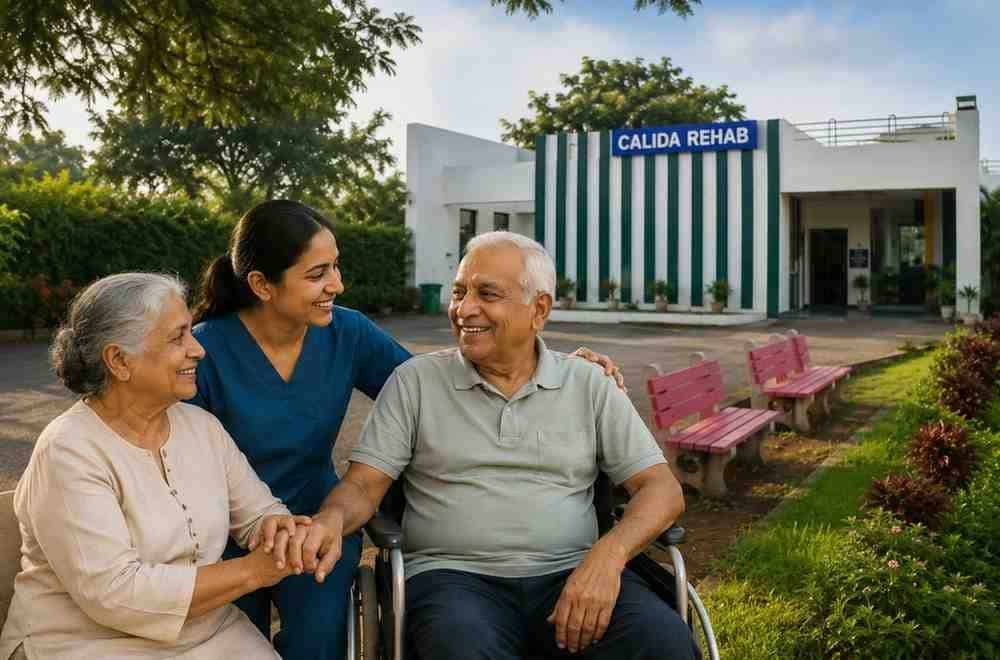
For families seeking a structured, clinician-led programme for an elderly family member, Calida Rehab offers one of the more credentialed options in the region. With centres in Baner, Pune, and Karjat near Mumbai, Calida provides geriatric treatment care in Pune and geriatric treatment care in Mumbai that integrates psychiatric evaluation, rehabilitation, cognitive support, counselling, and medical management within a single structured programme.
The centre is led by Dr. Prashant Dasud, who holds an M.D. in Psychiatry with specialist training, supported by a multidisciplinary team covering psychology, nursing, physiotherapy, and social work. Calida’s NABH-compliant facilities across its 170-bed capacity have supported over 10,000 patients across psychiatric and rehabilitation programmes. Both in-person care at the Pune and Karjat centres and teleconsultation are available for families across India.
How to Choose the Right Geriatric Care Centre?
To choose the right geriatric care centre in Pune or Mumbai, start with the clinical team. Ask about the specialist’s experience with your family member’s condition, whether dementia, post-surgical rehabilitation, or depression. Assess the environment of the centre if possible. Ask how families are kept informed and how medical emergencies are handled.
Bottom Line
Ageing deserves care that matches its complexity. The mental and physical challenges of later life respond to the right intervention when that intervention is timely, specialised, and delivered with genuine respect for the person receiving it.
If you are concerned about an elderly family member’s mental health, cognitive function, or recovery from illness, the right time to seek a professional assessment is not after a crisis. It is now. Calida Rehab’s team is available for consultation at its Pune and Karjat centres, with teleconsultation options across Mumbai and Maharashtra.
FAQs- Frequently Asked Questions
What is geriatric rehabilitation?
Geriatric rehabilitation is a specialized branch of healthcare that focuses on restoring independence, mobility, and improving overall quality of life in elderly patients. It is especially useful for individuals recovering from stroke, surgeries due to falls, and managing conditions like dementia and arthritis.
What are the 5 pillars of geriatric patients?
The 5 pillars of geriatric care, also known as the Geriatric 5Ms, include Mind, Mobility, Medications, Multicomplexity, and What Matters Most. These pillars ensure a holistic approach to elderly care focusing on physical, mental, and personal well-being.
What conditions are treated in geriatric rehabilitation?
Geriatric rehabilitation helps manage conditions such as stroke recovery, fractures due to falls, arthritis, Parkinson’s disease, dementia, and post-surgical recovery in elderly patients.
Who needs geriatric rehabilitation?
Elderly individuals who experience mobility issues, weakness, balance problems, chronic illnesses, or recovery after surgery or injury can benefit from geriatric rehabilitation programs.
How long does geriatric rehabilitation take?
The duration varies depending on the patient’s condition, severity, and recovery goals. It can range from a few weeks to several months with personalized therapy plans.
What therapies are included in geriatric rehabilitation?
It includes physical therapy, occupational therapy, speech therapy, and cognitive therapy to improve strength, mobility, communication, and daily living skills.