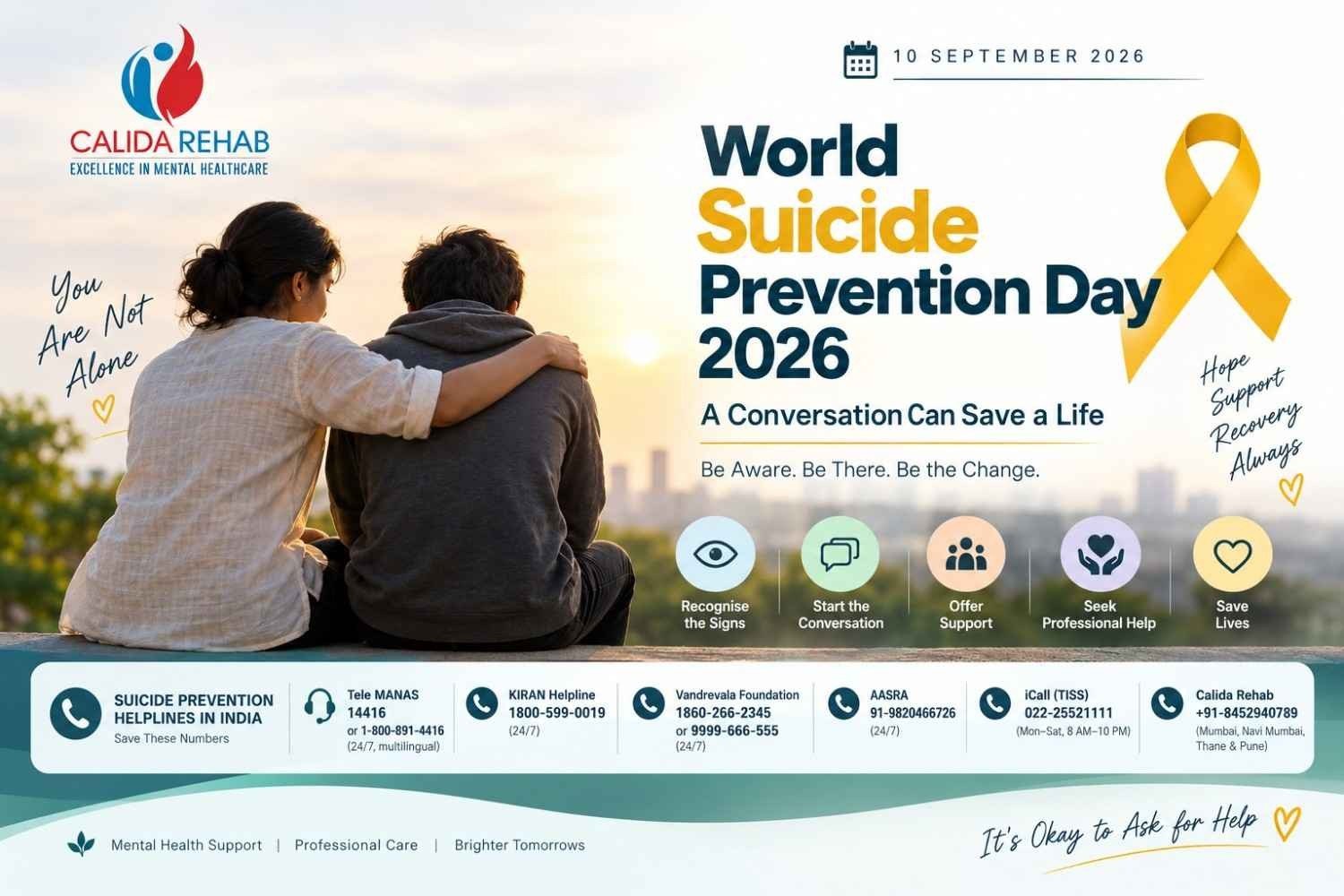

Every year on 10 September, the world observes World Suicide Prevention Day– a reminder that suicide is preventable, that warning signs are usually visible before a crisis, and that the right conversation at the right moment can genuinely save a life. This guide covers the signs to watch for, how to talk to someone you’re worried about, and the helpline numbers to save right now if you or someone you know is struggling in India.
Why World Suicide Prevention Day Matters
World Suicide Prevention Day was established in 2003 by the International Association for Suicide Prevention (IASP), in partnership with the World Health Organization. India records one of the highest numbers of suicide deaths in the world each year, and young adults are disproportionately affected- yet most people who die by suicide show recognisable warning signs beforehand, and most suicidal crises are temporary and treatable with the right support. The day exists to move the conversation from silence to action.
Warning Signs You Shouldn’t Ignore
Warning signs can be emotional, behavioural, or verbal, and they often appear together rather than alone. Pay closer attention if someone you know:
- Talks about feeling hopeless, trapped, or like a burden to others
- Withdraws suddenly from friends, family, or activities they used to enjoy
- Shows big changes in sleep, appetite, or energy that don’t have an obvious cause
- Starts giving away possessions or tying up loose ends unexpectedly
- Increases use of alcohol or drugs, or shows other signs that professional help may be needed
- Expresses feeling like there’s no way out, or talks about not wanting to be here anymore
- Shows sudden calm after a period of visible distress- this can sometimes mean a decision has been made, not that things have improved
No single sign confirms risk on its own, and not everyone shows obvious signs- but a cluster of these changes, especially after a loss, a diagnosis, or a major life setback, is worth taking seriously.
How to Start the Conversation With Someone You’re Worried About
Many people hesitate to ask directly, worried it might “put the idea in their head.” Research consistently shows the opposite- asking directly and calmly tends to bring relief, not harm. A few ways to approach it:
- Ask directly and calmly. “I’ve noticed you haven’t seemed like yourself lately- are you having thoughts of ending your life?” is clearer and safer than talking around it.
- Listen without trying to fix it immediately. Let them talk without judgement, interruption, or rushing to offer solutions.
- Take what they say seriously. Avoid minimising (“it’s not that bad”) or comparing their situation to others.
- Stay with them or arrange for someone to. If they’re in immediate danger, don’t leave them alone- call a helpline or take them to the nearest emergency department together.
- Help them take the next step, whether that’s calling a helpline together, booking a psychiatric consultation, or exploring how to encourage a loved one toward professional treatment if addiction is also part of the picture.
When It’s Time to Seek Professional Help
Suicidal thoughts are frequently linked to an underlying, treatable condition- most often depression, but also bipolar disorder, untreated trauma, or substance use disorders. If you’re unsure whether what you or someone else is feeling has crossed into something clinical, our guide on when to take a depression self-assessment is a reasonable starting point. Teenagers and college students carry a particular risk, often tied to academic pressure, social isolation, or undiagnosed conditions- our piece on depression in teenagers and college students in India looks at how this shows up and what families can do. More broadly, our guide on when to seek mental health treatment in India walks through the warning signs that mean it’s time to act rather than wait.
Your Rights as a Patient in India
It’s worth knowing that India decriminalised attempted suicide under Section 115 of the Mental Healthcare Act, 2017, which presumes severe stress rather than criminal intent and directs the government toward care and rehabilitation instead of prosecution. Understanding these protections can make it easier for families to seek help without fear- our detailed guide on the Mental Healthcare Act 2017 and a patient’s rights in treatment explains what this means in practice.
How Calida Rehab Can Help
At Calida Rehab, our psychiatrists, clinical psychologists, and counsellors work with individuals and families facing depression, suicidal ideation, and co-occurring addiction, offering structured clinical assessment and both outpatient and residential care. If you’re in Mumbai, Navi Mumbai, or Thane, you can learn more about our rehabilitation centre in Mumbai, our centre in Navi Mumbai, our centre in Thane, or our centre in Pune. You can also reach our team directly through our contact page or call +91-8452940789 to speak with someone in confidence.
Suicide Prevention Helpline Numbers in India (Save These)
If you or someone you know is in crisis right now, these confidential helplines are available across India:
- Tele MANAS (Govt. of India): 14416 or 1-800-891-4416- 24/7, multilingual
- KIRAN Mental Health Helpline (Govt. of India): 1800-599-0019- 24/7
- Vandrevala Foundation: 1860-266-2345 or 9999-666-555- 24/7
- AASRA (Mumbai-based, pan-India): 91-9820466726- 24/7
- iCall (TISS): 022-25521111- Monday to Saturday, 8 AM to 10 PM
- Calida Rehab: +91-8452940789– for professional psychiatric and de-addiction support in Mumbai, Navi Mumbai, Thane, and Pune
If you ever feel someone is in immediate danger, don’t wait- call one of the numbers above, or take them to the nearest hospital emergency department.
Frequently Asked Questions
When is World Suicide Prevention Day 2026?
World Suicide Prevention Day is observed every year on 10 September. In 2026, it falls on a Wednesday.
Will asking someone directly about suicide make things worse?
No. Multiple studies show that asking someone directly and calmly about suicidal thoughts does not plant the idea or increase risk- it more often brings relief, because it signals that someone has noticed and cares.
What should I do if a friend or family member says they’re having suicidal thoughts?
Stay calm, listen without judgement, and don’t leave them alone if they seem to be in immediate danger. Help them reach a helpline, a psychiatrist, or an emergency department the same day, rather than waiting to see if it passes.
Is attempting suicide a crime in India?
No. Section 115 of the Mental Healthcare Act, 2017 decriminalised attempted suicide, presuming severe stress rather than criminal intent, and directs authorities toward providing care and rehabilitation instead of prosecution.
Are suicidal thoughts always linked to depression?
Often, but not always. They can also occur with bipolar disorder, severe anxiety, trauma, substance use disorders, or in response to an acute life crisis. A professional evaluation is the only reliable way to understand what’s driving them and what treatment will help.
This article is for informational and awareness purposes only and is not a substitute for professional medical advice, diagnosis, or treatment. If you or someone you know is in crisis, please call the KIRAN helpline (1800-599-0019), Tele MANAS (14416), or reach out to a qualified mental health professional immediately.