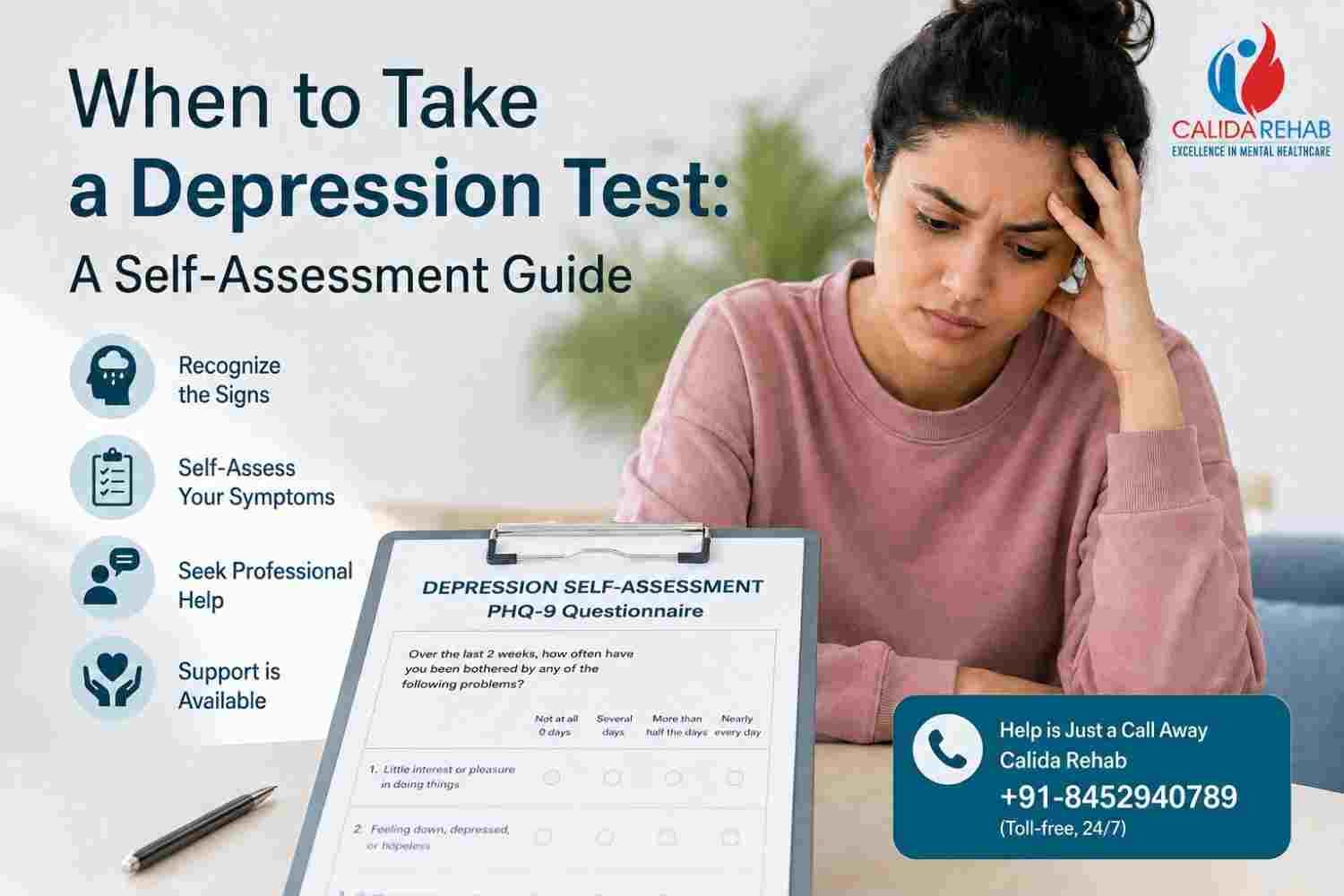

If you’ve been wondering whether what you’re feeling is ‘just a rough patch’ or something that needs professional attention, a depression self-assessment can be a useful first step- but it’s important to understand what it can and can’t tell you.
What Is a Depression Self-Assessment?
A depression self-assessment is a short questionnaire that screens for common symptoms of depression- things like low mood, loss of interest, sleep changes, and fatigue- over a recent period, usually the last two weeks. The most widely used and clinically validated tool is the PHQ-9 (Patient Health Questionnaire-9), which many doctors and psychiatrists use as a starting point during consultations.
Signs It May Be Time to Get Screened
- You’ve felt persistently low, empty, or hopeless for more than two weeks
- You’ve lost interest in activities you used to enjoy
- Your sleep or appetite has changed noticeably, in either direction
- You feel constantly tired, even after resting
- You’re finding it hard to concentrate at work, college, or home
- You feel worthless, excessively guilty, or like a burden to others
- You’ve had thoughts of self-harm or that life isn’t worth living
If the last point applies to you, please don’t wait to take an online quiz- reach out for support right away. In India, you can call the Calida Rehab +91-8452940789 (toll-free, 24/7) or speak with a mental health professional immediately.
About the PHQ-9 and How It’s Used
The PHQ-9 asks about nine core symptoms of depression, each scored on how often it has occurred over the past two weeks. Clinicians use the total score to gauge the likely severity of symptoms- from minimal to severe- and to track how someone responds to treatment over time. It’s a screening tool, not a lab test, and it works best when reviewed by a trained professional alongside a full clinical conversation.
Why a Self-Assessment Is Not a Diagnosis
It’s worth being clear about this: no online quiz, including the PHQ-9, can diagnose depression on its own. A real diagnosis requires a conversation with a psychiatrist or clinical psychologist who can rule out other causes, understand your personal history, and check whether what looks like depression might actually be something else- for example, the difference explored in our guide on depression vs bipolar disorder, or ordinary sadness versus clinical depression. A self-assessment is simply a signal that it may be worth having that conversation.
What Happens After a Positive Screening
If your self-assessment suggests symptoms of depression, the next step is a proper clinical evaluation. This typically involves depression counselling with a therapist or psychiatrist, who will explore your symptoms in depth, discuss possible treatment options- therapy, lifestyle changes, or medication- and, if needed, refer you to further support such as our guide on the different types of depression to understand which pattern best matches your experience.
Getting Help at Calida Rehab
At Calida Rehab, our psychiatrists in Mumbai and Pune offer structured clinical assessments that go well beyond a screening questionnaire- combining a full symptom history with professional evaluation to build a treatment plan suited to your specific situation.
Frequently Asked Questions
Are online depression tests accurate?
Validated tools like the PHQ-9 are reasonably reliable for screening purposes, but they are not a substitute for a professional diagnosis, which considers your full history and rules out other conditions.
How often should I take a depression self-assessment?
If you’re already in treatment, your therapist or psychiatrist may use tools like the PHQ-9 periodically to track progress. If you’re screening yourself for the first time and score in a concerning range, the priority should be booking a professional consultation rather than repeating the test.
What score on the PHQ-9 indicates depression?
Higher scores generally indicate more severe symptoms, but the exact interpretation should always be done by a qualified clinician rather than self-interpreted, since context matters significantly.
What should I do if I’m having thoughts of self-harm?
Please seek immediate help. In India, you can call the KIRAN helpline at 1800-599-0019, available 24/7, or go to the nearest hospital emergency department. You do not have to wait for a self-assessment result to reach out.
This article is for informational purposes only and is not a substitute for professional medical advice, diagnosis, or treatment. If you are experiencing a mental health crisis, please contact a qualified professional or the KIRAN helpline (1800-599-0019) immediately.