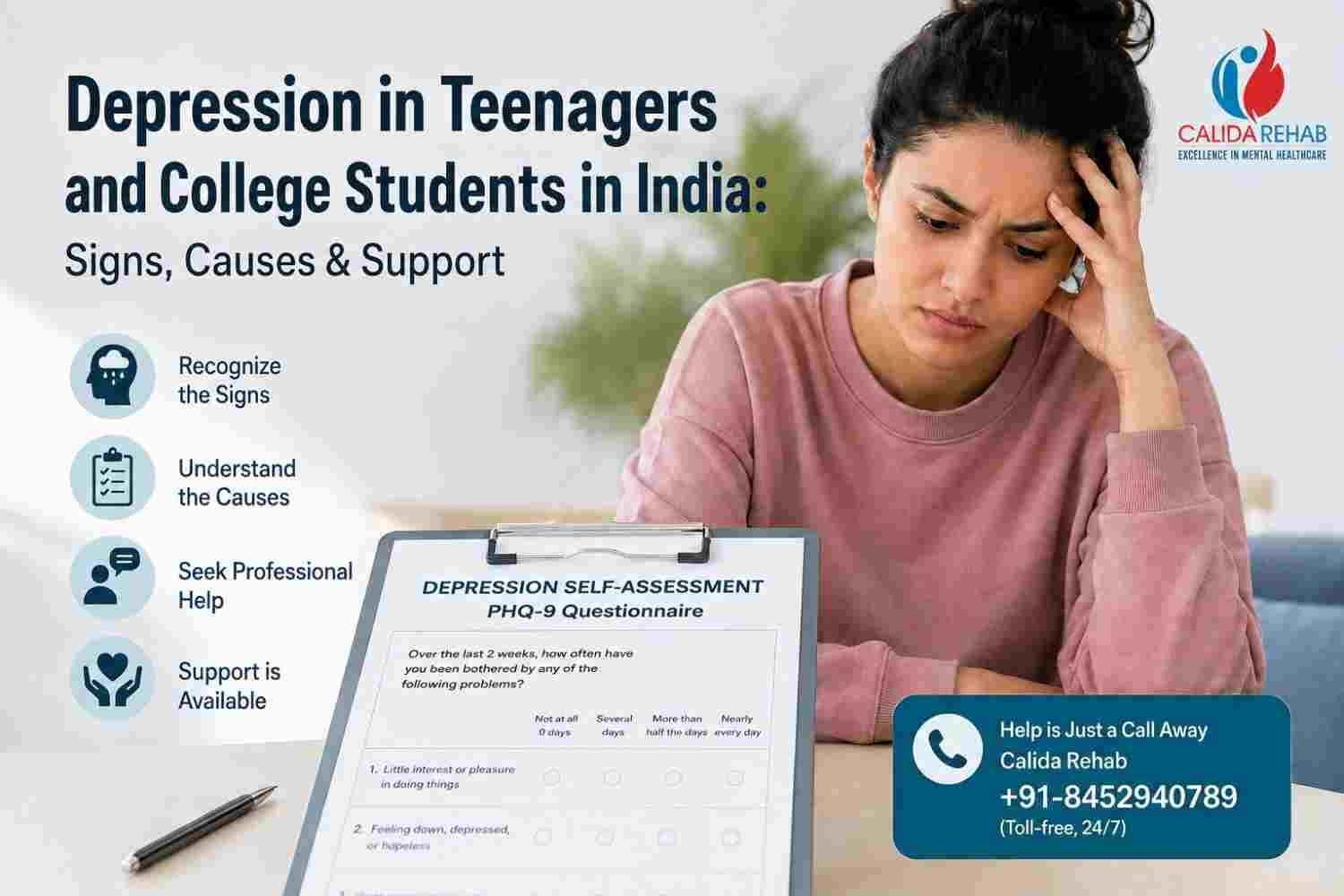

Depression among teenagers and college students in India is rising sharply, driven by academic pressure, competitive exams, social media comparison, and family expectations. Yet it remains under-recognised, often dismissed as ‘just stress’ or ‘a phase.’ Recognising the signs early can make a significant difference in recovery.
Why Are Indian Students at Higher Risk?
- Intense academic competition and pressure to secure top ranks or entrance exam scores
- Family expectations around career choices, often with little room for personal interest
- Social media comparison and fear of missing out (FOMO)
- Migration to new cities for college, away from family support systems
- Stigma around discussing mental health openly, especially with parents
Our earlier coverage of Pune college students facing an addiction crisis highlights how unmanaged academic and social pressure often pushes students toward substance use as a coping mechanism- depression and addiction frequently occur together in this age group.
Signs of Depression in Teens vs Adults
Depression in teenagers and young adults doesn’t always look like sadness. It’s important to know how it can present differently:
- Irritability or anger instead of visible sadness
- Declining academic performance or sudden loss of interest in studies
- Withdrawal from friends and family gatherings
- Changes in sleep– staying up all night or sleeping excessively
- Physical complaints like headaches or stomach aches with no medical cause
- Increased screen time as a way to avoid real-world stress
- Talk of feeling worthless or being a burden to family
Academic Pressure and Depression
Many students describe a cycle where declining motivation leads to falling grades, which increases pressure and guilt, which further lowers motivation- making it hard to break out without support. If a student close to you is struggling to find the energy to study, our guide on how to get motivated to study when depressed offers practical, compassionate strategies.
How Parents Can Help
- Ask open, non-judgemental questions instead of jumping to solutions or lectures
- Avoid comparing your child’s performance to siblings, cousins, or peers
- Watch for behavioural changes rather than waiting for your child to ‘say something’
- Normalise seeking professional help- treat it the same as seeing a doctor for a physical illness
- Involve the family in treatment when a mental health professional recommends it
Treatment Options for Young People
Depression in teenagers and college students is highly treatable with the right combination of therapy, family involvement, and, where necessary, medication under psychiatric supervision. Early intervention through structured depression counselling significantly improves outcomes and reduces the risk of the condition worsening into a more severe episode or co-occurring with substance use.
Getting Help at Calida Rehab
Calida Rehab’s centres in Mumbai and Pune offer age-appropriate mental health support for teenagers and young adults, including family counselling sessions designed to help parents understand and support their child’s recovery journey.
Frequently Asked Questions
How common is depression among Indian college students?
Multiple national surveys have found that a significant proportion of Indian college students report symptoms of depression or anxiety, with academic and career pressure cited as leading contributors.
Is teenage depression different from adult depression?
The underlying condition is similar, but teenagers more often show irritability, academic decline, and physical complaints rather than openly expressing sadness.
Should parents seek help even if the child says they’re fine?
Yes. Teenagers often minimise their struggles due to stigma or fear of disappointing family. Persistent behavioural changes are more reliable indicators than verbal reassurance.
Can academic pressure alone cause clinical depression?
Chronic, unmanaged academic stress can act as a significant trigger for depression, especially when combined with other risk factors like family conflict, social isolation, or lack of coping skills.