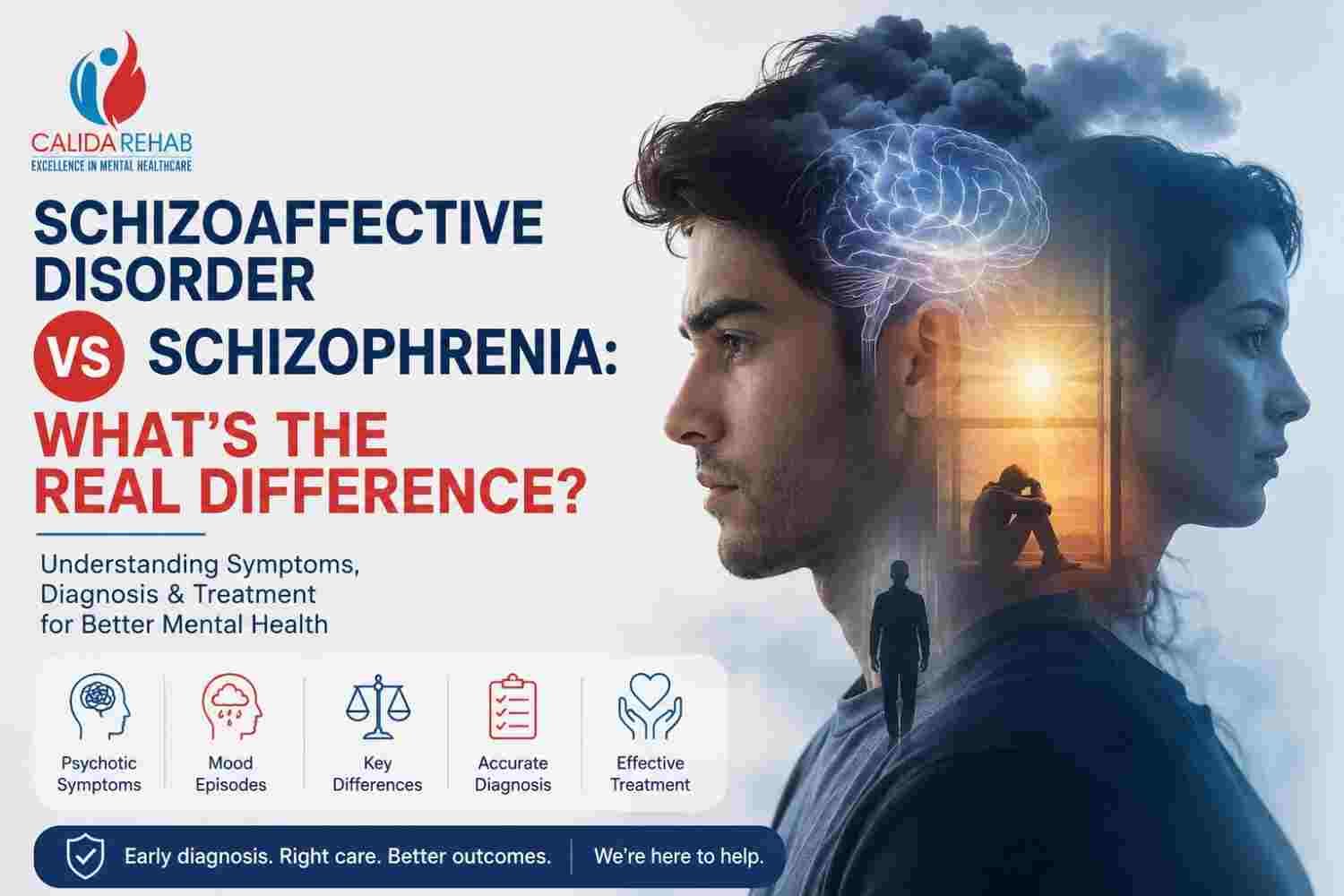

“Is it schizophrenia or something else?” is one of the most common questions families ask after a psychiatric evaluation. The two conditions share overlapping symptoms — hallucinations, delusions, disorganised thinking — which is exactly why schizoaffective disorder is so often confused with, or misdiagnosed as, schizophrenia.
Understanding the difference matters, because treatment approaches for the two conditions aren’t identical.
What Is Schizoaffective Disorder?
Schizoaffective disorder is a mental health condition that combines psychotic symptoms (like those seen in schizophrenia) with mood disorder symptoms (depression, mania, or both), according to Mayo Clinic.
There are two recognised types:
- Bipolar type — includes episodes of mania, and sometimes major depression, alongside psychotic symptoms
- Depressive type — includes only major depressive episodes alongside psychotic symptoms
If you’re trying to understand how mood symptoms present on their own, our guide on depression vs. bipolar disorder is a useful companion read.
Schizophrenia vs. Schizoaffective Disorder: The Core Difference
According to Cleveland Clinic, the distinction comes down to this:
- Schizophrenia involves hallucinations, delusions, and/or disorganised thinking — but without a significant, sustained mood component.
- Schizoaffective disorder involves those same psychotic symptoms plus episodes of depression, mania, or both.
Another key clinical distinction, per NCBI StatPearls: schizophrenia requires six months of prodromal or residual symptoms for diagnosis, while schizoaffective disorder does not require this duration criterion — the diagnosis instead hinges on the overlap and timing of mood and psychotic symptoms.
In simple terms — think of schizoaffective disorder as sitting at the intersection of a psychotic disorder and a mood disorder, rather than being a “mild version” of schizophrenia.
Common Symptoms of Schizoaffective Disorder
Psychotic symptoms (similar to schizophrenia):
- Hallucinations — hearing voices or seeing things that aren’t there
- Delusions — fixed false beliefs, even when shown clear evidence against them
- Disorganised thinking, speech, or behaviour
- Flat affect or reduced emotional expression
Mood symptoms:
- Depressive episodes — persistent sadness, loss of interest, low energy, hopelessness
- Manic episodes — elevated mood, high energy, impulsivity, reduced need for sleep
For a diagnosis, a person typically needs to experience an uninterrupted period of illness that includes a major mood episode occurring alongside psychotic symptoms, with psychotic symptoms also present for at least two weeks without a prominent mood episode at some point.
How Common Is Schizoaffective Disorder?
Schizoaffective disorder is diagnosed far less often than schizophrenia. Globally, roughly 1% of people are diagnosed with schizophrenia compared to approximately 0.3% with schizoaffective disorder. Onset typically occurs from the late teenage years through the early thirties.
Because mood and psychotic symptoms can appear together or at different times, and because the disorder is less common, it’s frequently under-recognised or initially misdiagnosed as either schizophrenia or a mood disorder alone — which is why a thorough psychiatric evaluation over time is so important.
Why an Accurate Diagnosis Matters
Treating schizoaffective disorder as “just schizophrenia” can mean the mood component — mania or depression — goes unaddressed, leading to incomplete symptom relief. Conversely, treating it as “just depression or bipolar disorder” can leave psychotic symptoms unmanaged, increasing risk during acute episodes.
An accurate diagnosis typically requires:
- A detailed psychiatric history, including the timeline of mood versus psychotic symptoms
- Ruling out substance-induced psychosis or other medical causes
- Observation over time, since schizoaffective disorder may run a unique course in each affected person
If you’re trying to understand psychotic symptoms on their own first, our guide on schizophrenia symptoms and prevention is a helpful starting point.
Treatment for Schizoaffective Disorder
There’s no cure, but with the right combination of care, most people manage symptoms and maintain a good quality of life:
- Antipsychotic medication to manage hallucinations, delusions, and disorganised thinking
- Mood stabilisers or antidepressants, depending on the bipolar or depressive subtype
- Individual and group psychotherapy to build coping skills and daily structure
- Family therapy and psychoeducation, since families are often the first to notice early warning signs
- Structured, residential care during acute episodes, when safety or daily functioning is significantly affected
At Calida Rehab, our psychiatric team in Pune, Mumbai, and Karjat provides comprehensive evaluation and personalised care for schizoaffective disorder — combining medication management, therapy, and a structured, supportive environment. Learn more about our approach to schizophrenia and related psychotic disorders, or explore our full range of psychiatric services on our About Us page.
Frequently Asked Questions
Is schizoaffective disorder a type of schizophrenia?
No. It’s a distinct diagnosis under the schizophrenia spectrum, but it specifically requires the presence of a significant mood episode (depression or mania) alongside psychotic symptoms — something not required for a schizophrenia diagnosis.
Can schizoaffective disorder be misdiagnosed as bipolar disorder?
Yes, particularly the bipolar type of schizoaffective disorder, since both involve manic episodes. The key differentiator is the presence of psychotic symptoms occurring independently of mood episodes for at least two weeks.
Is schizoaffective disorder more or less severe than schizophrenia?
Neither is inherently “more severe” — they’re different conditions. However, people with schizoaffective disorder are often described as more functional in day-to-day self-care and social interaction compared to those with schizophrenia, though this varies widely by individual.
What triggers a schizoaffective episode?
Common triggers include high stress, sleep disruption, substance use, and discontinuing medication. Identifying personal triggers is a key part of long-term management.
Can someone with schizoaffective disorder live independently?
With consistent treatment — medication, therapy, and a stable routine — many people with schizoaffective disorder are able to work, maintain relationships, and live independently.
If you or a loved one is experiencing a combination of mood changes and psychotic symptoms, don’t wait for a crisis to seek clarity. Calida Rehab’s psychiatric team offers confidential evaluation and personalised treatment across our Pune, Mumbai, and Karjat centres. Get in touch to book an assessment.