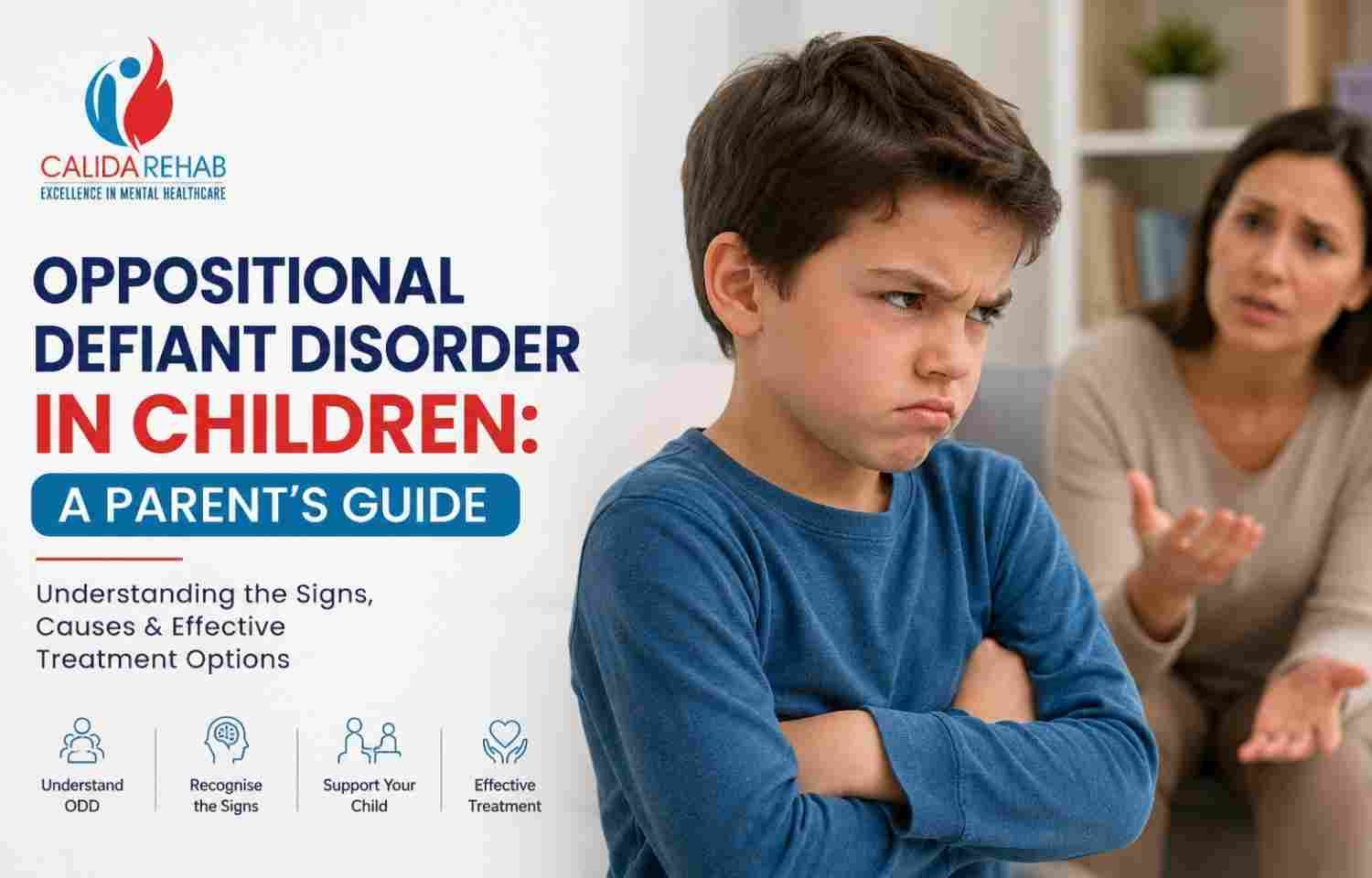

Every parent has dealt with a child who argues, refuses instructions, or throws a tantrum. Some defiance is a completely normal part of growing up — especially around ages two to three, and again in early adolescence. But when arguing, defiance, and anger become the default way a child interacts with adults, and it’s disrupting school, home, and friendships, it may be more than a “difficult phase.” It could be Oppositional Defiant Disorder (ODD).
What Is Oppositional Defiant Disorder?
According to the American Academy of Child and Adolescent Psychiatry (AACAP), ODD is an ongoing pattern of uncooperative, defiant, and hostile behaviour toward authority figures that seriously interferes with a child’s day-to-day functioning — at home, at school, or with peers.
The key word is pattern. A child having a bad day isn’t ODD. A child who is consistently, persistently oppositional in a way that’s out of step with other children of the same age — that’s when it becomes a clinical concern.
AACAP estimates that 1 to 16 percent of school-age children and adolescents have ODD, making it one of the more common reasons for referral to child mental health services.
Signs and Symptoms of ODD
Children with ODD typically show a mix of the following, most days, for at least six months:
- Frequent temper tantrums disproportionate to the situation
- Excessive arguing with adults, especially about rules
- Actively refusing to comply with requests or rules
- Deliberately annoying others or doing things to provoke a reaction
- Blaming others for their own mistakes or misbehaviour
- Easily annoyed or touchy, quick to anger
- Frequent anger and resentment
- Spiteful or vindictive behaviour
According to Cleveland Clinic, these symptoms often show up as anger, irritability, and vindictiveness — and while they can appear at home, school, or with peers, they’re often more pronounced in one setting than another (commonly, more intense at home with parents).
Is It ODD, or Just Normal Child Behaviour?
This is the question every parent needs answered first. Here’s a simple way to think about it:
| Typical childhood defiance | Possible ODD |
|---|---|
| Happens occasionally, often when tired, hungry, or overstimulated | Happens consistently, across settings, most days |
| Resolves with consistent, calm parenting | Persists despite consistent parenting approaches |
| Doesn’t significantly disrupt school or friendships | Causes real problems at school, with friends, or at home |
| Age-appropriate for toddlers or early teens | Stands out compared to same-age peers |
If the behaviour is frequent, intense, and clearly interfering with your child’s social, academic, or family life — not just occasionally frustrating — it’s worth a professional evaluation rather than assuming your child will “grow out of it.”
What Causes ODD?
There’s no single cause. AACAP notes that ODD likely results from a combination of factors:
- Biological — subtle differences in brain regions responsible for reasoning, judgment, and impulse control
- Psychological — children with ODD often misread neutral situations as hostile, and struggle to generate non-aggressive solutions to conflict
- Family history — ODD tends to occur more often in families with a history of ADHD, substance use disorders, or mood disorders like depression or bipolar disorder
- Environmental — inconsistent discipline, lack of structure, or limited parental supervision can contribute, though they’re rarely the sole cause
Importantly, ODD frequently occurs alongside other conditions — most commonly ADHD, but also learning disabilities, anxiety, and mood disorders. Treating only the ODD symptoms while ignoring a coexisting condition often limits progress, which is why a comprehensive evaluation is essential rather than addressing behaviour in isolation.
How ODD Affects Daily Life
Left unaddressed, ODD can quietly erode a child’s world:
- At school — frequent conflict with teachers, suspensions, falling grades
- At home — constant power struggles, strained sibling relationships, parental burnout
- With peers — difficulty maintaining friendships due to blame-shifting or provocative behaviour
- Long-term — AACAP notes that some children with ODD may go on to develop conduct disorder if left untreated, which involves more serious rule-breaking and aggressive behaviour
This progression isn’t inevitable — early intervention significantly reduces this risk.
How Oppositional Defiant Disorder Is Treated
The good news: ODD responds well to structured, evidence-based intervention, especially when started early. Common approaches include:
- Parent Management Training (PMT) — equips parents with consistent, structured strategies to respond to defiant behaviour without escalating conflict
- Social skills training — helps children build flexibility, problem-solving, and healthier ways to interpret social situations
- Individual therapy — including anger management and conflict resolution techniques tailored to the child’s age
- Family therapy — since ODD affects the whole household, not just the child
- Treating coexisting conditions — such as ADHD or anxiety, which can significantly improve ODD symptoms once addressed
If anger and irritability are a central concern, our guide on how to control anger issues offers practical strategies that complement professional treatment.
At Calida Rehab, our child and adolescent psychiatry services in Pune and Mumbai provide comprehensive evaluation for ODD and co-occurring conditions, along with family-inclusive treatment plans designed around your child’s specific needs — not a one-size-fits-all approach.
When to See a Child Psychiatrist
Consider a professional evaluation if you notice, over six months or more:
- Frequent, disproportionate anger or tantrums for your child’s age
- Constant arguing or refusal with authority figures at home and school
- Your child blaming others and rarely taking responsibility
- Deliberately provoking or annoying siblings, classmates, or adults
- Escalating conflict despite consistent, calm parenting on your part
Early evaluation isn’t about labelling your child — it’s about understanding what’s driving the behaviour and getting the right support before patterns become harder to shift.
Frequently Asked Questions
Will my child outgrow Oppositional Defiant Disorder?
Some children improve with consistent parenting strategies and maturity, but ODD doesn’t reliably resolve on its own, especially when it’s frequent and severe. Professional support significantly improves long-term outcomes.
Is ODD the same as ADHD?
No, though they frequently occur together. ADHD involves inattention, hyperactivity, and impulsivity, while ODD is specifically about a pattern of defiant, hostile behaviour toward authority. A child can have one, both, or neither.
Does ODD mean my child will develop conduct disorder?
Not necessarily. While some children with untreated ODD go on to develop conduct disorder, early intervention substantially reduces this risk.
What’s the difference between strict parenting and effective ODD management?
Strict, inconsistent, or purely punitive approaches often worsen ODD symptoms. Effective management relies on consistency, clear expectations, and specific behavioural techniques — often best learned through parent management training with a professional.
At what age can ODD be diagnosed?
ODD can be identified as early as preschool age, though it’s most commonly diagnosed and treated during the school-age years, when the behavioural pattern becomes clearer against same-age peers.
If your child’s defiance feels like more than a phase, you don’t have to navigate it alone. Calida Rehab’s child and adolescent psychiatry team in Pune and Mumbai offers confidential evaluations and family-centred treatment plans. Reach out to schedule a consultation.