

Depression is one of the most misunderstood barriers to academic success. When you’re dealing with it, even the most basic tasks like getting out of bed, responding to a text, or pouring a cup of tea might feel like climbing a mountain.
So when people say “just focus” or “push through it,” they don’t know what they’re asking. How to get motivated to study when depressed is a serious subject that deserves an honest answer. So let’s talk more about it.
Whether you are a high school student, a university undergraduate, or someone studying while juggling work and personal responsibilities, in this blog, we will talk about what depression does to your brain. We will also understand how motivation fades, and, most importantly, what you can do about it in the long run.
Understanding the Side Effects of Depression on Your Brain
Depression is not synonymous with sadness. It is a neurological and chemical condition that directly damages brain regions responsible for motivation, focus, memory, and decision-making.
When you are depressed, your brain produces less dopamine, which is the neurotransmitter closely associated with motivation, reward, and pleasure. This means that even if you understand you need to study, your brain does not provide enough motivation. There is no excitement, no sense of satisfaction when you finish anything, and no drive to start.
Depression also reduces activity in the prefrontal cortex, which regulates planning, concentration, and working memory. This is why cognitive fog – that thick, murky feeling you get after reading the same text five times and still not understanding it- is so common among people who are trying to study while sad. It’s not that you’ve lost intelligence. It’s just that your brain is operating under extremely difficult conditions.
Moreover, sleep problems, hunger swings, and the chronic presence of negative self-talk all have an impact. An inner critic running in the background, telling you that you are silly, that you will fail, that it is pointless – all of this cuts off the mental energy needed for learning. Understanding these mechanisms is the first step, since it eliminates self-blame and reframes your problems as symptoms to manage rather than personal failures to overcome via willpower.
Why is Motivation the Wrong Goal?
Here’s an unusual but important fact: waiting to be inspired before studying is one of the worst mistakes you can make when depressed. Motivation does not occur first, followed by action. The majority of those suffering from depression feel the opposite. First, take action, however small, and then seek inspiration.
This is the most important concept of behavioural activation and one of the most empirically supported strategies in cognitive behavioural therapy (CBT) for depression.
The idea is simple. You don’t wait till you feel ready. You take the smallest possible step, and the sense of accomplishment, no matter how small, progressively resets your brain’s reward system.
So, instead of asking “how do I feel motivated to study,” a better question might be “what is the smallest action I can take right now?” This frame tweak changes everything.
Practical Strategies for Studying While Depressed
- Begin embarrassingly small.
Seriously, smaller than you believe is required. Do not sit down and plan to study for three hours. Open your notebook. Read one page. Highlight one paragraph. Five minutes of true engagement with your content is far more important than two hours of looking at your screen and hating yourself.
- Follow the two-minute rule.
If a study task can be completed in two minutes or less, begin it immediately. Not the entire task, just the beginning. Open the document. Write the opening sentence. Bring up the lecture recording. The beginning is almost always the most difficult portion. Once you’re moving, it’s slightly easier to keep going.
- Work with your energy rather than against it.
Depression interrupts your natural energy patterns, but you probably still have one or two hours every day when you feel slightly better than the rest. Pay attention to when those windows are open.
For some, it is mid-morning after coffee, while for others, it is late evening. Reserve those hours for the most strenuous study assignments. Use lower-energy periods for passive studying, such as listening to recorded lectures or rereading notes.
- Try body doubling.
This is one of the most underrated strategies for people who struggle with motivation. Body doubling simply means studying alongside another person. They can be a friend, a classmate, or even a stranger in a library or café.
The presence of another human being creates a kind of gentle social accountability that makes it easier to stay focused. If you cannot meet someone in person, video calls work surprisingly well, too. You will be surprised to know that there are many online communities built entirely around body doubling just to get motivated to study.
- Write everything down.
Depression greatly impairs working memory. Trying to keep your work list, priorities, and to-dos straight while dealing with cognitive fog can be overwhelming. So what’s the solution? Get everything out of your head and on paper.
A basic handwritten list of three items to achieve during a session is sufficient. Cross them off as you go. Crossing something off gives your brain a modest but real dopamine jolt, which is just what it needs.
- Move your body before you open your books.
Exercise is one of the most well-supported treatments for depression. Even a ten-minute walk before a study session boosts blood flow to the brain.
This causes the production of brain-derived neurotrophic factor (BDNF) and results in a tiny but significant increase in dopamine and serotonin. You do not have to go to the gym.
A quick walk around the block can help make the next hour of studying feel more manageable.
- Connect your studies to something important to you.
When sadness takes away pleasure and significance, academic work can seem entirely meaningless. One method to fight this is to intentionally link studies to a deeper personal value.
Why did you select this subject? Who do you hope to become? What does completing this course make possible? You don’t need to be inspired; all you need to do is locate a thread of meaning, no matter how thin, and hang onto it when the work seems impossible.
- Reward yourself consistently.
Give yourself a treat that you enjoy after each study session, no matter how small it is. Not a prize always, but something substantial. A favourite dinner, an episode of your favourite show, time spent outside, music, and a nap. Your brain needs to understand that studying is followed by something enjoyable. Over time, this helps to repair the motivational circuitry that depression has disturbed.
Creating a Study Environment That Helps With Depression
Your physical surroundings have a surprising impact on your capacity to study while depressed. When motivation is already low, minimising friction in your environment can mean the difference between opening your books or not.
Natural lighting is extremely significant. Depression is strongly linked to abnormalities in circadian rhythm, and exposure to daylight, particularly in the morning, helps restore your body clock. It suppresses melatonin and boosts mood and alertness. If you are studying indoors, sit near a window.
Maintain as much consistency and cleanliness as possible in your study place. A specialised space teaches your brain to identify that setting with concentration rather than relaxation or enjoyment.
Place your phone in another room or use an app-blocking program during study sessions. Notifications are kryptonite for a brain that is already trying hard to concentrate.
A cool room temperature, between 18 and 20 degrees Celsius, promotes alertness. Stay hydrated. These may appear basic, but they are the types of things that are frequently overlooked when you are sad and struggle to care for yourself, and they do make a significant impact on cognitive performance.
Why Choose Calida Rehab?
If depression is interfering with your ability to study, work, maintain relationships, or simply get through the day, seeking professional help is important. Calida Rehab is a specialised mental health and rehabilitation centre serving in Mumbai and Pune with 170+ bed capacity and 5+ years of experience that understands the specific relationship between academic pressure and depression.
Their team of professional psychiatrists, clinical psychologists, and counsellors collaborates to provide holistic, evidence-based treatment plans that are individualised to each client.
Rather than providing a one-size-fits-all solution, Calida Rehab takes the time to identify the underlying causes of your depression. Their residential and outpatient programs ensure that expert assistance is available whether you require intensive, structured treatment or a consistent therapeutic foundation while studying.
What actually distinguishes Calida Rehab is that their student-centred mental health programs offer not only therapy but also practical aid with academic performance, time management, and reestablishing daily order.
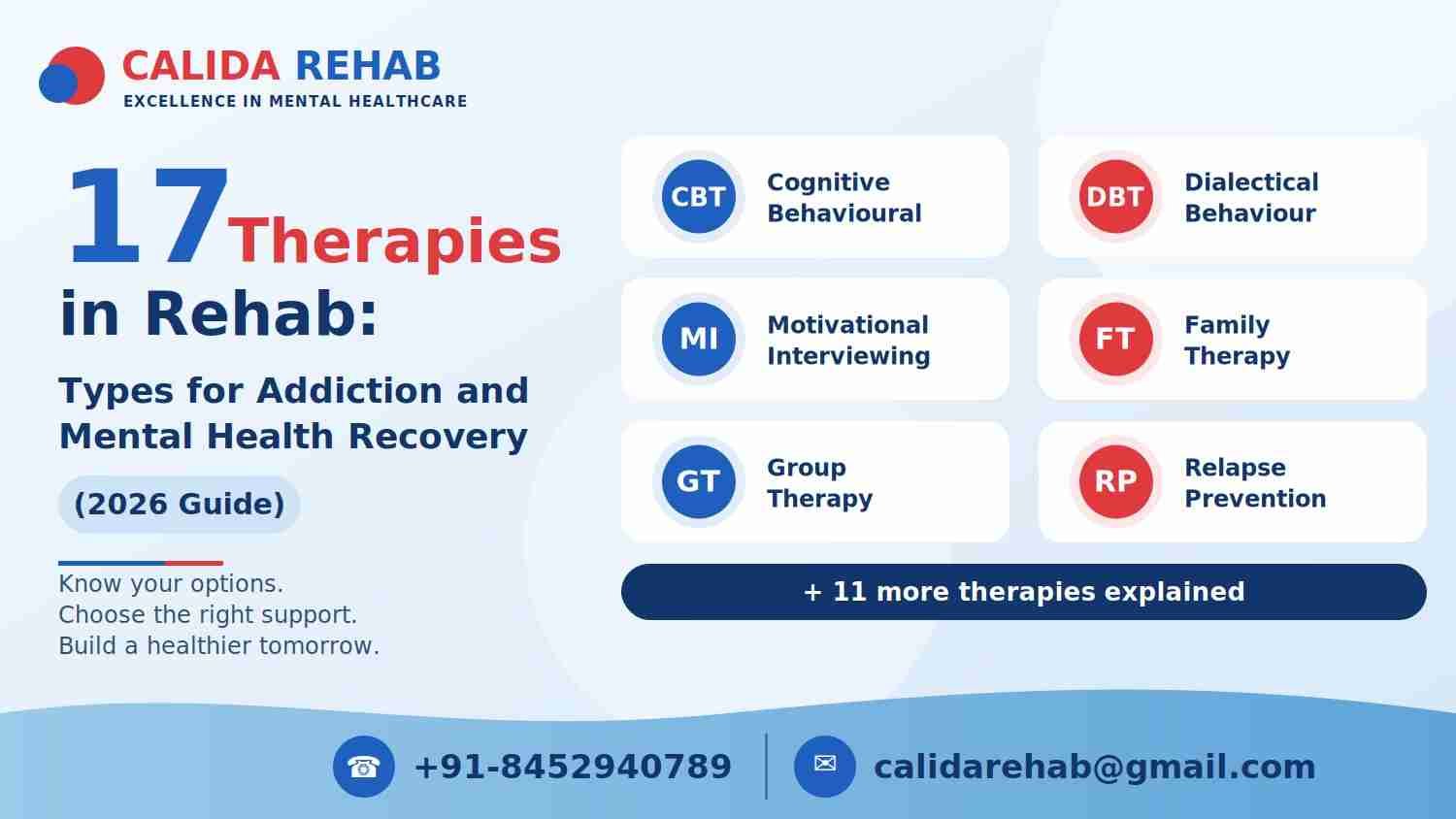
Calida Rehab’s clinicians are trained in CBT, DBT, and MBCT, which are three of the most thoroughly validated depression therapy approaches. Peer support groups and family involvement options guarantee that healing occurs in a community rather than in solitude.
If you are struggling to perform academically because of depression, Calida Rehab provides a caring, discreet, and therapeutically rigorous environment in which you can begin to reclaim your well-being and ability to study.
Conclusion
Understanding how to get inspired to study when you’re depressed starts with comprehending that motivation isn’t a switch that can be flicked with effort or discipline. Depression is a medical condition that disrupts the brain’s processes that regulate motivation and concentration.
The strategies in this blog, starting small, working with your energy, exercising your body, designing your environment, and getting help, are not quick fixes, but they are real, evidence-based steps that can dramatically improve your ability to continue academically as you heal.
Most essential, do not try to accomplish this alone. Whether it’s talking to a university counsellor, relying on a trusted friend, or visiting a specialist clinic like Calida Rehab, professional treatment speeds up recovery in ways that self-help methods cannot. Depression is treatable, motivation may be regained, and academic goals can still be achieved – one small, honest step at a time.
Frequently Asked Questions(FAQs) Answered
Absolutely. Loss of motivation is a major sign of depression. It is a physiological issue, not a character flaw.
Clinical evidence supports small actions even without motivation. But forcing too hard is not recommended.
Yes. Exercise improves mood, focus, and memory, making studying easier.
If symptoms last more than 2 weeks or affect daily life, seek professional help immediately.