An addiction emergency rarely gives a warning. A person who has been drinking or using drugs stops responding, has a fit, or becomes confused and terrified in the middle of the night. Families often lose precious time deciding whether this is serious enough for a hospital.
This guide gives you a simple rule to follow: when the signs below appear, treat it as a medical emergency first. It explains the warning signs of overdose, seizures and severe withdrawal, what you can safely do while help is on the way, and where rehab fits in once the person is stable.
- cannot be woken, or is barely responding
- is breathing very slowly, noisily or not at all, or has blue or grey lips
- is having a seizure (fit), or has had one and is not waking up
- is confused, seeing things that are not there, shaking badly, or has a high fever after stopping alcohol or sedatives
- has chest pain, is vomiting blood, or has taken a large amount of something and you do not know what
- talks about ending their life or has harmed themselves
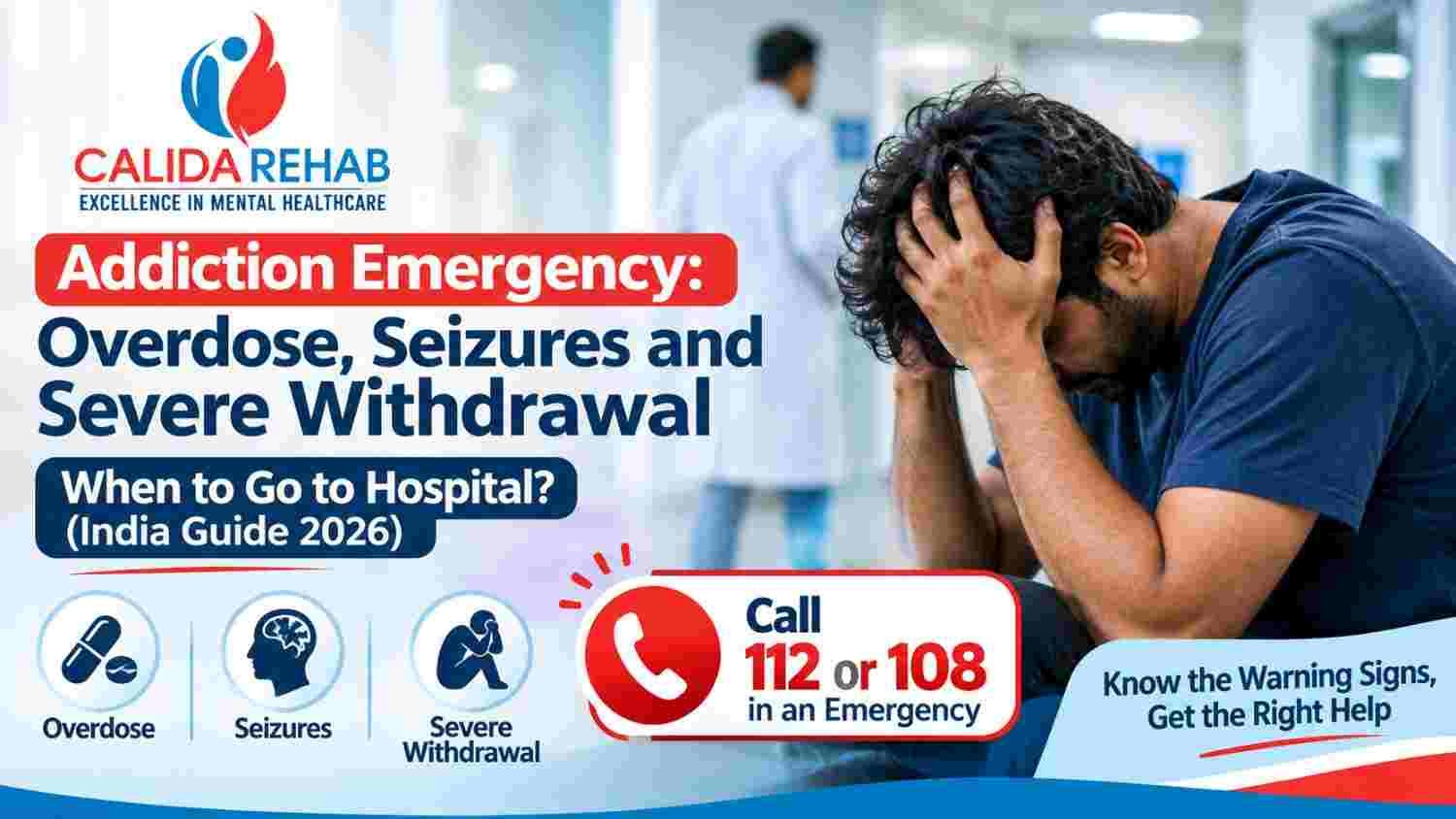
112 is the national emergency number and 108 is the ambulance service in Maharashtra. Do not wait for symptoms to “settle” and do not drive them to a rehab centre first.
Which situations need a hospital, and which can wait
Not every difficult moment in addiction is a life-threatening one. Use this as a quick sorting guide, and when in doubt, choose the higher level of care.
Go to hospital now
- Unresponsive or slow breathing
- Seizure or repeated fits
- Hallucinations, severe confusion or very high fever after stopping alcohol
- Suspected overdose of any drug or tablets
- Mixed alcohol with opioids or sedatives and now very drowsy
- Suicidal behaviour or self-harm
See a doctor the same day
- Heavy drinker or regular sedative user who wants to stop
- Tremors, sweating and vomiting after the last drink
- Repeated vomiting or diarrhoea during opioid withdrawal
- Cannot eat, drink or sleep for more than a day
- Withdrawal that is getting worse, not better
Plan treatment this week
- Cravings and loss of control, but medically stable
- Repeated relapses after trying to stop alone
- Family wants to arrange admission
- Need an assessment and a treatment plan
Overdose: warning signs and what to do
An overdose means the body has taken more of a substance than it can handle. It can happen with a single large dose, with a normal dose after a period of abstinence when tolerance has dropped, or when substances are mixed. Alcohol combined with opioids, sleeping pills or anti-anxiety tablets is especially dangerous because each one slows breathing.
Opioids: brown sugar, heroin, tramadol, codeine syrup and painkillers
- Very small (pinpoint) pupils
- Extreme drowsiness, cannot be woken by shouting or shaking
- Slow, shallow or stopped breathing; gurgling or snoring sounds
- Blue or grey lips and fingertips, cold clammy skin
Alcohol poisoning
- Confusion, stupor or passing out
- Repeated vomiting while drowsy, with a risk of choking
- Slow or irregular breathing, cold, pale or bluish skin
- A seizure
Stimulants: MD (mephedrone), cocaine and similar drugs
- Chest pain, racing or irregular heartbeat
- Very high body temperature, heavy sweating, severe agitation
- Seizures, panic, paranoia or hallucinations
- Severe headache, collapse or sudden weakness on one side
Sedatives: sleeping pills and benzodiazepines
- Heavy sleepiness, slurred speech, unsteady or no response
- Slow breathing, especially when taken with alcohol or opioids
What to do while help is on the way
- CallCall 112 or 108 straight away and put the phone on speaker.
- StayDo not leave the person alone, even if they seem to improve.
- PositionIf they are breathing but not awake, roll them onto their side so they cannot choke on vomit.
- BreathingIf they stop breathing and you are trained, begin CPR. The operator can guide you.
- InformationTell responders what was taken, how much and when. Keep strips, bottles and packets.
What not to do
- Do not let them “sleep it off”. Someone who cannot be woken needs a doctor.
- Do not induce vomiting, or give food, coffee, milk or water to a drowsy person.
- Do not use a cold shower, slap them or walk them around as a treatment.
- Do not give more medicines, or any alcohol, to “balance” the effect.
- Do not delay out of fear of police or social stigma. A hospital is a medical setting, and saving a life comes first.
A note on naloxone
Naloxone is a medicine that can reverse the effect of an opioid overdose, and it is given by emergency teams and hospitals. Its availability outside hospitals in India is limited, so do not rely on having it at home. Even when naloxone works, its effect can wear off before the opioid does, so the person still needs hospital observation.
Seizures in addiction
Seizures linked to substance use are common in the first one to two days after someone stops drinking heavily. They can also happen with sudden stopping of benzodiazepines, after tramadol use, and after overdose of stimulants. Every seizure in this setting needs medical assessment, because it can be a sign that more serious withdrawal is coming.
- Note the time the seizure starts.
- Move hard or sharp objects away and cushion the head.
- Loosen tight clothing around the neck.
- When the jerking stops, turn the person onto their side.
- Never put anything in their mouth and never hold them down.
- Call 112 or 108 for any seizure in a person who has been drinking or using, and especially if it lasts more than five minutes, repeats, or the person does not wake up afterwards.
Severe alcohol withdrawal and delirium tremens
For a person who drinks heavily every day, stopping suddenly can be dangerous. Withdrawal usually begins within hours of the last drink, with tremors, sweating, nausea, anxiety and a racing heart. In some people it progresses to seizures, usually in the first one to two days, and then to delirium tremens (DTs), usually two to four days after the last drink, although timing varies.
- Severe confusion and disorientation
- Seeing, hearing or feeling things that are not there
- Strong tremors, fever and heavy sweating
- Fast heartbeat and agitation or aggression
- Not recognising familiar people or place
DTs can be life-threatening and need hospital care. This is why heavy or long-term drinkers should not attempt to quit suddenly at home without medical advice. Our guides on alcohol withdrawal symptoms and stages of alcoholism and delirium tremens explain the timeline in more detail.
Withdrawal from sedatives and opioids
Benzodiazepines and sleeping pills. Stopping these suddenly after long use can cause seizures, severe anxiety and confusion. They should only be reduced gradually under a doctor’s supervision.
Opioids. Opioid withdrawal is intensely uncomfortable, with vomiting, diarrhoea, aches and restlessness, but it is less often life-threatening on its own. The risk comes from dehydration and from relapse after detox: tolerance falls quickly, so a return to the old dose can cause an overdose. See a doctor if the person cannot keep fluids down, is very weak or faint, or has a heart condition.
When the emergency is about suicide or self-harm
Intoxication and withdrawal can intensify hopelessness and impulsive behaviour. If the person talks about ending their life, has harmed themselves or is in immediate danger, call 112, stay with them and keep medicines, sharp objects and other means out of reach. You can also call Tele-MANAS, the free national mental health helpline, on 14416 (24/7).
Why the hospital comes first, and rehab comes next
A rehab centre is not an emergency department. Calida Rehab is a registered psychiatric hospital that admits urgent psychiatric cases, such as people at risk of suicide or self-harm and acute psychotic episodes, but it is not equipped to manage severe medical emergencies such as seizures or overdose. Those need a hospital emergency department.
Once the person is medically stable, the next step is treatment that addresses the cause. At our rehabilitation centre in Mumbai, assessment and admission planning take place in Colaba and residential care in Karjat is run under psychiatrist supervision. Families in Pune can read about our rehabilitation centre in Pune. Both help you plan a safe detox, therapy and aftercare so that the emergency does not repeat.
What to carry to the emergency department
- The substance, strips, bottles or packets, or a photo of them
- Time of the last drink, tablet or dose, and the approximate quantity
- Any regular medicines and known medical conditions
- An ID and a family member who can give the history
- A phone with the charger
After the emergency: practical next steps
- Ask the hospital team what the person needs next, and whether they are fit for a de-addiction programme.
- Do not send them straight home to the same situation. Plan supervised detox and follow-up.
- Read how to choose a rehabilitation centre in Mumbai and verify that a centre is licensed before admission.
- Learn what the first week of rehab looks like so the family knows what to expect.
- Speak to a team that can assess the person in confidence. You can call +91 84529 40789 or visit the contact page.
Frequently asked questions
What counts as an addiction emergency?
Any situation where breathing, consciousness or safety is at risk: an unresponsive person, slow or noisy breathing, a seizure, severe confusion or hallucinations after stopping alcohol, a suspected overdose, or suicidal behaviour. In these situations call 112 or 108 and go to a hospital emergency department.
Should I take someone to rehab or to hospital during an overdose?
Hospital. An overdose or seizure is a medical emergency that needs an emergency department. Rehab is the next step, after the person is stable.
Is it safe to stop drinking suddenly at home?
Not for everyone. People who drink heavily every day can develop seizures or delirium tremens when they stop suddenly. They should speak to a doctor before stopping, and anyone who develops confusion, hallucinations or seizures needs hospital care.
How long after the last drink can a withdrawal seizure happen?
Seizures usually occur within the first 6 to 48 hours after the last drink in a person who is alcohol dependent. Delirium tremens typically appears two to four days after the last drink, although timing differs from person to person.
Will the hospital call the police if I bring someone in after drug use?
A hospital is a medical setting, and the first priority is treating the person. Rules can vary by situation, so if you are worried about a legal issue, speak to a lawyer, but do not let that fear delay emergency care.
Can someone overdose after rehab or detox?
Yes. After a period without the drug, tolerance drops. A return to the old dose can cause an overdose, which is why aftercare, relapse prevention and medical follow-up matter.
What should I do if I am not sure whether it is serious?
Treat it as serious. Call 112 or 108, or take the person to the nearest hospital. You can always stand down if it turns out to be minor.
Related reading
- Alcohol withdrawal symptoms: timeline, dangers and safe treatment
- Stages of alcoholism and delirium tremens
- How to stop drinking alcohol: a safe, doctor-guided plan
- Opioid addiction: signs, withdrawal and treatment
- What is brown sugar drug? Effects, withdrawal and treatment
- Rehab vs psychiatric hospital: which one do you need?
- Rehabilitation centre in Mumbai: treatment, programmes and admission
- Rehabilitation centre in Pune: treatment, programmes and admission
Sources and editorial note
Medical references: WHO, Opioid overdose fact sheet; MedlinePlus, Alcohol withdrawal. Mental health helpline: Tele-MANAS, Government of India.
This article is for general information. It is not a substitute for emergency care or medical advice. If someone is in danger, call 112 or 108 immediately.
Published by Calida Rehab, which runs centres registered with the Maharashtra State Mental Health Authority in Karjat (serving Mumbai) and Pune. Last updated 6 November 2026.