

Depression is a serious mood disorder wherein people are persistently sad, lose interest in activities and in severe cases lose hope and may have active or passive suicidal thoughts. As per the World Health Organization(WHO), depression affects millions of people every year worldwide.
Now, where do antidepressants come into the picture? Antidepressants or medicine for depression work by balancing the chemicals in the brain to help with the symptoms of depression, anxiety and related disorders. These medicines are taken by many people as part of their treatment plans. However, it is important to know the long-term side effects of depression tablets on health before incorporating them into the treatment plan.
Chemical messengers like serotonin, norepinephrine and dopamine are important in mood control, and antidepressants work by changing the amount of these neurotransmitters. Since these tablets have an impact on several body parts simultaneously, their impact is rarely confined to just the mood. The side effects of antidepressants can range from minor to major depending upon the age, dosage, medication and individual’s overall health.
In this blog, we will talk about the different types of antidepressants available and their side effects, the long-term risks, as well as the importance of professional rehab and safe withdrawal. Let’s get started.
Long-Term Health Effects of Antidepressants
Most antidepressants are considered safe for long-term use when taken under medical supervision. While the short-term effects of depression tablets on health are well understood, long-term use may be associated with certain side effects that vary depending on the medication and the individual. Some of these include:
- Effects on the brain and mental health
Long-term usage can change the brain’s neuroplasticity and neurotransmitter sensitivity.
Prolonged use of SSRIs leads to:
- Emotional anaesthesia: A dulling of feeling, both positive and negative feelings, motivation and empathy.
- Tolerance: When the medicine loses its effectiveness over time also called tachyphylaxis.
- Dependency: The brain may become reliant on the medication to maintain the serotonin balance.
- Cognitive Side Effects: This includes reduced concentration and focus in some individuals.
- Metabolic and Weight-Related Effects
A lot of antidepressant tablets result in weight gain in the long run, which increases the risk of:
- Type 2 Diabetes
- Metabolic Syndrome
- Increase in cholesterol and triglyceride levels
- Non alcoholic fatty liver disease
Mirtazapine and TCAs are linked to considerable weight gain. Even SSSRIs, which rarely affect weight in the short term, can cause significant weight gain over a year or more with long-term use.
- Hormonal Disruption and Sexual Health
Sexual dysfunction is the most frequently reported side effect of depression tablet on health. The long-term effects include:
- Reduced libido
- Anorgasima: Difficulty experiencing orgasm
- Erectile dysfunction in men
- PSSD: It is a disorder where sexual dysfunction persists even after quitting the medication
While PSSD(Post-SSRI Sexual Dysfunction) is still under research, it is recognised by the EMA (European Medicines Agency) and can affect relationships and psychology.
- Overall Bone Health and Density
Long-term use of SSRIs can reportedly cause reduced bone mineral density. The neurotransmitter serotonin regulates the bone-building cells called osteoblasts; thus, long-term usage of antidepressants may decrease bone growth, which can increase the risk of osteoporosis and bone fractures, particularly in elderly people.
- Gastrointestinal Complications
The human stomach contains a significant amount of serotonin receptors, making it extremely vulnerable to the side effects of antidepressants. Some of the major side effects include:
- Chronic nausea
- Gastrointestinal bleeding, especially when taken with NSAIDs
- Effect on mood and immunity due to a change in the composition of microbiota
- Hyponatraemia, which is reduced salt levels, mostly in elderly people using SSRIs
- Discontinuation Syndrome
The most serious health impact is the difficulty in discontinuing antidepressants safely. This can develop when the tablets are abruptly stopped or lowered without proper medical advice and counselling. Symptoms include:
- Electric shock sensations
- Serious anxiety and irritation
- Chills, Muscular aches and flu-like symptoms
- Insomnia, lucid dreams
- Suicidal ideation in some circumstances
Some estimates suggest that up to 56% of people face discontinuation syndrome. It emphasises the need for medically supervised tapering rather than sudden discontinuation.
What are the different types of antidepressants available in the market
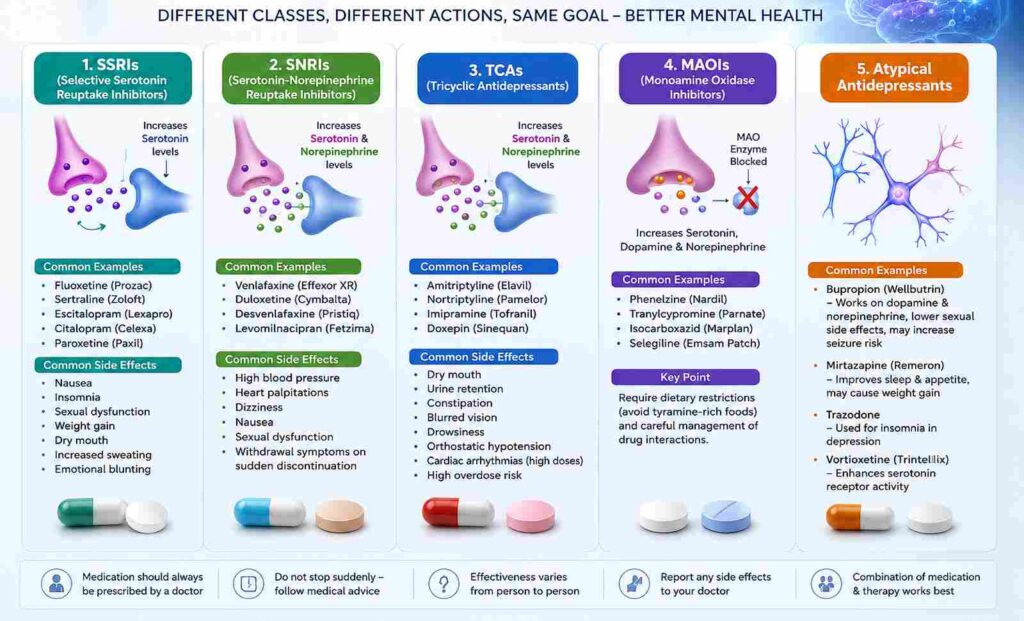
Different antidepressants have different mechanisms of action, efficacy, and side effects. A prescribing physician chooses the right medication based on the patient’s symptoms, medical history, and drug interactions. Now, let’s begin by looking at the main categories of antidepressants used in treatment today.
- Selective Serotonin Reuptake Inhibitors (SSRIs)
These are often the first line of antidepressants in the treatment of depression. They work by inhibiting the serotonin absorption in the brain, thus increasing the serotonin in the synapses between the nerve cells.
Common SRRIs are:
- Fluoxetine (Prozac)
- Zoloft (Sertaline)
- Lexapro (Escitalopram)
- Citalopram (Celaxa)
- Paxil (Paroxentine)
SSRI depression tablets side effects are nausea, insomnia, sexual dysfunction, weight gain, dryness in the mouth and increased sweating. Some patients also experience emotional blunting, which means feeling less capable of experiencing positive and negative emotions.
- Serotonin-Norepinephrine Reuptake Inhibitors (SNRIs)
These work like SSRIs, but also act on norepinephrine. They are mainly used when SSRIs do not work, and depression coexists with chronic pain disorders.
Common SNRIs are:
- Effexor XR (Venlafaxine)
- Cymbalta (Duloxetine)
- Pristiq (Desvenlafaxine)
- Fetzima (Levomilnacipran)
Side effects are high blood pressure, heart palpitations, dizziness, nausea and sexual dysfunction. Sudden discontinuation can also cause discontinuation syndrome and lead to various withdrawal symptoms.
- Tricyclic Antidepressants (TCAs)
Tricyclics are an older family of antidepressants which have been mostly replaced by SSRIs due to their higher side effects. However, these are still effective for treatment-resistant chronic pain disorders and depression.
Common TCas are:
- Elavil (Amitriptyline)
- Pamelor (Nortriptyline)
- Tofranil (Imipramine)
- Doxepin (Sinequan)
TCA depression tablets side effects include anticholinergic symptoms like dry mouth, urine retention, constipation, impaired vision, drowsiness, orthostatic hypotension, and severe cardiac arrhythmias at higher doses. The overdose risk with TCAs is much higher than that of the newer antidepressants.
- Monoamine Oxidase Inhibitors (MAOIs)
These are the oldest class of antidepressants, and they work by blocking the monoamine oxidase enzyme, which degrades neurotransmitters such as serotonin, dopamine and norepinephrine. Due to the dangers of interactions with foods containing tyramine and other drugs, MAOIs are only used when other treatments fail.
Common MAOIs are:
- Nardil (Phenelzine)
- Parnate (Tranylcypromine)
- Marplan (Isocarboxazid)
- Emsam, Transdermal Patch (Selegiline)
- Atypical Antidepressants
This group of antidepressants does not fit well into other groups but targets several neurotransmitter systems.
Remarkable instances are:
- Wellbutrin (Bupropion): It works on dopamine and norepinephrine, reduces sexual side effects, but increases the risk of seizures.
- Remeron (Mirtazapine): It improves sleep and appetite, but its frequency causes weight gain.
- Trazodone: It is generally used for insomnia caused by depression.
- Trinetellix (Vortioxetine): It is a newer SSRI with an increase in serotonin receptor activity.
How Rehabilitation Can Help?
Many people who have been on antidepressants for a long time often find it difficult to withdraw due to the dangers of withdrawal symptoms and relapse. This is where rehabilitation comes into the picture.
Rehabilitation techniques by expert consultants and specialists can help in reducing medication usage while managing serious health impacts and addressing psychological and behavioural problems caused by these drugs. These programs are typically organised, evidence-based, and tailored to individual needs, making them an effective part of long-term care.
- Medically supervised Tapering and Withdrawing
Calida Rehab’s clinical team offers medically reducing strategies to reduce the dangers of relapse and withdrawal symptoms. These strategies are personalised and adapted to the individual.
Instead of using a one-size-fits-all strategy, our doctors create a special program for every individual based on antidepressant type, age, medical history, duration of use and dosage. This intense monitoring can help prevent the detrimental symptoms of withdrawal and ensure that the patient feels safe and supported at all times.
- Holistic Mental Health Treatment
Antidepressants treat symptoms and not the cause of depression. Rehabilitation at Calida covers the entire picture of a person’s mental health through various ways, such as:
- CBT: Also known as Cognitive Behavioural Therapy, to challenge negative thoughts and establishing coping mechanisms.
- MBCT: Also known as Mindfulness-Based Cognitive Therapy, which is used to reduce depression recurrence.
- Psychodynamic Treatment: This treatment includes analysing the root cause of depression
- Group Therapy: In this, people feel less isolated, and it helps in reducing depression through building peer-to-peer connections and lessening the isolation that actually causes depression
- Trauma-informed care: This includes treating the root cause of depression, which causes trauma, resulting in such symptoms.
- Nutritional and lifestyle Rehab
Long-term use of antidepressants has an impact on the metabolic health of the body. Our integrated wellness program includes nutritional counselling to address weight gain and strategies to restore gut health, planned and structured physical activities as exercise is clinically proven to reduce depressive symptoms, a sleep regimen to combat insomnia and fatigue caused by both depression and its medication.
- Antidepressant Dependancy
Although antidepressants are not considered addictive, psychological and physiological dependence can occur in certain individuals. Rehab helps people develop alternative coping methods and gain control of their own emotions without depending on such depression reducing tablets.
- Relapse Prevention and Aftercare
At Calida Rehab, individuals are provided with aftercare planning as depression is highly recurrent. The planning includes the following points:
- Ongoing outpatient therapy sessions
- Peer mentoring and support groups
- Management plan for a crisis
- Family therapy and family education
- Regular monitoring of mental and physical health indicators
Bottom Line
If you are someone who is dealing with the consequences of antidepressant usage, difficulties of depression, or know someone who does, Calida Rehab provides compassionate and clinically led rehabilitation that is personalised for every individual and helps target your specific requirements.
Common Questions Answered
The most prevalent depression tablets side effects are nausea, headaches, insomnia, dry mouth, increased sweating, changes in weight, lower libido and difficulty in attaining orgasm. However, side effects like weight changes and sexual dysfunction can become prolonged or worsen with continuous usage. It is usually advised to discuss this with your prescribing doctor in case of an emergency or worsening condition.
Antidepressants are not typically addictive, so they won’t give euphoric or drug-seeking behaviour the way opioids do. But they can lead to physical dependence, meaning the body may rely on the medication to help regulate neurotransmitters. Therefore, antidepressants should always be taken under the guidance of a licensed physician.
In mild cases like nausea and headaches, it usually subsides within 2–4 weeks of starting the treatment. In more lasting adverse effects like sexual dysfunction, weight gain and emotional blunting, it can last throughout the treatment and sometimes after the course is over as well. In case of PSSD (Post-SSRI Sexual Dysfunction), side effects can last for months if not years, even after the medication is withdrawn.