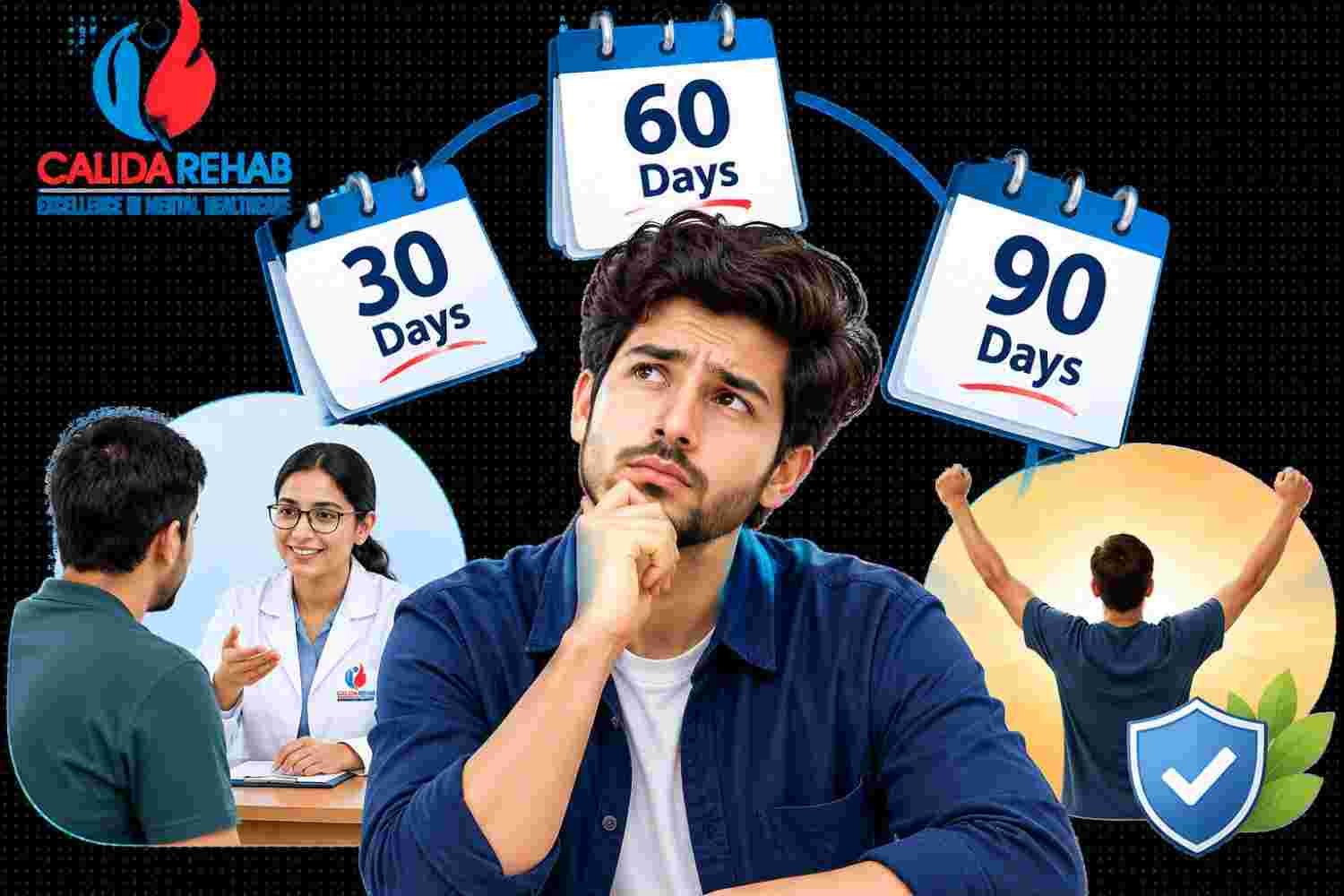

One of the first questions families ask us is how long rehab should last. The choices on offer are usually 30, 60 or 90 days, and the difference in price and time away from home can feel large. It is natural to want the shortest option that works.
The honest answer is that the right length depends on the person, the substance, the history and the home environment, and it should be decided after a clinical assessment, not from a price list. This guide explains what each stage usually covers, who each suits, and how to decide with a doctor. It sits alongside our main page on rehabilitation in Mumbai, which describes our levels of care.
30 days is often enough for detox, stabilisation and a first set of coping skills, and can suit a first attempt with a shorter history of use. 60 days gives more time to practise skills and repair relationships. 90 days or longer is generally recommended for long-standing or severe addiction, repeated relapse, or addiction together with another mental health condition.
Research from national addiction agencies suggests that treatment of less than about 90 days tends to be of limited effectiveness for many people, and that longer engagement usually does better. A doctor should set your length after assessment.
30, 60 and 90 days at a glance
30 days
Focus: safe detox, medical stabilisation, first skills
- Assessment and treatment plan
- Medical detox where needed
- Counselling and psychoeducation begins
- Aftercare plan for going home
60 days
Focus: skills practice and family work
- Everything in 30 days
- More time for individual and group therapy
- Family sessions and relationship repair
- Planned practice in daily-life situations
90 days or longer
Focus: deeper change and relapse prevention
- Everything in 60 days
- Time to treat co-occurring conditions
- Stronger relapse prevention and routines
- Gradual step back to work and home
The exact content of each level differs between centres, so always ask what is included in the days you are paying for.
What the first 30 days usually cover
The first weeks are mostly about safety. The team assesses the person, treats withdrawal where needed, and starts to stabilise sleep, mood and routine. Withdrawal from some substances, especially alcohol and sedatives, can be dangerous and needs medical supervision. You can read more in our guides to alcohol withdrawal symptoms and the first week of rehab.
Detox only clears the substance from the body. It does not by itself change the habits, triggers and thinking that led to use. A short stay can start that work, but a person who leaves after detox alone is at high risk of relapse.
When 30 days may be enough
- The history of use is shorter and the person has not tried treatment before
- There is no serious mental health condition alongside the addiction
- The home environment is stable, supportive and free from triggers
- The person is highly motivated and has strong family support
- A solid aftercare plan is in place, such as outpatient therapy, follow-up visits and support groups
Even then, 30 days is a starting point. Recovery continues after discharge, and a structured plan for the months that follow matters as much as the stay itself.
When 60 days is a better fit
- Use has gone on for several years, but the person has no major co-occurring condition
- The person needs more time to practise new skills before returning to work or family life
- Family relationships need repair, and the family needs time to learn how to support recovery
- The first 30 days showed good progress, but the team feels the person is not yet ready to return to the old environment
When 90 days or longer is recommended
- Long-standing or severe addiction, or use of more than one substance
- Previous attempts that ended in relapse
- Addiction together with depression, anxiety, bipolar disorder or another mental health condition, which needs psychiatric care at the same time
- A home or work environment where triggers are hard to avoid
- Physical health problems caused by substance use that need ongoing medical care
A longer stay gives time to treat the underlying causes, build routines and practise relapse prevention skills in a safe setting. Our team uses approaches such as relapse prevention therapy, and you can see the full range in our guide to therapies used in rehab.
How to decide: a five-step approach
- Get an assessmentA psychiatrist reviews substance use, health, mental health and past treatment.
- Check for other conditionsDepression, anxiety and other conditions often lengthen the stay that is needed.
- Look at the homeTriggers, supportive family and work pressure all matter.
- Plan the aftercareDecide the follow-up plan before admission, not after.
- Review progressThe team reviews at set points and can recommend extending the stay.
Other things that change the length of stay
- The substance. Alcohol, opioids, sedatives, stimulants and cannabis have different withdrawal patterns and relapse risks.
- Physical health. Liver problems, infections or other illnesses may need more medical time.
- Work and family commitments. These are real, but a stay cut short for convenience often has to be repeated. Read our guide on confidentiality and work if privacy is a concern.
- Cost and insurance. See our posts on rehab costs in Mumbai and health insurance and rehab. Ask what is covered before you decide.
- Where the person recovers best. Some people do better away from the city and its triggers. Our Karjat centre offers residential care outside Mumbai.
What if you cannot stay for the full length?
Sometimes a longer stay is not possible. In that case, talk to the team early. A shorter residential stay followed by a step-down plan, such as day-care or regular outpatient therapy, medical follow-up, support groups and family sessions, is much better than stopping treatment after detox. It is also worth knowing that recovery at home works best with professional support and not on its own.
Aftercare is part of the programme, not an extra. The weeks after discharge are when the risk of relapse is highest, and tolerance falls during abstinence, so a return to the old dose can be dangerous. If someone has taken too much or has a fit, read our guide on when to go to hospital and call 112 or 108.
Questions families ask about rehab length
How long is a rehab programme in India?
Most residential programmes are offered at 30, 60 or 90 days, and some people need longer. The right length is decided after a clinical assessment and reviewed during the stay.
Is 30 days of rehab enough?
It can be enough for detox, stabilisation and a first set of skills, especially for a first attempt with a shorter history of use. Many people with long-standing addiction, repeated relapse or a co-occurring mental health condition need 60 or 90 days or more.
Why is 90 days often recommended?
Research from national addiction agencies suggests that treatment under about 90 days tends to be of limited effectiveness for many people. A longer stay gives time to treat underlying causes and practise relapse prevention.
Can the length of stay be extended?
Yes. The clinical team reviews progress at set points and can recommend extending the stay if more time would help.
Is detox the same as rehab?
No. Detox safely clears the substance from the body and manages withdrawal. Rehab adds therapy, skills, family work and relapse prevention that detox alone does not provide.
What happens after rehab ends?
The person follows an aftercare plan, which can include outpatient therapy, medical follow-up, support groups and family sessions. Planning this before discharge lowers the risk of relapse.
Talk to our team about the right programme
If you are unsure whether you or a family member needs 30, 60 or 90 days, speak to our clinical team. We will assess the situation and explain the options honestly. You can reach our Karjat (Mumbai region) centre on +91 845 294 0789 or our Pune centre on +91 7499174304. You may also find our guide on how to choose a rehabilitation centre in Mumbai useful.
This article is for information and is not a substitute for medical advice. Treatment length and medicines should be decided by a qualified doctor after assessment. If someone is in immediate danger, call 112 or 108. The Tele-MANAS helpline is 14416.