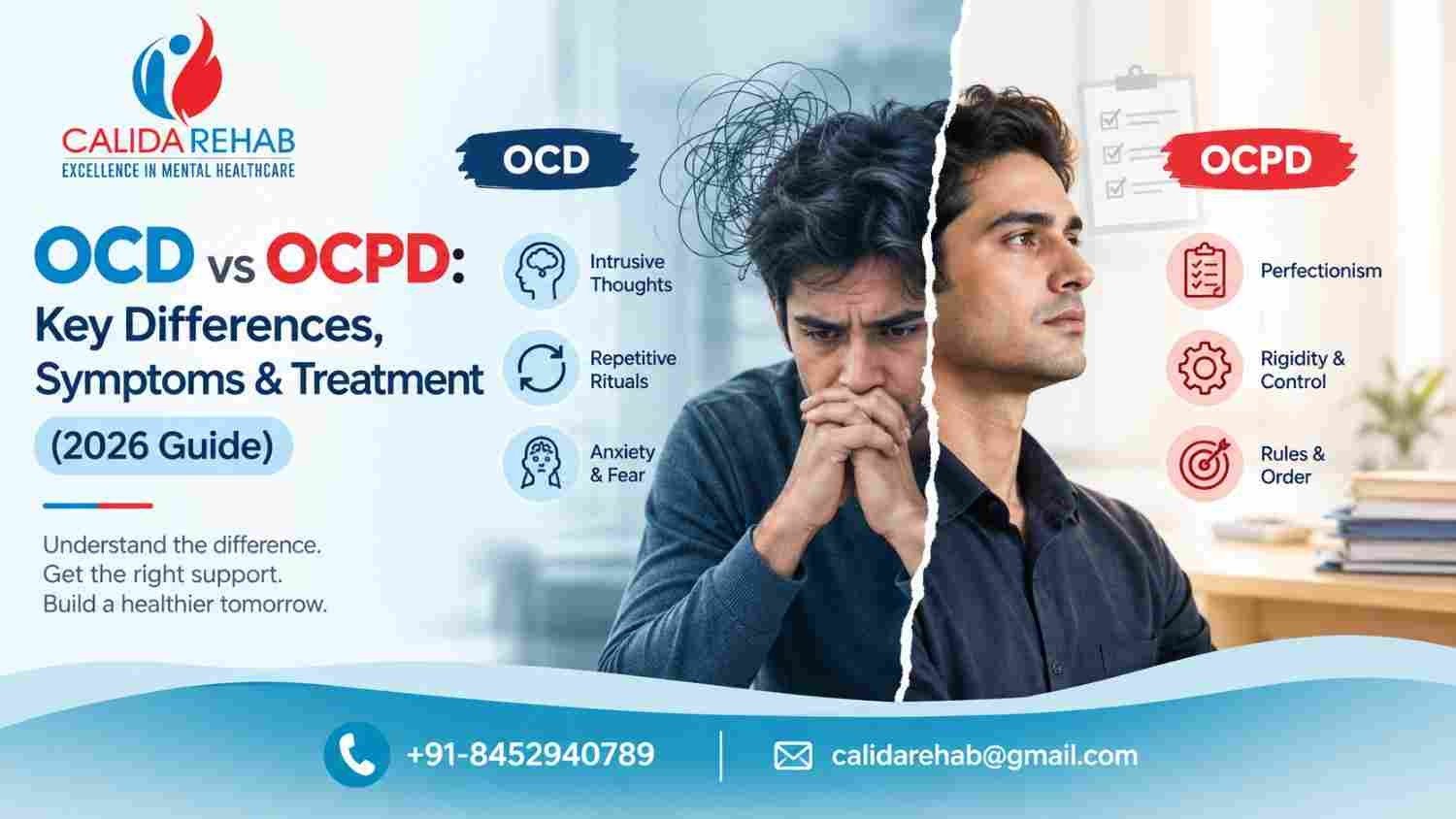

OCD vs OCPD in one line: OCD (Obsessive-Compulsive Disorder) is an anxiety-related condition in which unwanted thoughts drive repetitive rituals the person wants to stop, while OCPD (Obsessive-Compulsive Personality Disorder) is a lifelong personality pattern of perfectionism, rigidity and control that the person usually sees as simply “the right way to do things”. Despite the similar names, they are different conditions with different treatments.
The confusion is common. Families across Mumbai, Thane, Navi Mumbai and Pune often ask whether a loved one’s extreme perfectionism is actually OCD. This guide explains the difference between OCD and OCPD in simple language, based on how mental health professionals assess them.
What Is OCD (Obsessive-Compulsive Disorder)?
OCD is a mental health condition defined by obsessions (unwanted, intrusive thoughts, images or urges that cause intense anxiety) and compulsions (repetitive behaviours or mental acts performed to reduce that anxiety). The person usually knows the fear is excessive, yet feels unable to stop.
Under DSM-5-TR, symptoms point to OCD when they are time-consuming (commonly more than an hour a day) or cause significant distress or disruption to daily life. Globally, roughly 1 to 3 percent of people live with OCD, and it often begins in childhood, adolescence or early adulthood.
Common themes include contamination, checking, symmetry and intrusive thoughts. We explain each in our detailed guide to the types of OCD.
What Is OCPD (Obsessive-Compulsive Personality Disorder)?
OCPD is a personality disorder characterised by a long-standing pattern of perfectionism, orderliness and a need to control oneself, other people and situations. There are no true obsessions or compulsions here. The behaviour feels logical and correct to the person.
DSM-5 requires at least four of these eight traits, beginning by early adulthood and appearing across many situations:
- Preoccupation with details, rules, lists and schedules
- Perfectionism that interferes with finishing tasks
- Excessive devotion to work at the cost of family and leisure
- Rigid, over-conscientious attitude towards morals or ethics
- Difficulty discarding worn-out or worthless objects
- Reluctance to delegate unless others follow their exact method
- A miserly approach to spending
- Rigidity and stubbornness
Estimates suggest OCPD affects roughly 2 to 8 percent of the general population, making it one of the more common personality disorders.
OCD vs OCPD: Key Differences at a Glance
| Feature | OCD | OCPD |
|---|---|---|
| Nature | Anxiety-related mental health disorder | Personality disorder (lifelong pattern) |
| Core problem | Intrusive thoughts and compulsive rituals | Perfectionism, rigidity and need for control |
| How it feels | Unwanted and distressing | Natural, “the right way” |
| Insight | Usually aware it is excessive | Often believes others are wrong |
| Behaviour | Rituals such as washing, checking, counting | Rules, lists, over-planning, overwork |
| Emotional driver | Fear and anxiety | Need for order and control |
| Who suffers most | The person themselves | Often family and colleagues |
| Typical onset | Childhood to early adulthood | Early adulthood, stable over time |
| First-line treatment | ERP (a type of CBT), often with SSRIs | Long-term psychotherapy |
5 Key Differences Between OCD and OCPD Explained
1. Unwanted Thoughts vs Personal Standards
In OCD, the person is troubled by thoughts they did not choose, such as “my hands are contaminated” or “I left the gas on”. In OCPD, there are no intrusive thoughts. Instead, there is a firm conviction that everything must be done properly and according to a fixed standard.
2. Ego-Dystonic vs Ego-Syntonic
Clinicians describe OCD as ego-dystonic: the thoughts clash with the person’s values, so they actively want relief. OCPD is ego-syntonic: the traits fit the person’s self-image, so they rarely see anything wrong. This is why people with OCPD often seek help only after relationships or work begin to suffer.
3. Rituals vs Rules
A person with OCD may wash their hands twenty times or check a lock repeatedly, then feel only brief relief. A person with OCPD may keep colour-coded schedules, refuse to delegate, or stay late to perfect a report because they believe it is the correct way to work.
4. Anxiety vs Control
OCD is driven by fear, and rituals temporarily reduce anxiety. OCPD is driven by the need for control, and stress rises mainly when others do not follow the person’s standards.
5. Who Feels the Impact
OCD mostly torments the person living with it. OCPD frequently affects those around them, including spouses, children and coworkers, who may feel criticised or controlled.
Can a Person Have Both OCD and OCPD?
Yes. Research suggests OCPD is more common among people with OCD than in the general population, although estimates vary widely between studies. Because the two can overlap, a proper assessment matters. Rigid thinking linked to OCPD may need to be addressed alongside OCD treatment for the best outcome.
Signs and Symptoms: OCD vs OCPD
Common Signs of OCD
- Repeated handwashing or cleaning due to fear of germs
- Checking locks, switches or appliances again and again
- Needing objects arranged symmetrically or “just right”
- Disturbing intrusive thoughts and mental rituals such as counting or praying
- Avoiding places or situations that trigger fear
Common Signs of OCPD
- Extreme perfectionism that delays or prevents completing work
- Inflexibility about how tasks should be done
- Difficulty delegating or trusting others’ work
- Work taking priority over family, friends and rest
- Harsh judgement of oneself and others
How Are OCD and OCPD Diagnosed?
Only a qualified psychiatrist or clinical psychologist can diagnose either condition. Assessment usually includes a detailed clinical interview, personal and family history, and DSM-5-TR criteria. For OCD, clinicians often use the Yale-Brown Obsessive Compulsive Scale (Y-BOCS) to measure severity.
Online quizzes cannot replace this, because anxiety disorders, depression, autism spectrum traits and ordinary perfectionism can look similar on the surface.
Treatment for OCD vs OCPD
How OCD Is Treated
The gold-standard therapy is Exposure and Response Prevention (ERP), a form of Cognitive Behavioural Therapy. The person is gradually exposed to feared situations while resisting the urge to perform rituals. SSRI medication prescribed by a psychiatrist is commonly added for moderate to severe symptoms, and family support improves results. Read more about our OCD treatment approach.
How OCPD Is Treated
OCPD is usually treated with long-term psychotherapy such as CBT, schema therapy or psychodynamic therapy. The focus is on building flexibility, learning to delegate, tolerating imperfection and improving relationships. Medication is generally used only for co-existing conditions such as depression or anxiety. Progress is slower and depends on the person’s willingness to reflect on their patterns.
OCD Treatment in Mumbai, Thane, Navi Mumbai and Pune
If you are unsure whether what you or a family member experiences is OCD, OCPD or something else, start with a professional assessment. Calida Rehab supports individuals and families dealing with OCD through evaluation, evidence-based therapy such as CBT, and family counselling. Explore our OCD treatment centre in Pune, our OCD treatment centre in Mumbai, or read a real OCD case study.
When Should You Seek Professional Help?
- Thoughts or rituals take more than an hour a day
- You avoid places, people or tasks because of fear or rigid rules
- Perfectionism is causing missed deadlines, conflict or burnout
- Relationships, studies or work are being affected
- You also feel depressed, anxious, or are relying on alcohol or substances to cope
- A child or teenager shows repeated rituals or intense distress
Early help leads to better outcomes. To speak with our team, call +91-8452940789.
Final Thoughts
OCD and OCPD may share a name, but one is a distressing anxiety disorder and the other is a deeply rooted personality pattern. Understanding the difference helps you choose the right kind of help and avoid self-labelling. If any of the signs above feel familiar, a conversation with a mental health professional is the best first step.
This article is for information only and does not replace professional medical advice, diagnosis or treatment.
Frequently Asked Questions: OCD vs OCPD
Is OCPD the same as OCD?
No. OCD is an anxiety-related disorder with unwanted obsessions and compulsive rituals. OCPD is a personality disorder marked by lifelong perfectionism, rigidity and a need for control. The names are similar, but the symptoms, insight and treatment differ.
Which is more serious, OCD or OCPD?
Neither is automatically milder. OCD usually causes intense personal distress and can consume hours every day. OCPD tends to be long-standing and often strains work and family relationships. Severity depends on the individual, so a professional assessment is essential.
Can OCPD turn into OCD?
OCPD does not “turn into” OCD because they are different conditions. However, some people have both at the same time, and the overlap can make diagnosis and treatment more complex.
Do people with OCPD know they have a problem?
Often not. OCPD traits usually feel natural and correct to the person, so they may believe others are careless or wrong. Many seek help only when relationships, work or health suffer.

adminEdit Profile
Can OCD and OCPD be treated?
Yes. OCD responds well to Exposure and Response Prevention (ERP), a form of CBT, often combined with SSRI medication. OCPD is usually treated with long-term psychotherapy such as CBT or schema therapy. Improvement is possible with consistent professional care, though results vary from person to person.
Which doctor should I consult for OCD or OCPD?
A psychiatrist or clinical psychologist. They can assess your symptoms, rule out conditions such as anxiety, depression or autism spectrum traits, and recommend the right treatment plan.