
Quick answer: Brown sugar is the common Indian street name for an adulterated, low-purity form of heroin — typically only around 20% actual heroin, with the remaining 80% made up of cheap and often toxic fillers like chalk powder, zinc oxide, caffeine, or even strychnine. It is smoked, snorted, or injected, and it is one of the most widely abused opioids in India because of its low cost. At Calida Rehab, we treat brown sugar addiction daily, and the first thing we tell families is this: brown sugar is not a “milder” version of heroin. Because its composition is never consistent, every dose is a gamble — which is exactly why it is so dangerous, and why professional medical detox is not optional.
If you’ve searched “what is brown sugar drug,” “is brown sugar a drug,” or “how brown sugar drug is made,” you’re likely looking for real answers because someone you care about — or you yourself — may be using it. This guide explains what brown sugar actually is, what it does to the brain and body, how to recognise addiction and withdrawal, and what evidence-based treatment looks like in India.
What Is Brown Sugar Drug?
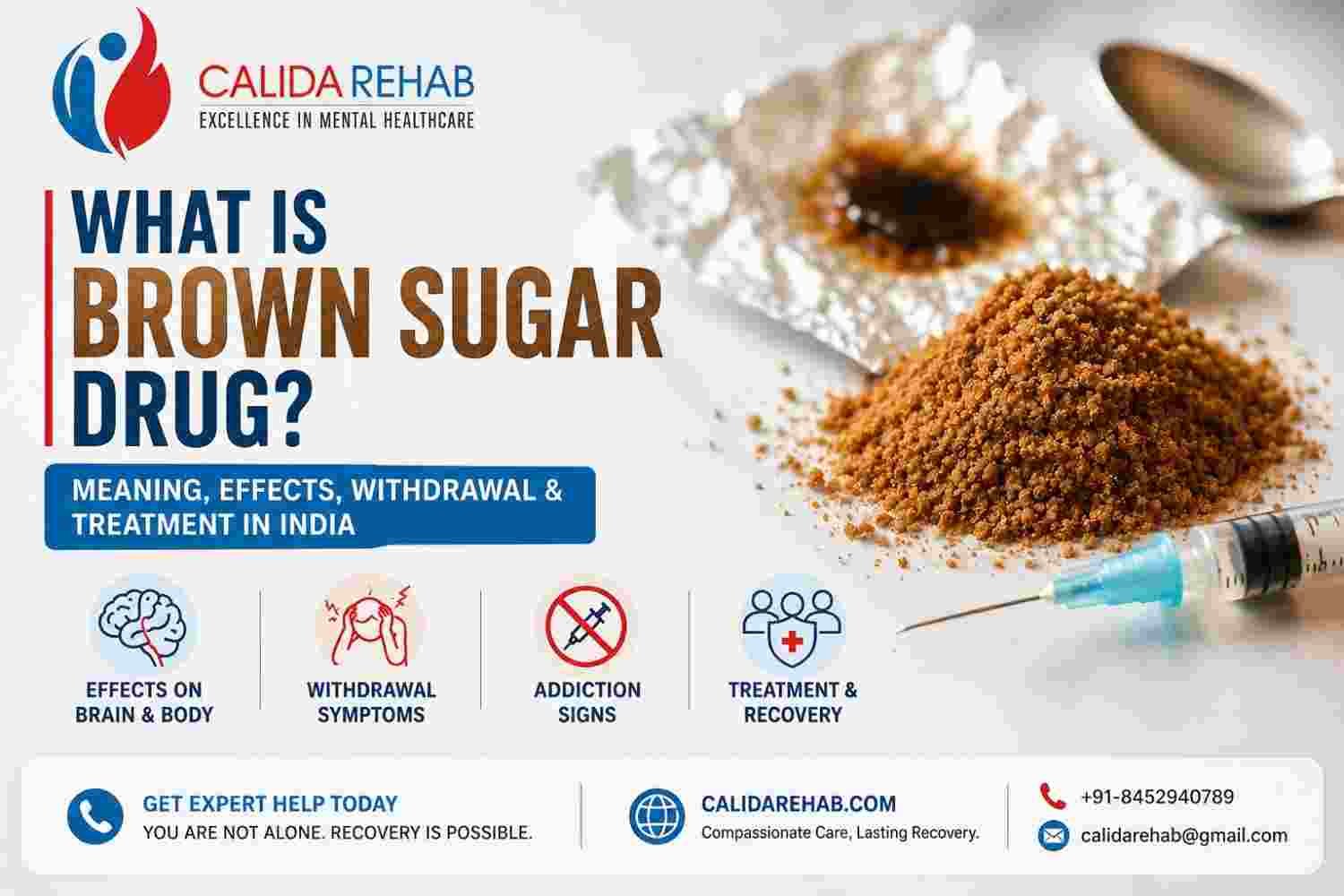
“Brown sugar” is street slang for a crudely processed, adulterated form of heroin (diacetylmorphine), a semi-synthetic opioid derived from morphine, which itself comes from the opium poppy plant. In India it’s also widely known as smack, junk, skag, BS, chaw, or matto, depending on the region.
Unlike pharmaceutical-grade or “pure” heroin (a fine white or off-white crystalline powder), brown sugar is a coarse, brownish granular powder — hence the name. That colour and texture come directly from the impurities mixed into it, not from any relation to edible sugar.
Brown sugar has been widely available across Indian cities since the 1980s, largely because it’s far cheaper to produce and sell than purer heroin. That low cost is also what makes it so accessible to first-time and young users, and it’s a major reason India has one of the highest rates of heroin-family opioid use in South Asia.
Is Brown Sugar a Drug? (Direct Answer)
Yes — unambiguously. Brown sugar is heroin, and heroin and its derivatives are controlled narcotics under India’s Narcotic Drugs and Psychotropic Substances (NDPS) Act, 1985. Possession, sale, or use is a criminal offence in addition to being a severe and often fatal health risk.
How Is Brown Sugar Drug Made? What’s Actually In It?
This is one of the most searched — and most misunderstood — parts of brown sugar. Street-level brown sugar typically contains:
- Diacetylmorphine (heroin) — usually only around 20% of the total product
- Chalk powder or zinc oxide — cheap bulking agents
- Caffeine — helps the drug vaporise at a lower temperature when smoked
- Starch or other inert fillers
- In some documented cases, strychnine — a highly toxic compound sometimes found in seized samples
There is no quality control, no consistency between batches, and no way for a user to know what percentage of what they’re taking is actually heroin versus filler or poison. This is the single biggest danger of brown sugar: two “identical-looking” packets from two different dealers can have wildly different strength and toxicity.
How Is Brown Sugar Used?
Brown sugar is most commonly:
- Smoked — heated on foil and the fumes inhaled (sometimes called “chasing the dragon”), the most common method in India because it burns at a lower temperature than pure heroin
- Snorted in powder form
- Injected intravenously — far riskier due to the impurities not dissolving cleanly, plus the added dangers of collapsed veins, abscesses, and blood-borne infections like HIV and Hepatitis C from shared needles
Effects of Brown Sugar on the Brain and Body
Like all opioids, brown sugar binds to opioid receptors in the brain that control pain, pleasure, and breathing — flooding the brain’s reward system with dopamine far beyond natural levels.
Short-term effects: an intense but short-lived euphoric rush, drowsiness, “nodding off,” pinpoint pupils, slowed breathing, nausea, and impaired coordination.
Long-term effects: rapid physical dependence and tolerance (meaning more is needed for the same effect), chronic respiratory and cardiovascular damage, collapsed veins with injection use, hormonal disruption, cognitive decline, and a sharply elevated overdose risk — precisely because purity is never predictable.
At Calida Rehab, we’ve seen how quickly this progression happens. What often starts as occasional, social use to numb stress or emotional pain becomes, within weeks or months, a physical need just to avoid getting sick. That shift — from using to feel good, to using to not feel bad — is usually the point families notice something is seriously wrong.
Signs of Brown Sugar Addiction
- Track marks, burns on fingers, or foil with burn residue and small glass pipes
- Drowsiness or “nodding off” at unusual times, slurred speech
- Sudden weight loss, neglect of hygiene and appearance
- Secretive behaviour — disappearing for long periods, especially to bathrooms or isolated spaces
- Sudden financial trouble, borrowing money, or selling personal belongings
- Withdrawing from family and old friends, associating with a new peer group
- Continued use despite clear damage to health, relationships, work, or studies
For a broader, non-substance-specific checklist that families often find helpful, Calida Rehab’s guide on 18 hidden drug addiction signs covers behavioural patterns that apply well beyond opioids.
Brown Sugar Withdrawal: What Actually Happens
Because brown sugar is an opioid, stopping abruptly triggers withdrawal — usually starting within 6 to 12 hours of the last dose, peaking around 48–72 hours in, and including muscle aches, sweating, chills, insomnia, anxiety, vomiting, diarrhoea, and intense cravings.
What families are often not told: withdrawal from brown sugar specifically tends to be harder and more medically unpredictable than withdrawal from pharmaceutical-grade opioids, because the neurotoxic adulterants (like strychnine and zinc oxide residue) compound the strain on the body.
Clinical data on brown sugar withdrawal has recorded seizures in over 40% of cases and psychotic symptoms in a meaningful minority — numbers far higher than what’s typically seen in cleaner opioid withdrawal. The first 72 hours are the most critical window, and this is exactly why attempting to quit “cold turkey” at home, without medical supervision, is genuinely dangerous — not just uncomfortable.
Is Brown Sugar Addiction Treatable?
Yes. Full recovery from brown sugar addiction is achievable, and at Calida Rehab we see it happen regularly — but it requires a structured, medically supervised process, not willpower alone. Treatment generally involves three stages:
- Medical detoxification — supervised withdrawal management, with close monitoring for the seizure and complication risks specific to brown sugar, to clear the substance from the body as safely as possible
- Structured rehabilitation — individual counselling, group therapy, and where clinically appropriate, Medication-Assisted Treatment (MAT) to manage cravings and support the brain’s recovery
- Aftercare and relapse prevention — because opioid addiction carries a high relapse risk, ongoing support after the person returns home is often what determines whether recovery holds
Getting Help for Brown Sugar Addiction at Calida Rehab
If someone you love is using brown sugar — or if you are — the most important thing to understand is that this isn’t a willpower problem, and waiting rarely makes it easier to treat. Calida Rehab provides medically supervised detox and structured de-addiction programs built specifically around opioid and heroin-based substances like brown sugar, combining round-the-clock clinical monitoring with long-term psychological and family support.
You can learn more about how we approach opioid-specific treatment in our detailed guide on opioid addiction signs, withdrawal, and treatment options, or explore Calida Rehab’s de-addiction centre in India to understand admission, program structure, and what the first days of treatment look like.
Frequently Asked Questions
What is brown sugar drug made of?
Brown sugar is roughly 20% heroin (diacetylmorphine) mixed with cheap fillers such as chalk powder, zinc oxide, caffeine, starch, and in some documented cases, strychnine.
Is brown sugar the same as heroin?
Brown sugar is a low-purity, adulterated form of heroin — not a different drug. Because of the unpredictable adulterants, it’s often considered more dangerous than purer heroin, not less.
How is brown sugar drug taken?
Most commonly smoked on foil, though it is also snorted or injected.
How do I know if someone is using brown sugar?
Watch for track marks or burns on fingers, foil with burn residue, drowsiness or “nodding off,” pinpoint pupils, secretive behaviour, and unexplained financial problems.
Can brown sugar addiction be treated?
Yes — with medically supervised detox, structured rehabilitation, and long-term aftercare, full recovery is achievable. Calida Rehab’s de-addiction programs are built specifically for opioids like brown sugar.