
If someone you love is struggling — with addiction, with their mental health, or with both — one question comes up almost immediately: do they need a psychiatric hospital, or do they need rehab?
Most families Google this at 2 AM, half-panicked, and end up more confused than before. The two terms get used interchangeably online, but they are not the same thing, they don’t treat the same conditions, and picking the wrong one can delay real recovery by months.
Here’s the clear, no-jargon breakdown.
The Short Answer
A psychiatric hospital treats acute mental health crises — situations that need immediate medical stabilization, often for a short period (days to a couple of weeks). A rehabilitation center treats ongoing patterns — addiction, behavioral issues, or long-term mental health conditions — through structured therapy over weeks or months, in a residential setting designed for sustained recovery, not just crisis control.
Think of it this way: a psychiatric hospital puts out the fire. A rehab center rebuilds the house.
Psychiatric Hospitals: Built for Crisis, Not Continuity
Psychiatric hospitals exist for emergencies. A person having a severe psychotic episode, someone at immediate risk of self-harm, or a patient who needs to be stabilized on medication under close observation — this is what psychiatric hospitals are designed for.
What actually happens there:
- Rapid diagnosis and medication management
- 24/7 clinical monitoring in a hospital-like environment
- Short stays, usually focused on getting the person medically stable
- Discharge once the immediate crisis has passed — often with a referral elsewhere for ongoing care
The limitation isn’t that psychiatric hospitals do a bad job — it’s that they’re not built for what happens after the crisis. A person leaves stabilized, but the underlying addiction pattern, the triggers, the family dynamics, the daily habits that led to the crisis — none of that gets addressed in a 5-day admission.
Rehabilitation Centers: Built for the Long Game
A rehab center works on a completely different timeline and a completely different goal. Instead of just calming the immediate symptom, it works on the root cause — through structured daily therapy, counseling, peer support, and lifestyle rebuilding, typically over 30, 60, or 90 days.
What actually happens there:
- Medical detox (if addiction is involved), followed by therapy — not just medication
- Individual and group counseling sessions, most often built around approaches like Cognitive Behavioral Therapy
- Family involvement — because recovery rarely works if the people at home aren’t part of the process
- Structured daily routines: therapy blocks, physical activity, mindfulness practices, and vocational or life-skills work
- A slower, more supervised return to independent life, instead of a sudden discharge
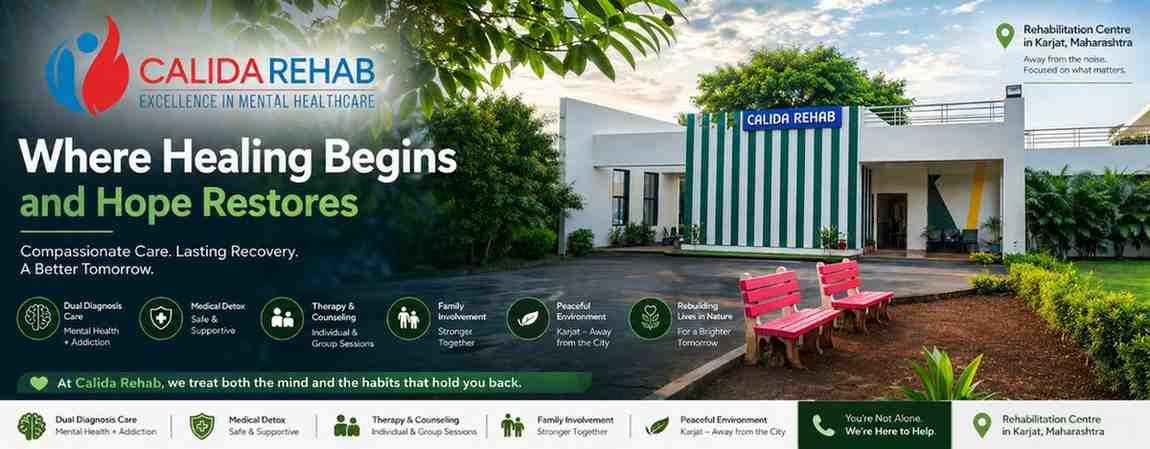
This is also why location matters more in rehab than in a hospital. A psychiatric hospital’s job is done in a clinical room. A rehab center’s job depends on the environment around the person — which is one reason facilities like Calida Rehab’s rehabilitation centre in Karjat are deliberately set away from the city, in a quieter, greener setting where the daily noise and triggers of urban life aren’t constantly present during the recovery window.
Side-by-Side: Where Each One Fits
| Psychiatric Hospital | Rehabilitation Center | |
|---|---|---|
| Purpose | Crisis stabilization | Long-term recovery |
| Typical duration | Days to 1–2 weeks | 30–90+ days |
| Focus | Medication, immediate safety | Therapy, habits, root causes |
| Family role | Usually minimal during stay | Actively involved throughout |
| Best suited for | Acute psychiatric emergencies | Addiction, behavioral patterns, ongoing mental health support |
| Environment | Clinical, hospital setting | Residential, structured, often away from the city |
Why “Either/Or” Often Fails — And What Works Instead
When addiction and mental illness co-occur (called dual diagnosis), treating only one side rarely works. Someone treated for addiction alone, without addressing underlying depression or anxiety, is far more likely to relapse. Someone treated only for their psychiatric condition, without addressing substance dependency, often doesn’t fully stabilize either.
This is exactly why Calida Rehab was built as both a rehabilitation center and a mental health treatment facility — not one or the other. Our team includes psychiatrists, de-addiction specialists, and rehabilitation psychologists working together, so a patient doesn’t have to be transferred between facilities mid-treatment or figure out which “type” of help they need before they even walk in.
Our rehabilitation centre in Karjat is set up to handle exactly this overlap — offering medical detox, psychiatric care, and long-term rehabilitation therapy under one roof, in a quiet, green environment away from the city that tends to support both physical and mental recovery.
Getting the Right Support
At Calida Rehab, admissions start with an honest conversation about what stage the person is actually at — not a one-size-fits-all program. The team works across mental health conditions and de-addiction, with residential care available at the Calida’s Rehabilitation Centre in Karjat for those who need a quieter, more sustained environment to recover in, alongside centers in Pune.
If you’re unsure which path fits your situation, that first conversation is usually the fastest way to find out — not another night of searching symptoms online.
Note: This article is for general awareness and isn’t a substitute for professional medical advice. If you or someone you know is in immediate crisis, please contact emergency services or a mental health professional right away.