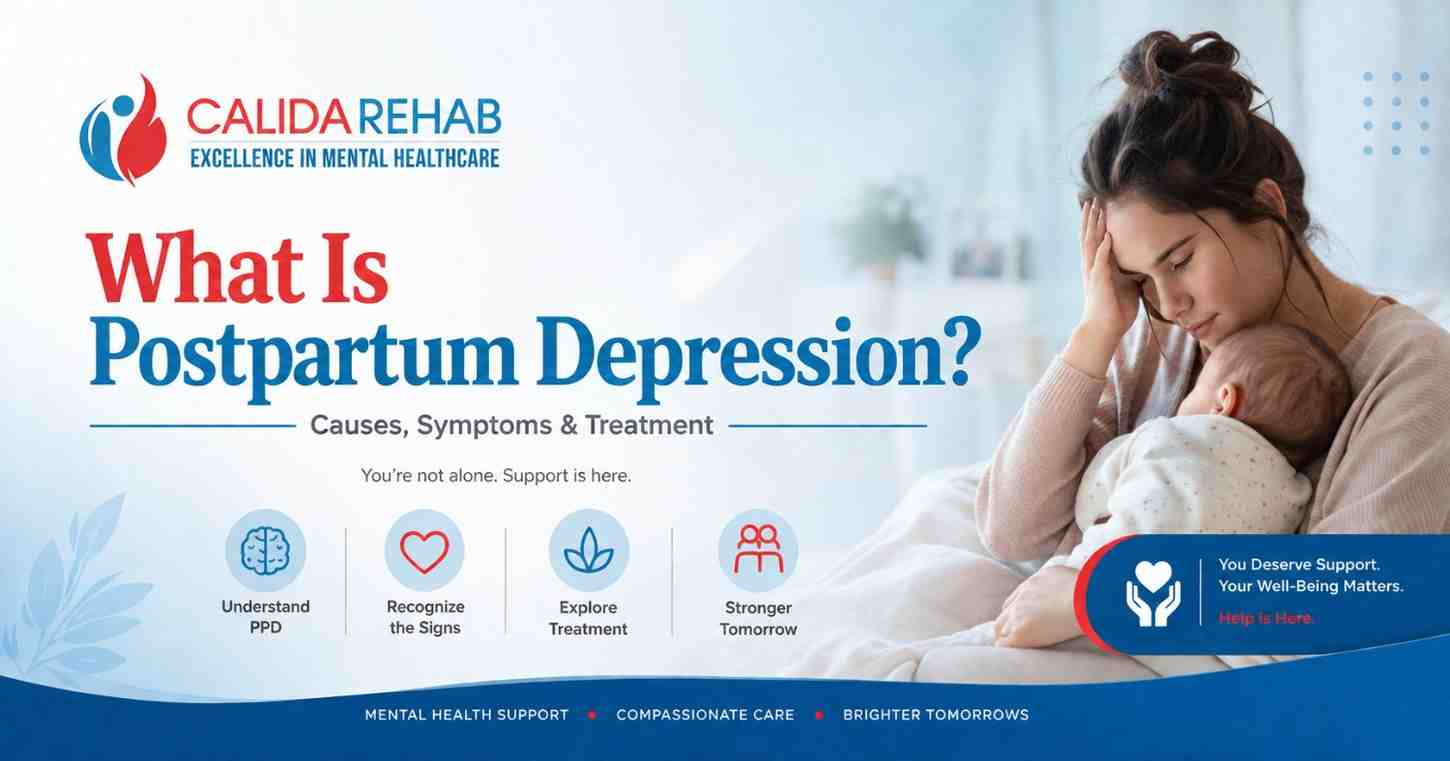

Quick answer: Postpartum depression (PPD) is a mood disorder that develops after childbirth, causing persistent sadness, anxiety, exhaustion, and difficulty bonding with or caring for the baby. It affects roughly 1 in 7 new mothers, can begin during pregnancy or up to a year after delivery, and is treatable with therapy, medication, and structured psychiatric support.
If you’ve been searching “what is postpartum depression” because something feels off after having your baby, you’re not imagining it — and you’re not alone. This guide breaks down what PPD actually is, how it differs from the “baby blues,” what causes it, and what real treatment looks like.
What Is Postpartum Depression?
Postpartum depression is a clinical mood disorder that typically emerges within the first few weeks after childbirth, though it can develop gradually over the first year or even begin during pregnancy (often called perinatal depression). It’s caused by a mix of hormonal shifts, physical exhaustion, and the emotional and social upheaval of becoming a parent.
Unlike everyday tiredness or the occasional bad day, PPD doesn’t resolve on its own. It interferes with a mother’s ability to function, bond with her baby, and take care of herself — and it needs professional attention to fully resolve.
PPD doesn’t only affect biological mothers. Adoptive parents and surrogates can experience similar symptoms, since the condition is driven as much by psychological and lifestyle adjustment as it is by hormones.
Baby Blues vs. Postpartum Depression vs. Postpartum Psychosis
New parents often confuse these three conditions. Here’s the difference at a glance:
| Condition | How Common | Onset | Duration | Severity |
|---|---|---|---|---|
| Baby Blues | Up to 3 in 4 mothers | Within days of delivery | 1–2 weeks, resolves on its own | Mild — tearfulness, mood swings |
| Postpartum Depression | Up to 1 in 7 mothers | Within weeks, can appear up to 1 year later | Weeks to months without treatment | Moderate to severe — interferes with daily life |
| Postpartum Psychosis | About 1 in 1,000 mothers | Sudden, usually within 2 weeks | Weeks to months | Severe medical emergency — hallucinations, delusions |
If symptoms last beyond two weeks or start interfering with daily functioning, it’s no longer “just the baby blues” — it’s time to consult a mental health professional.
Signs and Symptoms of Postpartum Depression
You may be experiencing PPD if you notice several of the following, most days, for two weeks or more:
- Persistent sadness, emptiness, or hopelessness
- Excessive worry, guilt, or feeling “on edge”
- Loss of interest in things you used to enjoy
- Appetite changes — eating too little or too much
- Extreme fatigue or loss of motivation
- Trouble sleeping, or wanting to sleep constantly
- Frequent, unexplained crying
- Difficulty concentrating or making decisions
- Feeling disconnected from or anxious around your baby
- Withdrawing from your partner, family, or friends
Seek help immediately if you experience thoughts of harming yourself or your baby, or recurring thoughts about death. These are medical emergencies, not signs of weakness or bad parenting.
What Causes Postpartum Depression?
There’s no single cause — PPD develops from a combination of factors:
- Hormonal changes: Estrogen and progesterone rise sharply during pregnancy and crash within days of delivery, which can trigger mood instability.
- Physical strain: Sleep deprivation, recovery from delivery, and the physical demands of newborn care.
- Psychological adjustment: Anxiety about parenting ability, identity shifts, and unmet expectations of motherhood.
- Social factors: Limited support at home, relationship strain, or financial stress.
Because the causes are biological and situational, sadness and clinical depression can look similar on the surface but require very different responses — one needs time and support, the other needs treatment.
Who Is at Higher Risk?
Certain factors increase the likelihood of developing PPD:
- A personal or family history of depression, anxiety, or previous PPD
- Limited support from family or partner
- Relationship or marital conflict
- Difficult pregnancy, delivery complications, or premature birth
- Financial stress or socioeconomic pressure
- Difficulty breastfeeding or a baby with high care needs
- Depression or anxiety during pregnancy itself
- Being a young or first-time parent
Having one or more of these risk factors doesn’t guarantee PPD — but it means it’s worth watching your mental health more closely in the months after delivery.
How Is Postpartum Depression Diagnosed?
There’s no blood test for PPD. Diagnosis usually involves:
- A clinical conversation about symptoms, mood, and daily functioning
- Standardized screening tools, most commonly the Edinburgh Postnatal Depression Scale (EPDS) — a 10-question screening
- Ruling out related conditions, such as thyroid imbalance, which can mimic depressive symptoms
- A psychiatric evaluation if symptoms are moderate to severe
At Calida Rehab, evaluations are conducted by qualified psychiatrists to ensure the diagnosis — and the treatment plan that follows — is accurate rather than assumed.
Treatment Options for Postpartum Depression
The good news: PPD is highly treatable. Most treatment plans combine two or more of the following:
1. Psychotherapy
Cognitive Behavioural Therapy (CBT) and talk therapy help identify and reframe negative thought patterns, rebuild confidence, and develop coping strategies for the demands of new parenthood.
2. Medication
Antidepressants (SSRIs/SNRIs) can help rebalance brain chemistry. A psychiatrist will weigh the benefits against breastfeeding considerations, since many options are considered safe during nursing under medical supervision.
3. Structured or Residential Care
For moderate to severe PPD — especially where a mother is unable to care for herself or her baby — residential psychiatric treatment offers continuous monitoring, a distraction-free healing environment, and a faster path to stability than outpatient care alone.
4. Support Systems
Peer support groups, family involvement, and lifestyle adjustments (rest, nutrition, gentle activity) all support recovery alongside clinical treatment.
Most people begin feeling meaningful improvement within a few weeks of starting treatment, though full recovery timelines vary by severity and individual response.
How Calida Rehab Helps New Mothers
Calida Rehab is a residential mental health facility with centres in Pune and Mumbai, offering structured psychiatric care for depression, anxiety, and dual-diagnosis conditions in a supervised, home-like setting.
Under the guidance of <a class=”doctor-link” href=”https://calidarehab.com/dr-prashant-dasud/”>Psychiatrist Dr. Prashant Dasud</a> and <a class=”doctor-link” href=”https://calidarehab.com/dr-santosh-pawar/”>Mental Health Expert Dr. Santosh Pawar</a>, our team combines medication management, psychotherapy, and personalised rehabilitation strategies — treating each case as an individual, not a checklist.
With 170+ licensed beds and a team that has supported 10,000+ individuals, Calida provides the structured, continuously monitored environment that more severe cases of postpartum depression often require — without the overwhelmed feeling of a large, institutional hospital. Explore our depression treatment programs or book a depression counselling session to speak with our team.
When to Seek Emergency Help
Contact a healthcare provider or emergency services immediately if you or someone you know experiences:
- Thoughts of self-harm or harming the baby
- Hallucinations, delusions, or extreme confusion
- Inability to function or care for the baby at all
- Symptoms that feel like they’re escalating rapidly
If you’re in India and need immediate support, reach out to a local emergency service or a mental health helpline — you don’t need to wait for an appointment to ask for help.
Frequently Asked Questions- FAQs
This article is for informational purposes and isn’t a substitute for professional medical advice. If you’re experiencing symptoms of postpartum depression, please consult a qualified healthcare provider.
Reviewed by Dr. Prashant Dasud, Psychiatrist & De-Addiction Specialist, Calida Rehab.