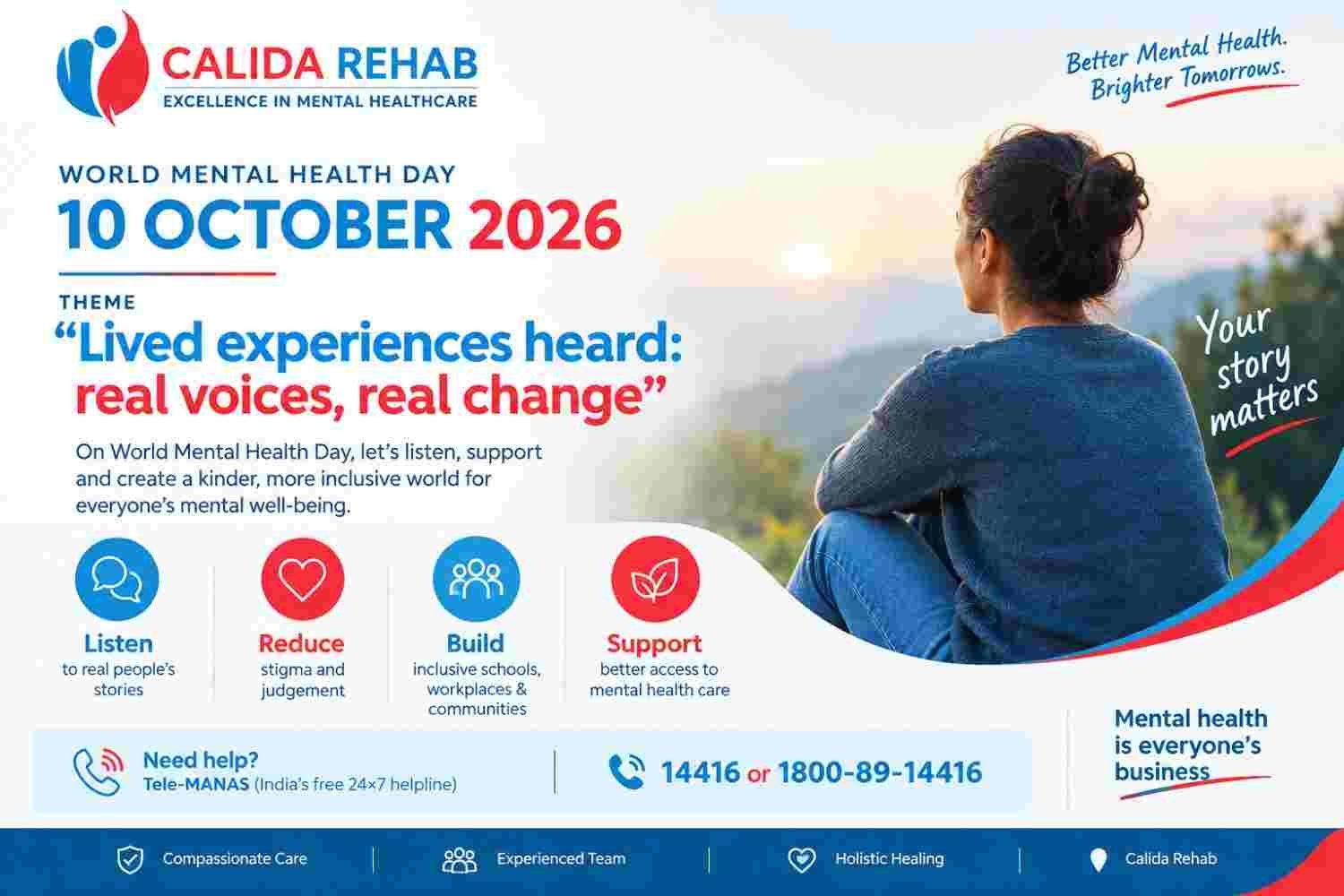
World Mental Health Day 2026 takes place on Saturday, 10 October 2026. This year, the World Health Organization’s theme is “Lived experiences heard: real voices, real change”. Next, this guide explains the theme and history of the day, what the latest WHO and India data say, the conditions and warning signs worth knowing, 12 activity ideas for schools, workplaces and families, and the free helplines you can call in India today.
Last updated: 6 October 2026. Reviewed against the WHO World Mental Health Day page and WHO fact sheets published in September 2026.
World Mental Health Day 2026 at a Glance
| Question | Quick answer |
|---|---|
| Date | Saturday, 10 October 2026 (every year on 10 October) |
| 2026 theme (WHO) | Lived experiences heard: real voices, real change |
| First observed | 1992, on the initiative of the World Federation for Mental Health |
| Global burden (WHO, 2023) | Nearly 1 in 7 people, about 1.2 billion, live with a mental disorder |
| India (NIMHANS, 2015-16) | 10.6% of adults had a mental disorder; treatment gap of 70% to 92% |
| Free helpline in India | Tele-MANAS: 14416 or 1800-89-14416 (24×7) |
What Is World Mental Health Day?
World Mental Health Day is a global awareness day observed on 10 October. WHO describes its overall objective as raising awareness of mental health issues around the world and mobilising efforts in support of mental health. It also gives everyone working in the field, from governments and clinicians to schools and families, a moment to talk about what the field has achieved and what still needs to change to make mental health care a reality for people everywhere.
History: How 10 October Became a Global Mental Health Day
The World Federation for Mental Health, a global membership organisation founded in 1948, launched the day in 1992. At first it had no fixed theme; however, from 1994 each year has focused on a specific message. WHO now supports the day and publishes the campaign each year. Overall, recent themes show how the conversation has moved from awareness to access, rights and everyday settings:
| Year | WHO theme |
|---|---|
| 2026 | Lived experiences heard: real voices, real change |
| 2025 | Mental health in humanitarian emergencies |
| 2024 | Mental health at work |
| 2023 | Mental health is a universal human right |
| 2022 | Make mental health and well-being for all a global priority |
Source: WHO, World Mental Health Day campaign page.
World Mental Health Day 2026 Theme: “Lived Experiences Heard: Real Voices, Real Change”
The official WHO campaign page for 2026 lists the theme. In other words, it asks policymakers, health systems, employers and communities to listen to people who have lived through mental health conditions, and to let that experience shape services, laws and everyday attitudes. For example, here is what that can look like in practice:
- In families: listening first, without rushing to fix, judge or compare.
- At work and in school: building policies with employee and student input, not only for them.
- In healthcare: involving patients and caregivers in treatment planning, which is also the spirit of India’s Mental Healthcare Act, 2017 and a patient’s rights in treatment.
- Across public conversation: replacing stigma and stereotypes with real stories, shared with consent.
Mental Health by the Numbers: What WHO Says
The latest WHO fact sheet on mental disorders (updated 11 September 2026) reports the following for 2023:
- 1.2 billion people, nearly 1 in 7 worldwide, were living with a mental disorder, with anxiety and depressive disorders the most common.
- 470 million people lived with an anxiety disorder, including 146 million children and adolescents.
- 322 million people lived with depression, including 43 million children and adolescents.
- 36 million people lived with bipolar disorder and about 27 million (1 in 300) with schizophrenia.
- Only about one third of people with depression and 40% of people with psychosis receive formal mental health care.
- People with schizophrenia die, on average, nine years earlier than the general population.
The message behind these numbers is clear: effective treatment exists, but most people never reach it.
Mental Health in India: What the Data Shows
India’s most comprehensive dataset is still the National Mental Health Survey (NMHS) of 2015-16, which NIMHANS conducted in 12 states. It remains the benchmark, although it is now a decade old and newer national data would be welcome.
- 10.6% of adults had a mental disorder at the time of the survey, and the lifetime prevalence was 13.7%.
- The treatment gap ranges from 70% to 92% depending on the disorder.
- India has roughly 0.75 psychiatrists per 100,000 people, against a benchmark of at least 3 per 100,000.
- The government launched Tele-MANAS, India’s free 24×7 tele-mental health service, on World Mental Health Day, 10 October 2022. Reach it on 14416 or 1800-89-14416.
Overall, stigma, cost, distance and a shortage of specialists are the main reasons people wait years before seeking care. So if you are weighing options, speak to a psychiatrist early rather than waiting for symptoms to worsen. Early assessment usually leads to better outcomes.
Common Mental Health Conditions Everyone Should Understand
Depression
In fact, depression is more than sadness. WHO describes it as low mood or loss of interest in activities for most of the day, nearly every day, for at least two weeks, along with changes in sleep, appetite, energy and concentration.
Anxiety and Panic
Anxiety disorders involve excessive fear and worry that disrupt daily life. In addition, panic disorder adds sudden, intense attacks with physical symptoms.
Bipolar Disorder and Schizophrenia
These are serious but treatable conditions. Bipolar disorder involves episodes of depression and mania; schizophrenia affects perception, thinking and behaviour.
Trauma, PTSD and OCD
Trauma, for example, can leave lasting effects long after the event. Post-traumatic stress disorder (PTSD) and the effects of childhood trauma on adults often go unnoticed. People also frequently mistake obsessive-compulsive disorder (OCD) and its four types for mere habits or perfectionism.
Children, Young Adults and Older Adults
In fact, mental health needs change across life. Children and teenagers may show distress through changes in behaviour, school performance or sleep. New mothers can develop postpartum depression, and older adults may face depression, loneliness or memory problems. Recognising these patterns early makes it easier to get the right help.
Mental Health Myths vs Facts
- Myth: Mental illness is a sign of weakness. Fact: It is a health condition with biological, psychological and social causes, and it can affect anyone.
- Myth: People with mental illness are dangerous. Fact: Most are not violent, and they are far more likely to suffer harm than to cause it.
- Myth: You can just snap out of depression or anxiety. Fact: These conditions need proper assessment and often treatment; willpower alone is not enough.
- Myth: Medicines change your personality or are addictive. Fact: Psychiatrists prescribe medicines to treat symptoms, and your doctor monitors dose and side effects. Never start or stop them on your own.
- Myth: Talking about suicide puts the idea in someone’s head. Fact: Asking calmly and directly usually brings relief and opens the door to help.
- Myth: Mental health problems are rare. Fact: Nearly 1 in 7 people worldwide live with one, according to WHO.
Warning Signs It May Be Time to Seek Professional Help
Everyone has hard days. However, it is worth speaking to a professional when symptoms last two weeks or longer, keep returning, or interfere with daily life. Watch for:
- Persistent sadness, irritability, emptiness or hopelessness
- Loss of interest in things you used to enjoy
- Big changes in sleep, appetite, weight or energy
- Constant worry, panic attacks or avoiding places and people
- Difficulty concentrating, studying or working
- Withdrawing from family and friends
- Increased use of alcohol, drugs or sleeping pills to cope
- Hearing or seeing things others do not, or unusual, fixed beliefs
- Thoughts of death or self-harm, which need urgent help
How to Support Someone: A 5-Step Approach
The 2026 theme is a reminder that listening is itself a form of support. If someone you know is struggling:
- Choose a calm, private moment. Then say what you have noticed without blaming: “You have seemed low lately and I am worried about you.”
- Listen more than you talk. Above all, do not minimise, compare or rush to give advice.
- Ask directly about safety. If they mention suicidal thoughts, stay with them and help them reach a helpline or emergency care.
- Encourage professional help. For instance, offer to find an appointment or go along. Our team of psychiatrists and clinical psychologists is available for consultation.
- Keep checking in. Because recovery takes time, consistent support matters more than one big conversation.
12 World Mental Health Day Activity Ideas
Planning something for 10 October? These ideas work with small budgets, and you can adapt them to the 2026 theme of lived experiences.
For Schools and Colleges
- Story circle: invite students and teachers to share short, anonymous notes about a time they struggled and what helped, then read a selection aloud.
- Peer-support buddy system: train student volunteers to listen and to know how to refer a friend to a counsellor.
- Art and music hour: a creative session that lets students express feelings without words.
- Screen-free break: a short phone-free activity, with a discussion drawn from the effects of mobile phones on students.
For Workplaces
- Manager workshop: a short session on how to notice distress and start a supportive conversation.
- Expert Q&A: invite a psychiatrist or clinical psychologist for a talk with an anonymous question box.
- Meeting-free hour: protect time for a walk, a break or a quiet lunch.
- Share the resources: circulate Tele-MANAS and your employee assistance details.
For Families and Communities
- Phone-free family dinner: one meal where everyone shares one high point and one low point of the week.
- Community walk or dance session: movement and company are a simple way to lift mood.
- Street play or poster drive: short messages that challenge stigma in local languages.
- Check-in calls: contact three people you have not spoken to in a while, especially older relatives and anyone living alone.
Everyday Habits That Support Mental Health
Daily habits do not replace treatment, but they support it. For example, keep a regular sleep schedule, move your body most days, stay connected with people you trust, limit alcohol, and take breaks from news and social media.
Treatment Options: What Works
WHO states that effective psychological treatment exists for depression, anxiety, PTSD and many other conditions, and that doctors may consider medicines depending on age and severity. Doctors plan treatment around the person, and it may include:
- Cognitive behavioural therapy (CBT) and dialectical behaviour therapy (DBT)
- Family therapy and group therapy
- Counselling for depression, stress and burnout
- Medicines from a psychiatrist, with regular monitoring
- Residential care when symptoms are severe or home is not a safe setting, such as inpatient care in Mumbai or inpatient care in Pune
Calida Rehab provides psychiatric and mental health care in Maharashtra through its mental hospital in Mumbai and Pune centre, where psychiatrists and clinical psychologists assess each person and plan treatment around their needs.
Where to Get Help in India
| Service | Number | Notes |
|---|---|---|
| Tele-MANAS (Government of India) | 14416 or 1800-89-14416 | Free, 24×7 tele-mental health support in multiple languages |
| KIRAN Mental Health Rehabilitation Helpline | 1800-599-0019 | Toll-free support for stress, anxiety, depression and suicidal distress |
| Emergency services | 112 | If someone is in immediate danger |
| Calida Rehab | Mumbai or Pune | Psychiatric consultation and inpatient mental health care |
If you or someone near you is thinking about suicide, please call a helpline or go to the nearest emergency department right now. In other words, you do not have to wait until things get worse.
Frequently Asked Questions About World Mental Health Day
When is World Mental Health Day 2026?
World Mental Health Day 2026 falls on Saturday, 10 October 2026. The day always falls on 10 October.
What is the theme of World Mental Health Day 2026?
According to the World Health Organization, the 2026 theme is “Lived experiences heard: real voices, real change”. In other words, it puts the voices of people who live with mental health conditions at the centre of the conversation.
Who started World Mental Health Day?
The World Federation for Mental Health launched World Mental Health Day in 1992. Since then, the World Health Organization has supported the day and published campaign material each year.
Why is World Mental Health Day celebrated?
The overall objective, as stated by WHO, is to raise awareness of mental health issues around the world and to mobilise efforts in support of mental health.
How common are mental health conditions?
WHO estimates that in 2023 nearly 1 in 7 people worldwide, about 1.2 billion, were living with a mental disorder. In India, however, the National Mental Health Survey 2015-16 found that 10.6% of adults had a mental disorder at the time of the survey.
Is there a free mental health helpline in India?
Yes. Tele-MANAS is the Government of India’s free, 24×7 tele-mental health service. Dial 14416 or 1800-89-14416 from anywhere in India. For suicide-related distress you can also call the KIRAN helpline on 1800-599-0019.
How do I know if I need professional help for my mental health?
Consider seeing a psychiatrist or clinical psychologist if low mood, anxiety, sleep or appetite changes, or loss of interest last for two weeks or more, or if they are affecting your work, studies or relationships. However, seek help immediately if you have thoughts of harming yourself.
Can mental health conditions be treated?
Yes. WHO states that effective prevention and treatment options exist for most mental disorders, including psychological therapies, medicines where appropriate, family interventions and psychosocial rehabilitation. Moreover, early treatment generally leads to better outcomes.
What is the difference between a psychiatrist, a clinical psychologist and a counsellor?
A psychiatrist is a medical doctor who diagnoses mental health conditions and can prescribe medicines. Clinical psychologists specialise in psychological assessment and evidence-based therapy. Counsellors offer supportive talk-based help for everyday stress and life difficulties. In fact, many people benefit from a team that includes more than one of them.
How can I observe World Mental Health Day?
Start a conversation, check in on someone, share a helpline number, organise a story circle at school or work, or book a long-overdue appointment for yourself. In addition, this guide lists 12 practical activity ideas.
Key Takeaways
- World Mental Health Day is on 10 October; in 2026 it falls on a Saturday.
- The 2026 WHO theme is “Lived experiences heard: real voices, real change”.
- Nearly 1 in 7 people worldwide live with a mental disorder, yet most do not get care.
- Effective treatment exists, so seek help if symptoms last two weeks or affect daily life.
- In India, call Tele-MANAS 14416 for free, 24×7 support.
Sources and Further Reading
- WHO: World Mental Health Day campaign
- Official 2026 page for World Mental Health Day (WHO)
- Mental disorders fact sheet from WHO (11 September 2026)
- Over a billion people living with mental health conditions (WHO news, 2 September 2025)
- Comprehensive Mental Health Action Plan 2013-2030 (WHO)
- Mental Health Gap Action Programme, mhGAP (WHO)
- NIMHANS: National Mental Health Survey of India, 2015-16
This article is for information and awareness only and is not a substitute for professional medical advice, diagnosis or treatment. If you or someone you know is in crisis, call Tele-MANAS (14416), the KIRAN helpline (1800-599-0019) or emergency services (112), or contact a qualified mental health professional immediately.