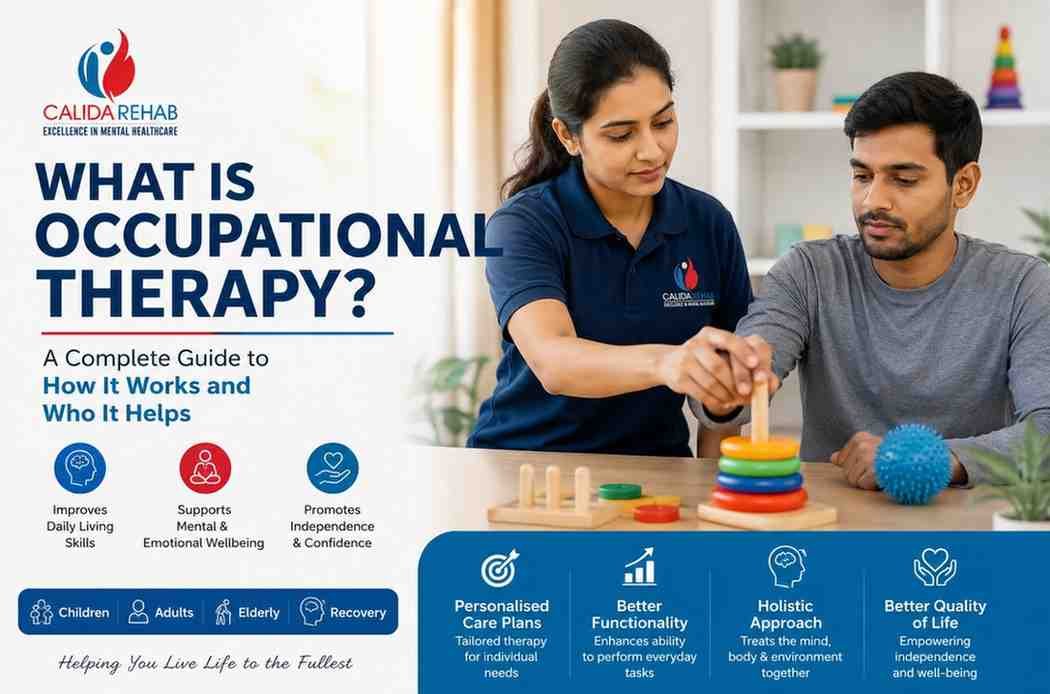

Quick Answer: Occupational therapy (OT) is a healthcare profession that helps people of all ages regain, develop, or maintain the skills needed to perform everyday activities — called “occupations” — such as dressing, working, studying, or socializing, when illness, injury, disability, or mental health conditions make these tasks difficult.
Unlike therapies that focus only on a specific body part or diagnosis, occupational therapy looks at the whole person — their body, mind, environment, and daily routine — and builds a practical plan to help them function independently and meaningfully in everyday life.
This guide breaks down exactly what occupational therapy involves, who it’s for, how it differs from other therapies, and why professional guidance matters when choosing this kind of care.
Understanding “Occupation” in Occupational Therapy
The word “occupation” often confuses people, since it’s commonly associated only with jobs or careers. In occupational therapy, “occupation” means any activity that occupies a person’s time and gives their life structure, purpose, or meaning. This includes:
- Self-care activities — bathing, dressing, eating, grooming
- Productive activities — work, studying, parenting, household tasks
- Leisure activities — hobbies, sports, social interaction, play
When any of these everyday activities become difficult due to physical injury, developmental delay, neurological conditions, or mental health struggles, occupational therapy steps in to rebuild the specific skills needed to manage them again.
What Does an Occupational Therapist Actually Do?
An occupational therapist (OT) is a trained healthcare professional who evaluates a person’s physical, cognitive, emotional, and environmental challenges, then designs a personalized treatment plan to improve their ability to function independently. This typically involves:
- Assessment — Understanding the person’s specific difficulties, goals, home environment, and daily routine
- Goal-setting — Identifying practical, meaningful outcomes (e.g., being able to dress independently, return to work, or manage daily tasks without assistance)
- Intervention — Using targeted exercises, adaptive techniques, assistive tools, or environmental modifications to build or restore function
- Ongoing evaluation — Adjusting the treatment plan as progress is made
Importantly, OT isn’t just about physical rehabilitation — it also addresses cognitive skills (like memory, attention, and problem-solving) and emotional regulation, especially in cases involving mental health conditions or neurological differences.
Occupational Therapy vs. Physiotherapy: What’s the Difference?
This is one of the most common points of confusion, and it’s a fair one, since both professions can overlap in rehabilitation settings.
- Physiotherapy primarily focuses on restoring physical movement, strength, and mobility — treating pain, stiffness, or physical limitations directly.
- Occupational therapy focuses on function — helping a person apply whatever physical or cognitive ability they have (even if limited) to actually perform daily tasks independently, safely, and confidently.
In many cases, especially after injury, surgery, or stroke, both professions work together — physiotherapy improves physical capability, while occupational therapy ensures that capability translates into real, practical independence in daily life.
Occupational Therapy vs. Other Related Therapies: Comparison Chart
Since OT is often confused with other rehabilitation and mental health therapies, here’s a side-by-side comparison to make the distinctions clear:
| Therapy Type | Primary Focus | Who It Typically Helps | Common Techniques | Typical Setting |
|---|---|---|---|---|
| Occupational Therapy (OT) | Building independence in daily activities (self-care, work, routines) | Stroke/injury recovery, developmental delays, mental health & addiction recovery, elderly care | Adaptive techniques, routine-building, sensory integration, environmental modification | Hospitals, rehab centres, homes, schools |
| Physiotherapy | Restoring physical movement, strength, and mobility | Injuries, post-surgery recovery, chronic pain, sports injuries | Manual therapy, exercise programs, stretching, mobility training | Clinics, hospitals, sports facilities |
| Speech Therapy | Communication, language, and swallowing difficulties | Stroke patients, children with speech delays, individuals with neurological conditions | Articulation exercises, language drills, swallowing therapy | Clinics, schools, hospitals |
| Psychotherapy / Counseling | Emotional, psychological, and behavioral wellbeing | Anxiety, depression, trauma, addiction, relationship issues | CBT, DBT, psychodynamic therapy, group therapy | Private practice, rehab centres, hospitals |
Key takeaway: These therapies aren’t competing approaches — they’re often complementary. For example, someone recovering from a stroke may need physiotherapy to regain strength, speech therapy to recover communication, and occupational therapy to apply both toward independently managing daily life again. Similarly, in addiction and mental health recovery, occupational therapy and psychotherapy typically work side by side — one rebuilding daily structure and functional independence, the other addressing the underlying emotional and psychological drivers. This is exactly why comprehensive, multi-disciplinary programs like those at Calida Rehab combine these therapies under one clinically coordinated plan, rather than offering them as disconnected, standalone services.
Who Needs Occupational Therapy?
Occupational therapy isn’t limited to one age group, diagnosis, or condition. It’s used across a remarkably wide range of situations:
Children
- Developmental delays affecting motor skills or coordination
- Sensory processing difficulties
- Autism spectrum condition-related challenges with daily routines or social interaction
- Difficulty with handwriting, focus, or classroom participation
Adults
- Recovery after stroke, brain injury, or surgery
- Chronic pain or physical disability affecting daily function
- Workplace injuries requiring a return-to-work plan
- Mental health conditions like severe anxiety, depression, or PTSD that disrupt daily routines and independence
Elderly Individuals
- Age-related decline in mobility, memory, or coordination
- Fall-risk reduction and home safety modifications
- Support for maintaining independence despite conditions like arthritis, Parkinson’s, or dementia
Individuals in Addiction and Mental Health Recovery
Occupational therapy plays a particularly important, often overlooked role in addiction and mental health recovery. Addiction frequently disrupts basic daily structure — sleep routines, work responsibilities, self-care, and social functioning. OT helps individuals rebuild these foundational life skills, creating the stability that supports long-term recovery. This is exactly why structured treatment centres such as Calida Rehab incorporate occupational therapy as part of a broader, clinically guided recovery program — not as an isolated service, but as a core piece of helping individuals regain a functional, independent daily life.
Common Techniques Used in Occupational Therapy
Occupational therapists use a wide range of evidence-based techniques depending on the individual’s needs:
- Adaptive technique training — Teaching new ways to perform tasks when the original method is no longer possible (e.g., one-handed dressing techniques after injury)
- Fine and gross motor skill exercises — Improving coordination for tasks like writing, buttoning clothes, or walking safely
- Cognitive rehabilitation exercises — Strengthening memory, attention, and problem-solving, particularly after brain injury or in early recovery from substance use
- Sensory integration therapy — Especially common in children, helping the brain process sensory input more effectively
- Environmental modification — Recommending changes to a home or workspace (grab bars, ergonomic setups, reduced clutter) to support independence
- Routine-building and daily structuring — Particularly valuable in mental health and addiction recovery, helping individuals rebuild stable, healthy daily patterns
Why Occupational Therapy Matters for Mental Health and Addiction Recovery
While OT is often associated with physical rehabilitation, its role in mental health and addiction treatment is just as significant, if less commonly discussed. Depression, anxiety, and substance use disorders frequently strip away the basic structure of daily life — consistent sleep, hygiene, productive activity, and social engagement. Occupational therapy directly targets this gap, helping individuals:
- Rebuild consistent, healthy daily routines
- Develop coping strategies for managing stress and triggers during everyday tasks
- Regain confidence in managing responsibilities independently
- Transition more smoothly from structured treatment back into daily life, work, or study
This function-focused approach is why many comprehensive rehabilitation programs, including the treatment models used at Calida Rehab’s rehabilitation centre in Mumbai, integrate occupational therapy alongside traditional counseling and psychiatric care — addressing not just the underlying condition, but the practical, everyday impact it has on a person’s life.
What Does an Occupational Therapy Session Look Like?
Sessions vary significantly based on the individual’s goals, but generally follow a structured pattern:
- Initial assessment — Understanding current abilities, challenges, and personal goals
- Personalized goal-setting — Defining specific, measurable outcomes (e.g., “independently prepare a meal” or “return to work part-time within 8 weeks”)
- Skill-building exercises — Practicing targeted tasks, often in real-world-like settings
- Progress review — Regularly reassessing and adjusting the plan based on improvement
Sessions can take place in hospitals, rehabilitation centres, outpatient clinics, schools, or even at home, depending on the person’s needs and the severity of their condition.
How Long Does Occupational Therapy Take?
There’s no fixed timeline — duration depends entirely on the individual’s condition, goals, and progress. Some people need a few weeks of focused sessions after a minor injury, while others, particularly those recovering from stroke, severe mental health conditions, or addiction, may benefit from several months of structured, ongoing occupational therapy as part of a broader treatment plan.
Choosing the Right Occupational Therapy Provider
Because occupational therapy touches such a wide range of physical, cognitive, and emotional needs, it’s important that it’s delivered by qualified, licensed professionals within a properly structured program — not as a standalone, generic service. The most effective outcomes typically come from centres that integrate OT within a broader clinical framework, alongside psychiatric care, counseling, and medical support where needed.
This integrated, clinically supervised approach is central to how Calida Rehab structures its treatment programs, offering occupational therapy as part of a comprehensive recovery plan through their rehabilitation centre in Mumbai and their rehabilitation centre in Pune — ensuring individuals don’t just recover clinically, but regain real, functional independence in their everyday lives.
Final Thoughts
Occupational therapy is far broader than most people realize — it’s not just about physical recovery, but about helping people regain genuine independence and functionality in every part of daily life, whether the barrier is physical, cognitive, developmental, or emotional. From children building foundational skills to adults recovering from injury, mental health conditions, or addiction, OT plays a practical, often life-changing role in bridging the gap between clinical treatment and real, everyday living.
For anyone considering occupational therapy — for themselves or a loved one — working with a professionally structured, clinically integrated program like Calida Rehab ensures the care isn’t isolated, but part of a complete, expert-guided path toward lasting recovery and independence.
Frequently Asked Questions About Occupational Therapy
Is occupational therapy only for physical injuries? No. While it’s widely used in physical rehabilitation, occupational therapy also addresses cognitive, developmental, and mental health-related challenges that affect a person’s ability to manage daily life.
What’s the difference between occupational therapy and physiotherapy? Physiotherapy focuses on restoring physical movement and strength, while occupational therapy focuses on applying whatever ability a person has to independently perform real-life daily tasks.
Can occupational therapy help with anxiety or depression? Yes. OT helps individuals rebuild daily structure, routines, and coping strategies that are often disrupted by mental health conditions, making it a valuable complement to therapy and psychiatric care.
Do children need a diagnosis to receive occupational therapy? Not necessarily. While OT is commonly used for diagnosed developmental delays or conditions, it can also help children who show difficulty with coordination, focus, or daily tasks, even without a formal diagnosis.
Is occupational therapy part of addiction treatment? Yes, in comprehensive treatment programs. It helps individuals in recovery rebuild the daily structure, routines, and independent living skills often disrupted by addiction.