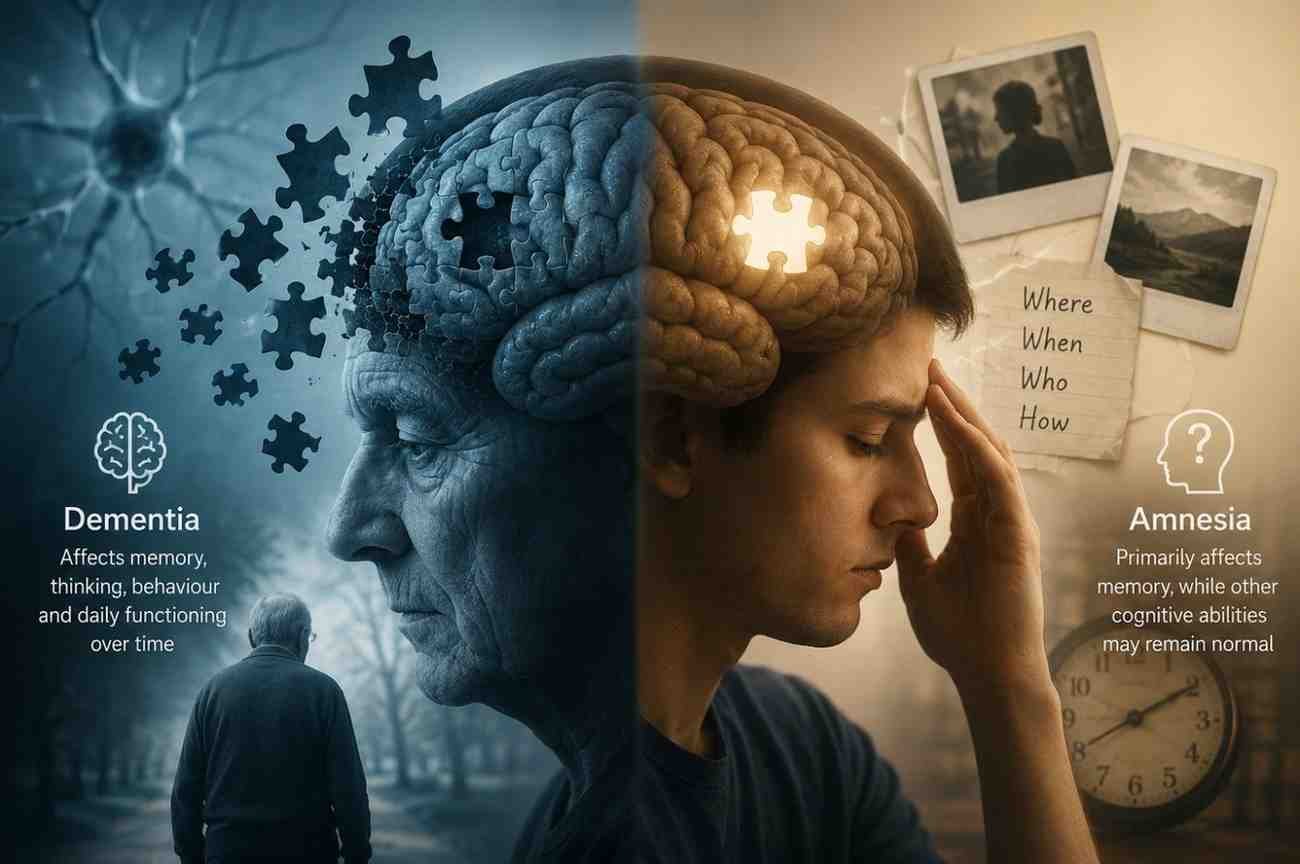

The difference between dementia and amnesia exists mainly because of the type and extent of memory and cognitive impairment. Dementia is a broader concept that includes a neurological condition that affects the memory, thinking, reasoning, behaviour, and daily functioning over time.
Amnesia, on the other hand, primarily refers to the memory loss caused by brain injury, trauma, stress, or any disease, while other cognitive abilities may remain relatively normal. Understanding the difference between the two is important for identifying the symptoms, seeking treatment, and improving the quality of life.
What is Dementia?
Dementia is not a singular disease but a multitude of symptoms that affect the memory, thinking, communication, and decision-making ability of an individual. It is mainly seen in older people and gradually worsens over time. The most common type of dementia is Alzheimer’s disease, but other forms of dementia also exist, such as vascular dementia, Lewy body dementia, and frontotemporal dementia.
Symptoms of dementia
- Memory loss
- Difficulty in communication
- Confusion and disorientation
- Mood and personality changes
- Difficulty performing daily tasks
- Poor judgement and reasoning
- Trouble in recognizing people and places
The condition progresses slowly and affects the mental and physical functioning of the person.
What is Amnesia?
Amnesia refers to the partial or complete memory loss; unlike dementia, it centrally affects the memory, in which other abilities remain intact. A person with amnesia may forget past events, people, and places, or may struggle to form new memories, but in some cases, both.
Symptoms of amnesia
- Difficulty remembering past events
- Trouble forming new memories
- Confusion in new cases
- Forgetting personal information
- Memory gaps
People with this disease generally maintain awareness, reasoning skills, and personality traits better than people with dementia.
Key Differences between Amnesia and Dementia
The difference between dementia and amnesia becomes clear when we compare the symptoms, progression, and cognitive impact.
Definition
- Dementia is progressive in nature, and it consistently deteriorates cognitive function.
- Amnesia is a simple memory loss condition.
| Aspect | Dementia | Amnesia |
| Main effect | Dementia mainly affects the memory, thinking, and behaviour. | Amnesia majorly affects the memory. |
| Progression | Dementia is usually progressive and worsens with time. | Amnesia, on the other hand, can be temporary or permanent. |
| Cause | Dementia is caused by brain degeneration or disease. | Amnesia is caused by trauma, injury, stress, or illness. |
| Cognitive Abilities | In dementia, the cognitive abilities are broadly impaired. | In amnesia, the cognitive abilities are often preserved. |
| Daily Functioning | In dementia, cognitive abilities are severely affected over time. | In amnesia, cognitive abilities are functional. |
| Awareness | It is reduced in later stages. | In amnesia, it is usually maintained. |
| Treatment | In dementia, the treatment options mostly include symptomatic management. | In amnesia, it usually depends on the underlying cause or disorder. |
Causes of dementia
Dementia mostly occurs due to damaged brain cells, which affect the communication between the brain and other parts of the body. Some of the most common causes include:
- Alzheimer’s Disease: The most common form of dementia is Alzheimer’s. It involves abnormal protein buildup in parts of the brain.
- Vascular problems: Reduced blood flow in various regions of the brain can lead to vascular dementia.
- Lewy body disease: Protein deposits called Lewy bodies affect the brain’s functioning.
- Frontotemporal degeneration: Damage to the frontal and temporal lobes affects behaviour and language.
Other causes:
- Parkinson’s disease
- Huntington’s disease
- Brain infections
- Severe head injuries
Understanding these causes helps understand the contrast between the two brain diseases clearly.
Causes of amnesia
Amnesia can occur due to several physical and psychological factors. Some common causes of amnesia include:
- Brain injury: Head trauma may damage the brain regions that are in control of memory.
- Stroke: Reduced oxygen supply to the brain, even temporarily, can affect the memory function.
- Emotional trauma: Severe stress or psychological shock may trigger dissociative amnesia
- Alcohol and drug abuse: Long-term substance abuse can damage the brain system.
- Brain infections: Conditions like encephalitis may affect the memory.
- Surgery or seizures: Some medical procedures and neurological conditions lead to temporary amnesia, which usually heals with time.
The amnesia and dementia differences become more noticeable sooner than later since amnesia only targets the memory, whereas dementia affects the cognitive capabilities of a person. Now, let’s talk a little about the different types of dementia and amnesia.
Types of dementia
- Alzheimer’s disease: Characterized by progressive memory loss and confusion.
- Vascular dementia: It is caused by reduced blood flow to the brain.
- Lewy body dementia: It is associated with hallucinations, movement issues, and deterioration of cognitive capabilities.
- Frontotemporal dementia: It affects an individual’s personality, language, and behaviour.
- Mixed dementia: It is a combination of multiple types of dementia.
Types of amnesia
- Retrograde amnesia: Loss of memory which were formed before causing amnesia.
- Anterograde amnesia: It is the inability to form new memories after the event.
- Transient global amnesia: A temporary or sudden memory loss lasting a few hours.
- Dissociative amnesia: In this type of amnesia, people experience memory loss, which is caused by emotional trauma or stress.
Diagnosis of Dementia
Doctors use different methods to diagnose dementia. The few methods are as follows:
- Medical history: Doctors evaluate the symptoms by taking a daily history of the patient.
- Cognitive tests: The memory, reasoning, and problem-solving capabilities of the person are tested.
- Brain image: MRI scans or CT scans help identify any changes in the brain chemistry.
- Blood tests: Blood tests help rule out any vitamin deficiencies or infections.
- Neurological examination: Doctors test the balance, coordination, and reflexes.
Diagnosis of amnesia
- Memory assessments: Doctors evaluate the short-term and long-term memory loss.
- Brain scans: MRI and CT scans help identify injuries or abnormalities to the brain.
- Psychological evaluation: This type of test is usually done in trauma-related amnesia.
- Neurological testing: This helps detect brain damage and seizures.
Treatment options for dementia
Currently, there is no complete cure for dementia, but there are treatments that can help manage the symptoms. These include:
- Medications: Some medicines that improve memory and communication abilities temporarily are:
- Cholinesterase Inhibitors like Donepezil, Rivastigmine, and Galantamine. These help in preventing the breakdown of an important neurotransmitter called acetylcholine, which is important for memory.
- Glutamate Regulators like Memantine help regulate glutamate levels, which can damage the brain if in excess quantity.
- Drugs like Lecanemab and Donenemab can help with mild cognitive impairment and slow down the progression of diseases like Alzheimer’s.
- Cognitive therapy: Mental exercises help slow the deterioration of cognitive abilities.
- Lifestyle changes: A healthy diet, exercise, and social interaction support brain health
- Supportive care: Family support and caregiving are essential.
Treatment for amnesia
Treatment depends mostly on the underlying cause. Some common treatment options include:
- Therapy: Psychological counselling helps with trauma-related amnesia cases.
- Rehab: Memory training exercises can improve memory.
- Treating underlying conditions: Managing infections, seizures, or injuries may improve recovery
- Healthy lifestyle: Good sleep, nutrition, and stress management support recovery
Unlike dementia, some forms of amnesia may improve over time with proper therapy and lifestyle changes.
Can dementia and amnesia occur simultaneously?
Yes, some people who suffer from dementia may also experience memory loss, resembling amnesia. However, the conditions are not identical.
Dementia affects the broader brain functioning, whereas amnesia targets only the memory-related aspect. Understanding the difference between the two can help alleviate perceived confusion between the two conditions.
Risk Factors for dementia
- Age
- Family history
- Smoking
- High blood pressure
- Diabetes
- Obesisty
- Lack of any physical activity
Risk factors for amnesia
- Brain injury
- Stroke
- Emotional trauma
- Alcohol intoxication/abuse
- Neurological disorders
Tips to prevent amnesia and dementia
Dementia
- Exercising regularly
- Eating a balanced diet
- Staying mentally active
- Controlling blood pressure
- Avoid smoking
Amnesia
- Protecting the head from injuries
- Managing stress
- Avoiding excessive alcohol use
- Seeking treatment for neurological conditions
Why choose Calida Rehab?
At Calida Rehab, we understand how memory-related diseases and cognitive problems can have a great influence on an individual’s quality of life. Whether you or a loved one is experiencing dementia, memory loss, or cognitive decline, early intervention and professional help can make a big impact.
Our specialist team offers comprehensive examinations, personalized treatment programs, and continuous support that is based on each individual’s specific needs. We focus on improving cognitive function, daily living skills, and assisting persons in maintaining the maximum possible quality of life.
At Calida Rehab, our services include:
- Comprehensive cognitive and neurological assessments
- Individualized treatment and rehabilitation programs
- Cognitive training and memory enhancement therapies
- Psychological counselling and emotional support
- Family education and caregiver guidance
- Holistic wellness programs focusing on nutrition, physical activity, and mental well-being
- Long-term care planning and support
Our compassionate approach guarantees that each client receives individualized treatment in a secure and supportive setting. If you or a loved one is experiencing memory problems, confusion, or cognitive difficulties, seeking professional help early can improve outcomes.
In a nutshell
It is very important to understand the difference between the two diseases and know how they affect memory and the daily functioning of the brain. Dementia is a progressive condition that impacts memory, reason, communication, and daily functions. On the other hand, amnesia mainly involves memory loss, while the other cognitive abilities remain functioning.
Recognizing the dementia and amnesia difference helps individuals seek the right guidance and seek the right support, and get a proper diagnosis done. Early intervention, early medical care, and emotional support can greatly improve the quality of life for patients and their families.
Both conditions highlight the importance of brain health, mental wellness, and supportive rehab. Knowing the symptoms, causes, and risks, along with the treatment options available for people dealing with this, can help patients and their families make informed decisions and access healthcare when needed.
Common Questions Answered
The major difference is that dementia affects thinking, reasoning, and behaviour (overall cognitive abilities), whereas amnesia mainly affects memory.
Yes, in some cases, amnesia can be temporary, and many people improve with treatment and recovery.
No, in most cases dementia is not reversible, but symptoms can be managed with proper care and treatment.
Although dementia is more common in older adults, it can also develop in younger individuals in rare cases.
Yes, severe emotional stress can sometimes lead to dissociative amnesia.
Early signs include confusion, memory loss, difficulty communicating, and poor judgment.
Doctors typically use memory tests, brain scans, and neurological evaluations to diagnose amnesia.