
Last updated: October 2026
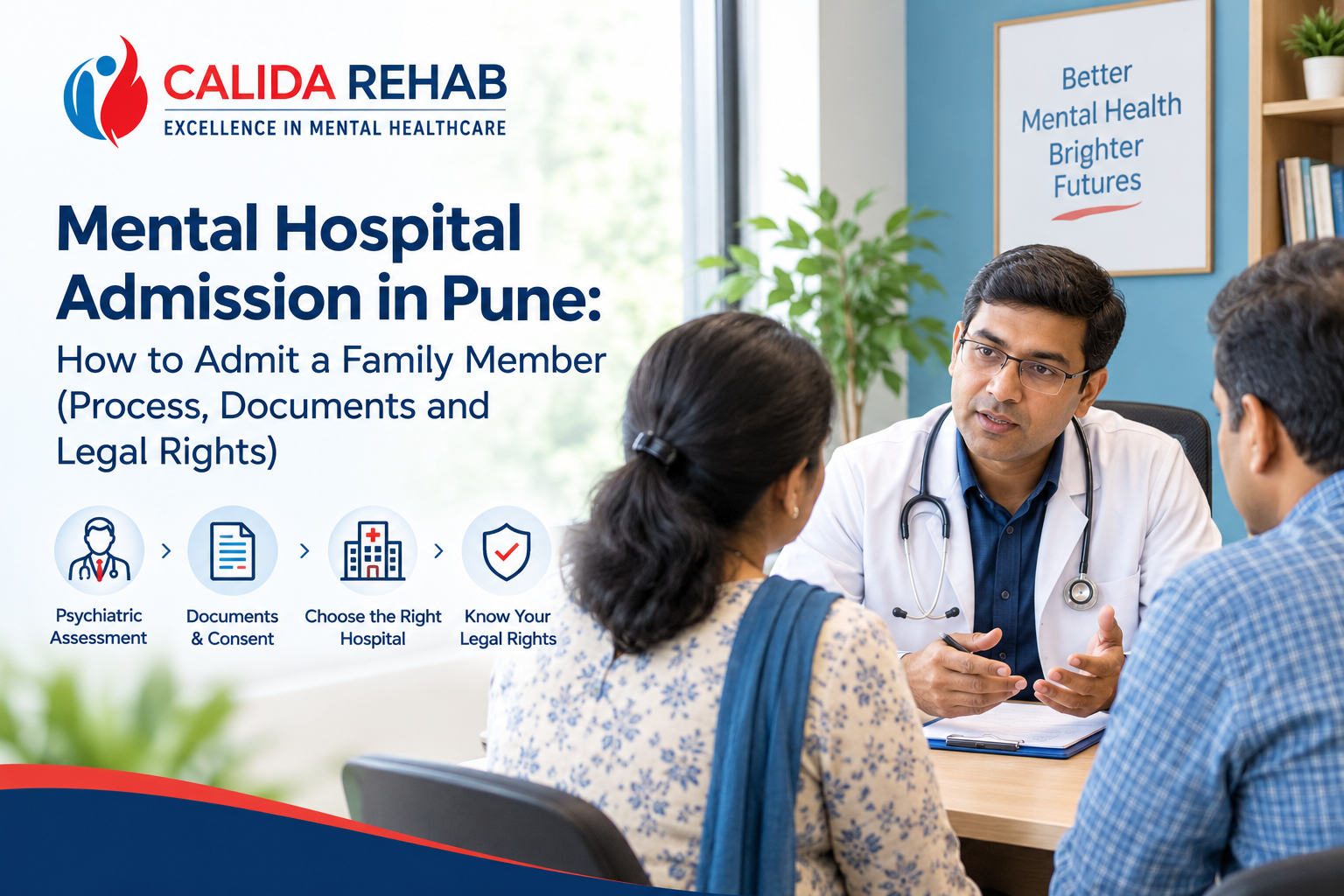
Quick answer: For mental hospital admission in Pune, first get a psychiatric assessment. Then check how consent works under the Mental Healthcare Act, 2017, choose a registered hospital with 24/7 supervision, carry the right documents and agree a written treatment plan. Most adults are admitted with their own consent (independent admission). If a person cannot decide for themselves, the law allows supported admission through a nominated representative, with safeguards.
Key takeaways
- Admission is a medical decision. A psychiatrist decides whether the person needs inpatient care, day care or outpatient treatment.
- The Mental Healthcare Act, 2017 has three main routes: independent admission (Sections 85 and 86), admission of a minor (Section 87) and supported admission (Sections 89 and 90).
- Supported admission under Section 89 is time-limited to 30 days and needs two professionals, including a psychiatrist, to examine the person.
- Only choose a facility that is registered, has qualified psychiatrists, runs 24/7 supervision and gives you the treatment plan and cost in writing.
- Insurers must cover mental illness on the same basis as physical illness (Section 21(4)), but waiting periods and limits in your policy still apply.
- In an emergency, call 112. For free 24×7 mental health support, call Tele-MANAS on 14416.
Deciding to admit someone you love is one of the hardest calls a family can make. Most people do not know where to start, what the law says, or what papers to carry. This guide explains mental hospital admission in Pune step by step, in plain language, so you can act calmly and protect the patient’s rights.
It is written for families in Pune and nearby areas such as Pimpri-Chinchwad, Hinjewadi, Kothrud and Hadapsar. It is for education only and does not replace advice from a psychiatrist or a lawyer.
When does someone need to be admitted to a mental hospital?
Many people with mental illness get better with outpatient visits, medicines and therapy. Inpatient admission is usually advised when the risk or the distress is too high to manage at home. Common reasons include:
- talk of suicide or self-harm, or any attempt;
- a risk of harm to other people;
- severe psychosis, such as hearing voices, strong false beliefs or a person who is not making sense;
- mania, with days of almost no sleep, reckless spending or dangerous behaviour;
- refusing food, water or medicines, or being unable to look after basic needs for several days;
- repeated relapse even though the person is taking outpatient treatment;
- alcohol or drug use together with another mental illness (dual diagnosis), where detox and psychiatric care are needed together.
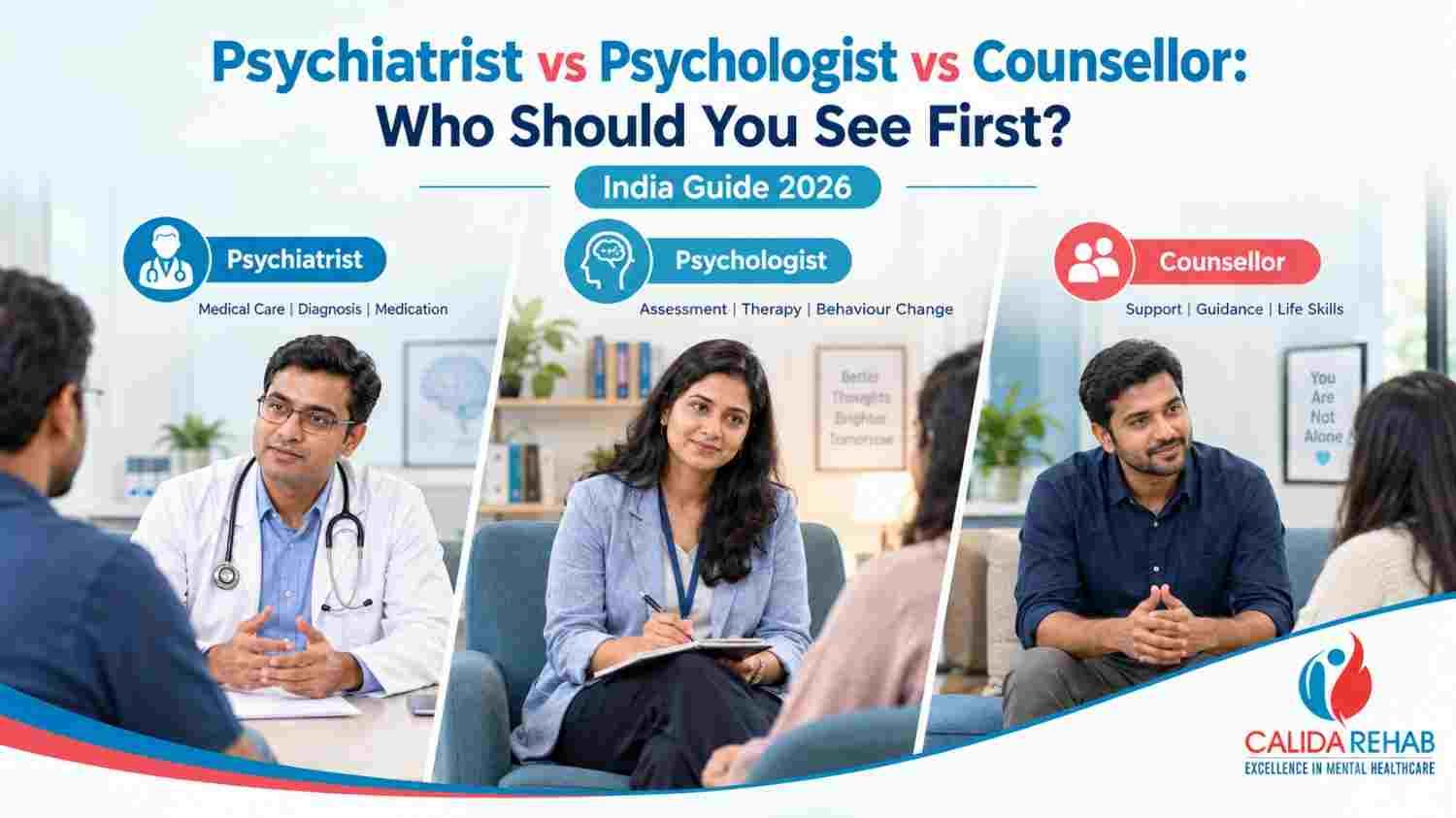
If you are not sure, read our guide on warning signs and when to seek mental health treatment. It also helps to understand the difference between a rehab centre and a psychiatric hospital before you decide, and who to see first: a psychiatrist, psychologist or counsellor.
Types of admission under the Mental Healthcare Act, 2017
The Mental Healthcare Act, 2017 (MHCA) is the law that governs every admission to a mental health establishment in India. It prefers independent admission and allows supported admission only when it cannot be avoided.
| Type of admission | Who can be admitted | Who gives consent | Key points |
|---|---|---|---|
| Independent admission (Sections 85 and 86) | An adult who has the capacity to make treatment decisions | The patient | The patient can ask to be discharged. The hospital may delay discharge for up to 24 hours to assess whether supported admission is needed. |
| Admission of a minor (Section 87) | A person under 18 | A nominated representative, usually a parent or legal guardian | Follows a separate procedure with extra safeguards for children. |
| Supported admission, up to 30 days (Section 89) | An adult with a serious mental illness who cannot make the treatment decision | A nominated representative applies; two professionals, including a psychiatrist, examine the person | Strict conditions apply, such as serious risk of harm to self or others, or being unable to look after oneself. |
| Supported admission, beyond 30 days (Section 90) | A person who still needs inpatient care after 30 days | A nominated representative, with a fresh assessment | Reviewed again, and the person can stay on as an independent patient if the conditions are no longer met. |
For a deeper look at what the Act says about consent, privacy and complaints, read our post on patient rights under the Mental Healthcare Act 2017. The sections are also explained in the Nyaaya explainer on admission and discharge.
How to admit a family member to a mental hospital in Pune: step by step
Step 1: Get a psychiatric assessment
Book a visit with a psychiatrist. They will take a full history, check symptoms and risk, and advise on the level of care. Take a family member who knows the full story. If the person is in immediate danger, do not wait for an appointment. Call 112 or go to the nearest emergency department.
Step 2: Understand who can give consent
Ask the psychiatrist which route applies. If the person understands the problem and agrees, admission is independent. If the person is a minor, a parent or guardian consents. If an adult cannot understand or decide because of the illness, supported admission may be possible, but only through the legal process.
Step 3: Choose a registered facility
Do not choose on price or a phone call alone. Check that the facility:
- is a registered mental health establishment under the Mental Healthcare Act, 2017;
- has qualified psychiatrists and clinical psychologists on the team;
- provides 24/7 supervision and a clear emergency protocol;
- gives a written treatment plan and a written cost estimate;
- explains family involvement, visiting rules and discharge planning.
We compare the options in how to choose a mental hospital in Pune. If you are also comparing rehab centres, use our checklist for choosing a rehabilitation centre in Pune.
Step 4: Visit, ask questions and confirm costs
If the situation allows, visit the hospital before admission. See the wards, meet the treating team and ask for the estimate in writing. The money side is covered in our cost of treatment section and in typical costs for inpatient mental health treatment in India.
Step 5: Carry the right documents
- Photo ID of the patient, and of the family member or nominated representative (Aadhaar, PAN, passport or driving licence).
- Previous prescriptions, test reports and discharge summaries.
- A list of current medicines, allergies and other medical conditions.
- Health insurance policy details and the insurer’s contact, if you plan to claim.
- For a minor, a document that shows the parent or guardian relationship.
Hospitals may ask for more paperwork, so call ahead and confirm the list.
Step 6: Admission, evaluation and the treatment plan
After admission the team completes a detailed evaluation and prepares a personal plan. It usually covers medicine, psychotherapy, daily routine, family sessions and rehabilitation. Ask who your main contact is, how often you will get updates and what the review dates are.
Step 7: Plan for discharge from day one
Good care does not end at the hospital gate. Ask about relapse-prevention planning, medicine schedules, follow-up appointments and how the family can support recovery at home.
What if the person refuses help?
This is the situation that worries families most. Stay calm and avoid force, tricks or false promises. Trust is hard to rebuild once it is broken. Speak to a psychiatrist about the safest way forward. Sometimes a person who refuses at home will accept help after a calm talk with a doctor, or once a trusted relative joins the visit. Our page on motivational interviewing explains a gentle, respectful method that clinicians use to build willingness to accept care.
If the person lacks capacity and the risk is serious, supported admission under Section 89 may be considered. Under the Act, a nominated representative applies, and two professionals, including a psychiatrist, must examine the person. It lasts up to 30 days and is then reviewed. Because the rules are strict and the stakes are high, ask the treating psychiatrist to explain the process before you start. You can read the text of Section 89 of the Act yourself.
If someone is in immediate danger, call 112. Do not wait for paperwork.
Government and private mental hospital options in Pune
Pune has government and private choices. The state runs a small number of regional mental hospitals, including the Regional Mental Hospital in Yerawada, and the demand on them is high. Beds and waiting times can vary, so ask directly. Private and residential psychiatric hospitals can often admit faster and may offer smaller wards, more individual attention and structured therapy, but costs are higher.
Whichever you choose, the checks in Step 3 stay the same. You can read more in government vs private rehab centre: the real difference. If you prefer a residential programme, see our overview of residential inpatient programmes in Mumbai and Pune.
Admission at Calida Rehab, Pune
At our mental hospital in Pune, families start with a call to the care team and an initial psychiatric assessment. After that, admission can often be completed within 24 to 48 hours, subject to bed availability. Programmes run for 30, 60 or 90 days, depending on the person’s needs and the doctor’s advice.
Before you decide, you can:
- see the rooms, therapy areas and daily routine on our facilities page;
- check our registration on the licences and certificates page, which includes the permanent registration certificate for our Pune centre;
- read how recovery looks in practice in our patient case studies;
- meet the clinical team on the about us page;
- read common questions on our FAQs page.
We offer inpatient care for several conditions. These pages explain each programme in detail:
- Schizophrenia treatment centre in Pune
- Rehabilitation centre for depression in Pune
- Dementia care centre in Pune
- De-addiction centre in Pune, including care when addiction and mental illness occur together
Families in Mumbai can read about our mental hospital in Mumbai. For a wider view of our care across the city, see our rehabilitation centre in Pune page.
Cost and insurance for mental hospital admission
The total cost depends on the type of room, the length of stay, the medicines and the therapies included. Always ask what is covered in the quoted price and what is billed separately. Ask for the estimate on paper.
On insurance, Section 21(4) of the Mental Healthcare Act, 2017 says insurers must cover mental illness on the same basis as physical illness. In practice, waiting periods, sub-limits, co-payment and the need for pre-authorisation can still apply. Call your insurer before admission and keep copies of every document they ask for.
Ten questions to ask before you sign
- Is the hospital registered under the Mental Healthcare Act, 2017?
- Which psychiatrist will treat the patient, and how often will they see them?
- What is the emergency plan at night and on holidays?
- What therapies are included, and how many sessions a week?
- How and when will the family receive updates?
- What are the visiting and phone-call rules?
- What is the total cost, and what is extra?
- How does the hospital handle a patient who wants to leave?
- Is there family therapy or family education?
- What does the discharge and follow-up plan look like?
How the family can help during treatment and after discharge
Recovery is a team effort. Families who take part in treatment tend to help the patient settle in faster and cope better at home. Join family therapy sessions where they are offered, and learn about the condition so you can spot early warning signs. Structured skills from cognitive behavioural therapy and group therapy often continue after discharge as part of the follow-up plan. If the person also has a substance problem, a written relapse prevention plan is a key part of going home safely.
Helplines and emergency numbers
- 112: national emergency number, for immediate danger.
- Tele-MANAS, 14416: free, 24×7 mental health support in India.
If you are worried about someone’s safety right now, do not wait. Make the call first and sort out the paperwork afterwards.
Frequently asked questions
How can I admit a family member to a mental hospital in Pune?
Get a psychiatric assessment, confirm the consent route under the Mental Healthcare Act, 2017, choose a registered hospital, carry ID and medical records, and agree a written treatment plan and cost. If the person cannot decide because of the illness, supported admission is possible only through the legal process.
Can a person be admitted to a mental hospital against their will in India?
Only in limited cases. Under Section 89 of the Mental Healthcare Act, 2017, a nominated representative can apply for supported admission for up to 30 days. Two professionals, including a psychiatrist, must examine the person, and strict conditions apply. The rules are set to protect the person’s rights.
What documents are needed for admission to a mental hospital?
Usually photo ID of the patient and the family member, previous prescriptions and reports, a list of current medicines and conditions, and insurance details if you plan to claim. Hospitals may ask for more, so confirm before you go.
How long does admission take?
It depends on the facility, the urgency and bed availability. At Calida Rehab, admission can often be completed within 24 to 48 hours after the initial psychiatric assessment.
How long does a patient stay in a mental hospital?
It depends on the condition and the response to treatment. Many residential programmes run for 30, 60 or 90 days, and the doctor reviews progress along the way.
Does insurance cover admission to a mental hospital?
Section 21(4) of the Mental Healthcare Act, 2017 requires insurers to cover mental illness on the same basis as physical illness. Waiting periods, sub-limits and co-pay in your policy still apply, so confirm pre-authorisation with your insurer.
Can a patient ask to be discharged?
An independent patient can ask to be discharged. The hospital may hold the discharge for up to 24 hours to assess whether supported admission is needed. Supported patients are discharged when they no longer meet the conditions, on the nominated representative’s request with the doctor’s approval, or by order of the Mental Health Review Board.
Can I visit the patient?
Visiting rules differ by facility, so ask before admission. Family involvement is an important part of recovery.
Need guidance for your family? Speak to our care team at 8452940789, use our contact page or read about our mental hospital in Pune.
This article is for general education and is not legal or medical advice. Laws and procedures can change, so confirm the current process with a psychiatrist or a lawyer.