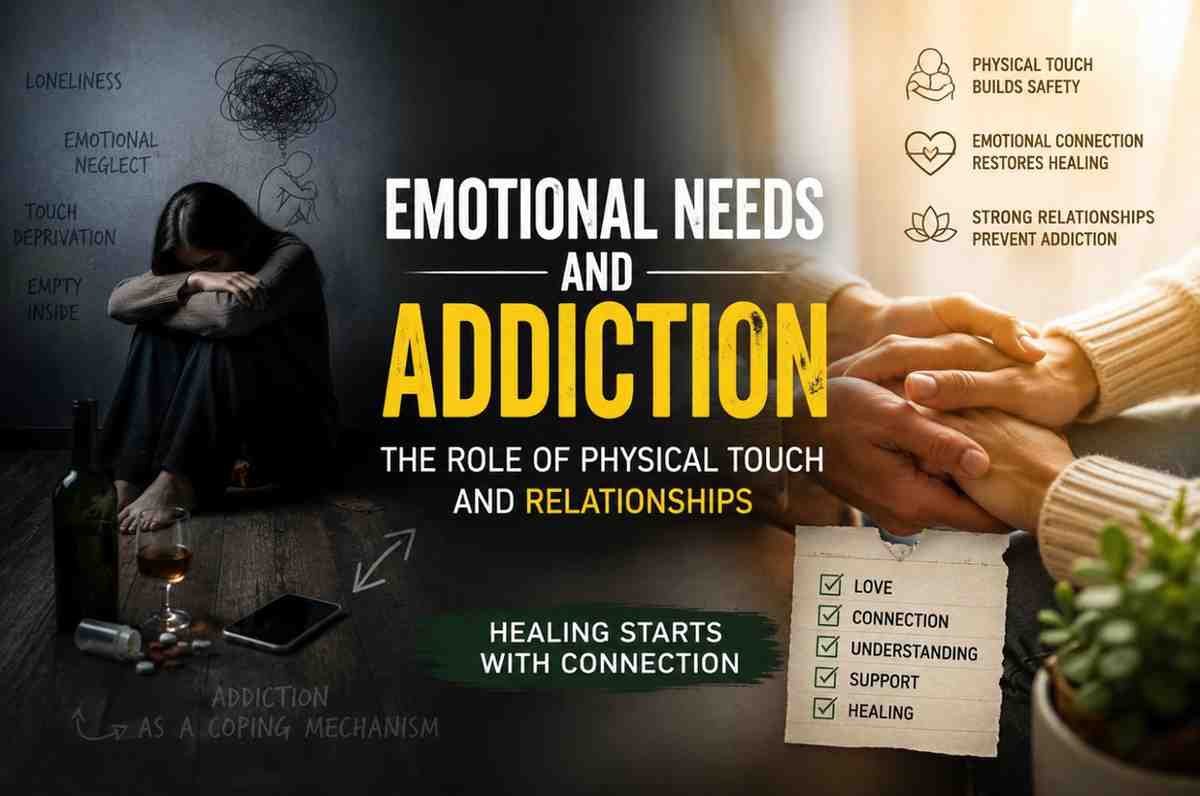

Unmet emotional needs, especially the need for physical touch, can silently lead to addictive behaviors.
Most people never connect the two. They see addiction as a choice, a personality flaw, or a moral failure. But research keeps pointing in a very different direction. When people feel chronically unloved, untouched, and emotionally unseen, the brain looks for something, anything, to fill that gap. And that search is where addiction often quietly begins.
This article goes into what that really looks like, why love language and physical touch matter more than most people think, and how relationship and addiction are more connected than addiction treatment has historically acknowledged.
When Physical Touch Becomes a Need, Not a Want
Gary Chapman’s five love languages include words of affirmation, acts of service, gifts, quality time, and physical touch. For people whose primary love language falls into the last category, a hug isn’t just a nice-to-have. It’s how they feel safe, loved, and seen in the world.
But here’s what the science says beneath all the popular talk about love languages. Physical touch directly affects your nervous system. When someone holds your hand, hugs you, or simply puts a hand on your shoulder, your body releases oxytocin, often called the bonding hormone. Oxytocin reduces cortisol, lowers anxiety, slows the heart rate, and signals to the brain that you’re safe. Without regular physical affection, cortisol levels tend to stay elevated. The body stays stuck in low-grade stress mode, braced, guarded, and quietly desperate for relief.
Researchers call this “skin hunger” or touch deprivation. It’s not a poetic metaphor. It’s a physiological state in which the nervous system is chronically undernourished. And it creates a fertile ground for emotional neglect addiction, where people start reaching for anything that mimics the relief that real human connection would have provided.
The Path From Neglect to Dependency
This is where most articles stop at the surface. Let’s go deeper.
Step 1: Neglect. It starts quietly. A marriage where physical affection has slowly disappeared. A childhood where hugs were rare, and emotions were dismissed. A person living alone in a city where they go days without meaningful human contact. A relationship where one partner’s need for love language and physical touch is consistently ignored, not out of cruelty, but out of mismatch or disconnection.
Step 2: The Emotional Void. Over time, that unmet need doesn’t just cause sadness. It creates an actual hole in how a person experiences daily life. They feel vaguely anxious without knowing why. Social events feel hollow. Intimacy feels distant. There’s an undercurrent of loneliness that doesn’t go away even when surrounded by people. This is emotional neglect addiction in its early, pre-substance stage, a quiet hunger that the person may not even have words for.
Step 3: Coping. The brain is built to seek relief. So people find it. Alcohol numbs the ache. Scrolling through a phone at midnight simulates connection without the vulnerability of asking for it. Getting into intense, fast-moving romantic relationships offers a burst of touch and closeness that feels like finally breathing again. Binge-watching shows, compulsive eating, gambling, pornography, work addiction all serve a similar function. They don’t fix the need. But they temporarily quiet it.
Step 4: Dependency. What begins as coping becomes a pattern. The brain adapts. The relief gets shorter. The dose needs to go higher. The original emotional need is now buried under a behavioral or substance dependency that has taken on its own momentum. This is where relationship and addiction intersect most painfully, because by this stage, the very relationships that might have provided healing are often the ones most damaged.
Loneliness in Metro Cities
There is something specific about urban loneliness that deserves to be named directly, especially in a city like Mumbai.
Mumbai is one of the most densely populated cities in the world. Millions of people live within metres of each other, share walls, commute in packed trains, and still go home at night to profound isolation. Young people migrate from smaller cities for work, leaving their families and support systems behind. Couples live in small apartments with jobs that demand 12-hour days, slowly losing the time and energy for physical intimacy. Nuclear families, increasingly the norm, strip away the extended family warmth that once provided regular human connection: the casual arm around the shoulder, the grandmother who held your face, the cousin you sat close to while watching TV.
Research shows that between 11% and 22% of adults report feeling chronically lonely, with that number climbing to 35% for those over 45. In a city like Mumbai, where the social pressure to appear successful and busy is intense, people rarely admit to being touch-starved. They just find something else to reach for.
That something else is increasingly alcohol, substances, screen addiction, or toxic relationship patterns that at least provide some form of intense feeling, even if it’s painful.
Toxic Relationships and Addiction
Here’s a pattern that doesn’t get talked about enough in the context of emotional neglect addiction. People who are touch-starved and emotionally neglected often don’t gravitate toward healthy relationships. They gravitate toward intense ones.
An emotionally unavailable partner who occasionally shows deep affection creates a cycle that is neurologically very similar to addiction. The unpredictable reward, warmth followed by coldness, closeness followed by withdrawal, activates the brain’s dopamine system in the same erratic, craving-inducing way that addictive substances do. The person clings not because they’re weak, but because their brain has learned that this is what love feels like: rare, unpredictable, and worth waiting for.
The Connection Between Affection in Marriage and Addiction Risk
A marriage where physical affection has reduced is one of the most quietly destructive environments for someone whose love language is central to how they feel loved.
This doesn’t mean loveless marriages are always toxic. But when one partner is chronically touch-deprived while going through the motions of domestic life, the emotional void that builds can be enormous. Many people in this situation don’t identify it as neglect. They think they should be grateful. They stay busy. They work more. They drink a little more each evening. They watch more screens. They emotionally eat. And over months or years, those coping mechanisms quietly become something harder to put down.
It’s a pattern worth sitting with. Some addictions begin not in a dark alleyway but in the perfectly ordinary loneliness of a shared bed where two people no longer reach for each other.
What Healing Actually Looks Like?
Recovery from addiction that is rooted in emotional neglect and touch deprivation needs to go deeper than most standard treatment models do.
Addressing the substance or behavior is necessary. But if the emotional void underneath is never touched, relapse risk remains high. The brain will keep looking for something to fill what’s missing.
Real healing in this context tends to involve several things working together.
Somatic therapy and body-based approaches directly address the nervous system, helping the body relearn what safety and connection feel like without a substance mediating it. This is particularly important for people whose love language is physical touch and who regulate emotionally.
Attachment-focused therapy helps people understand the patterns they learned early in life about intimacy, closeness, and whether it’s safe to need other people. Many people who are touch-starved as adults learned very early that needing closeness leads to disappointment.
Couples and relationship counseling can be transformative for those in partnerships where affection has eroded. Rebuilding physical warmth and safety in a relationship isn’t just nice; it directly supports sobriety.
Rebuilding community and connection matters as much as individual therapy. Peer support groups, community spaces, even simply choosing to live closer to others can reduce the baseline loneliness that feeds addictive coping.
At Calida Rehab, our treatment philosophy recognises that addiction rarely exists in a vacuum. For many people, especially those for whom love language physical touch is a core emotional need, the path to recovery runs directly through addressing what was missing long before the substance ever entered the picture. Treatment here addresses the emotional roots alongside the behavioral patterns, including therapy around attachment, relationships, and rebuilding the capacity for real, nourishing human connection.
Bottom Line
Addiction is not always about the substance or the behavior. Sometimes it is about what the substance is replacing. Unmet needs for physical closeness, emotional warmth, and relational safety create a void that the brain will fill one way or another. Recognising relationship and addiction as genuinely connected is not soft thinking. It’s the direction the research is pointing. And healing that ignores the emotional roots is unlikely to hold.
Frequently Asked Questions-FAQs
Can lack of physical touch lead to addiction?
Yes. Touch deprivation raises cortisol and creates chronic emotional stress. When the brain is under sustained stress without natural relief, it becomes more likely to seek out substances or behaviors that provide temporary relief, which can develop into dependency over time.
What is emotional neglect addiction?
Emotional neglect addiction refers to addictive behaviors that develop as a coping mechanism for long-term emotional neglect, including the lack of physical affection, warmth, and connection in childhood or adult relationships.
Is physical touch a love language and does its absence cause harm?
Physical touch is one of the five love languages, and for people who rely on it most, its consistent absence in relationships can cause genuine emotional and physiological harm, raising stress levels and increasing vulnerability to addiction.
How does loneliness in cities like Mumbai relate to addiction?
Urban loneliness, particularly in fast-paced metro cities where social bonds are weaker and family support is absent, creates sustained emotional isolation. Research shows loneliness is a significant risk factor for substance use, and city-based isolation makes that risk more chronic.
What kind of therapy helps when addiction is rooted in emotional neglect?
Somatic therapy, attachment-based therapy, couples counseling, and dual diagnosis treatment that addresses both the addiction and its emotional roots tend to work best. Treating only the substance use without addressing what the substance was replacing rarely leads to lasting recovery.