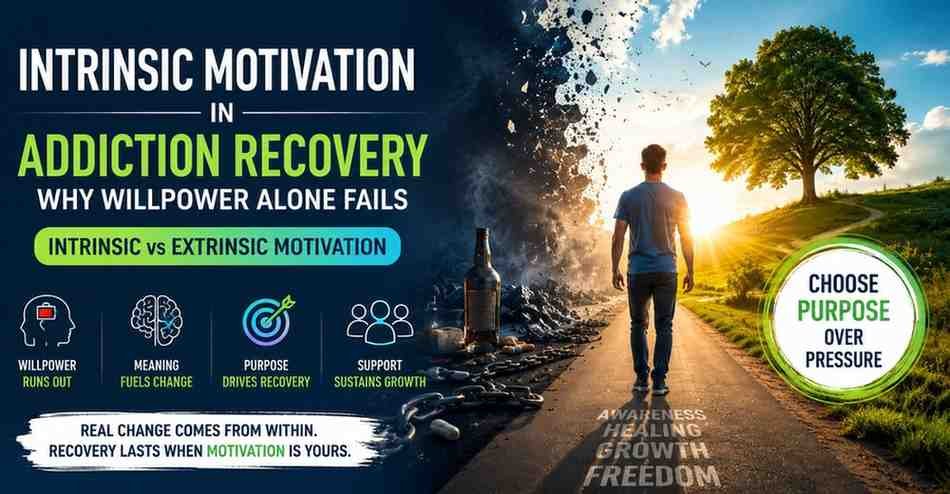

Willpower alone fails in addiction recovery because motivation is not constant. Systems and internal drivers matter far more than determination.
That is an uncomfortable truth. Most people enter recovery believing that if they just want it badly enough, they can stay clean. And for a while, that might even work. But wanting something and being able to sustain the behavior needed to keep it are two very different things. The brain does not run on intention. It runs on patterns, rewards, and deep emotional responses. And no amount of willpower permanently overrides those without the right internal foundation.
This is where understanding the difference between intrinsic and extrinsic motivation changes everything.
Intrinsic Motivation Vs Extrinsic Motivation: Actual Meaning of these termms
Intrinsic motivation is when you do something because it genuinely means something to you. Not because someone is watching, not because there will be consequences if you don’t. In the context of motivation in addiction recovery, intrinsic motivation looks like wanting to be present for your children, wanting to feel physically healthy again, wanting to rebuild self-respect, or wanting to find out who you are without the substance.
Extrinsic motivation is when you act because of an outside force. A family ultimatum. A court order. A job on the line. These pressures can get someone through the door of a treatment centre. But research consistently shows that when the external pressure lifts, motivation tied only to that pressure tends to lift with it.
The core of intrinsic vs extrinsic motivation in addiction is not about saying one is good and the other bad. It is about recognising which one leads to lasting change. External motivation is often the starting point. Internal motivation is what keeps people going when no one is watching.
Which motivation works best for long-term recovery?
Intrinsic motivation works best for long-term recovery because it is internal, meaningful, and sustainable. It comes from personal values, purpose, and a genuine desire to change.
In contrast, extrinsic motivation is temporary because it depends on external pressure like family, legal issues, or consequences. Once that pressure is removed, the motivation often fades.
In short: Lasting recovery happens when motivation shifts from external pressure to internal commitment.
Practical Steps to Stay Motivated in Recovery
Knowing why willpower fails does not help unless there is something to replace it with. Here is what actually works when it comes to how to stay motivated in recovery.
Find your “because.” Not “I am recovering because my family asked me to.” The question is: what do you want your life to look like in two years? What kind of person do you want to be? These questions build internal motivation by attaching recovery to identity, not just behavior.
Build systems, not streaks. Willpower relies on making a good decision every single day. Systems reduce the number of decisions required. Structuring your day, removing access to substances, having a pre-agreed plan for high-risk moments: these make the default action the right one.
Control your environment. This is one of the most underrated tools in staying motivated long-term. The environment shapes behavior far more than most people realise. The people around you, the places you go, the triggers in your physical space, all of these either support or undermine recovery constantly and quietly. Changing the environment changes the battle.
Build meaning into daily life. Boredom is one of the most significant relapse triggers there is. When recovery is only about removing something, it creates a vacuum. Filling that vacuum with genuine purpose, creative work, physical movement, community, learning, and connection rewards the brain signals it is actually looking for. This is a core part of how to stay motivated in recovery for the long term.
Use your support system as a system, not a safety net. There is a difference between telling people “call me if you need me” and having structured check-ins, sponsors, and therapy appointments in the calendar. Active, scheduled support is not the same as passive availability. Consistent connection with people who understand recovery is one of the strongest predictors of sustained sobriety.
The Role of Therapy and Structured Recovery Programmes
Individual motivation, no matter how genuine, needs a container. That is what structured treatment provides.
Cognitive Behavioural Therapy directly addresses the thought patterns and emotional triggers that drive relapse, reaching parts of the brain that willpower alone cannot. Motivational Interviewing helps people shift from extrinsic compliance toward genuine internal commitment. That shift, from doing recovery for others to doing it for yourself, is the heart of intrinsic vs extrinsic motivation in a treatment context.
Relapse prevention is not just about avoiding substances. It is about building a life where the emotional needs that substances were meeting get met in healthier ways. Understanding motivation in addiction recovery at this level is what separates programmes that create lasting change from those that only produce short-term compliance.
At Calida Rehab, the approach to motivation in addiction recovery is grounded in this understanding. Treatment is not about building enough willpower to resist. It is about uncovering what genuine recovery means to each individual and building internal motivation around that meaning, while providing the psychological tools, environment, and support structure to make that motivation stick. The focus is on lasting recovery, not just short-term compliance.
In a Nutshell
Willpower is not a character flaw when it fails in recovery. It is simply the wrong tool for the job. The brain reshaped by addiction needs more than determination. It needs internal meaning, consistent systems, emotional support, and structured help that addresses the triggers willpower cannot see coming.
Understanding intrinsic vs extrinsic motivation is the difference between completing a programme and actually building a different life. The people who sustain recovery are not the ones who gritted their teeth hardest. They are the ones who found a genuine reason to choose differently, then built a life that made that choice easier every day.
Frequently Asked Questions-FAQs
Why does willpower alone fail in addiction recovery?
Because willpower is a depletable resource that operates in the rational brain, while addiction is driven by emotional triggers and altered dopamine pathways that willpower cannot override consistently over time.
What is the difference between intrinsic and extrinsic motivation in recovery?
Intrinsic motivation comes from personal meaning, values, and genuine desire for change. Extrinsic motivation comes from outside pressure like family ultimatums or legal consequences. Research shows intrinsic motivation leads to more lasting recovery outcomes.
How to stay motivated in recovery when things get hard?
Reconnect with your personal “why,” lean on your structured support system, keep your environment as low-risk as possible, and use therapy to process emotional triggers rather than relying on willpower alone.
Can external motivation ever help in addiction recovery?
Yes, external pressure can help initiate treatment. However, for long-term recovery, it must gradually shift into intrinsic motivation and genuine personal commitment.
What role does therapy play in building motivation?
Therapies like CBT and Motivational Interviewing help individuals build internal motivation, identify personal values, and develop coping tools that sustain long-term recovery.
Is relapse a sign of low willpower?
No. Relapse is often part of the recovery process. It indicates the need to adjust coping strategies and support systems, not a lack of willpower or moral failure.