
Charas, ganja, bhang, hash, and marijuana are all types of cannabis products, but not all of them have the same properties. There is a wide range of individuals who try to identify the difference between charas and ganja since these two types of cannabis products are widely used in India.
The difference between charas ganja and bhang can be found out according to which parts of the cannabis plant are used in preparation. Namely, charas is prepared from the resin of fresh cannabis plants, while ganja is extracted from dried cannabis flowers. Bhang is prepared with the dried leaves and seeds of the cannabis plant.
Note: Regular cannabis use carries real risks — dependency, memory loss, mental health effects. Early professional help makes the difference.
Struggling with Charas or Cannabis (Ganja/Weed) or any Other Drug Addiction? 24/7 confidential support — talk to our specialists now.
Visit Mumbai Centre Visit Pune CentreIn this blog, we will discuss the difference between charas and ganja scientifically, legalisation in India, and the differences between charas, ganja, bhang, and hash.
What Is Cannabis and Its Different Forms
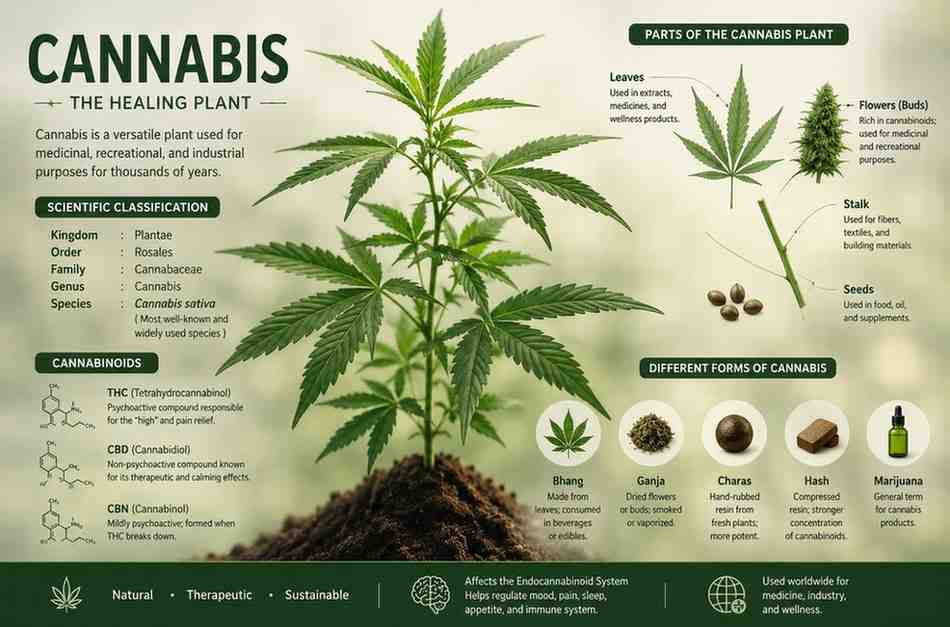
Cannabis is an intoxicating herb that humans use for various applications like recreation, medication, and other purposes. One variety of cannabis is called cannabis sativa, which consists of psychoactive compounds known as cannabinoids.
Various types of cannabis are formed using parts of this plant, which explains the difference in strength and effects. The cannabinoids found in cannabis include THC and CBD, where THC causes the “high” experience, while CBD provides a relaxing sensation.
Cannabis products with higher amounts of THC tend to be more powerful and lead to dependency and related psychological problems. Different cannabis products, such as bhang, ganja, charas, and hash, show varying degrees of intensity in their effects due to how each product is formed.
Bhang is prepared using cannabis leaves and seeds, ganja uses cannabis dried flowers, charas is concentrated resin obtained from freshly grown cannabis, and hash is resin that is processed.
What Is Charas?
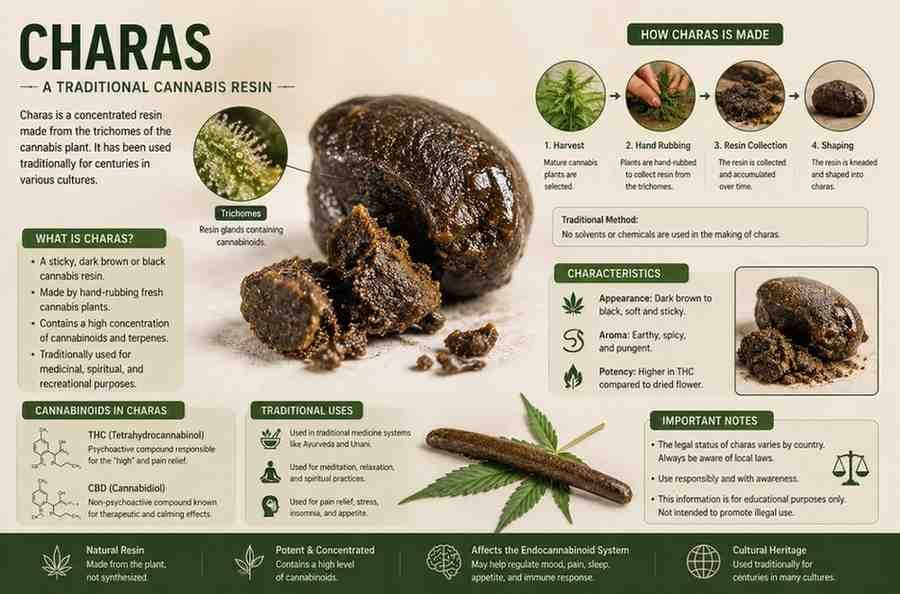
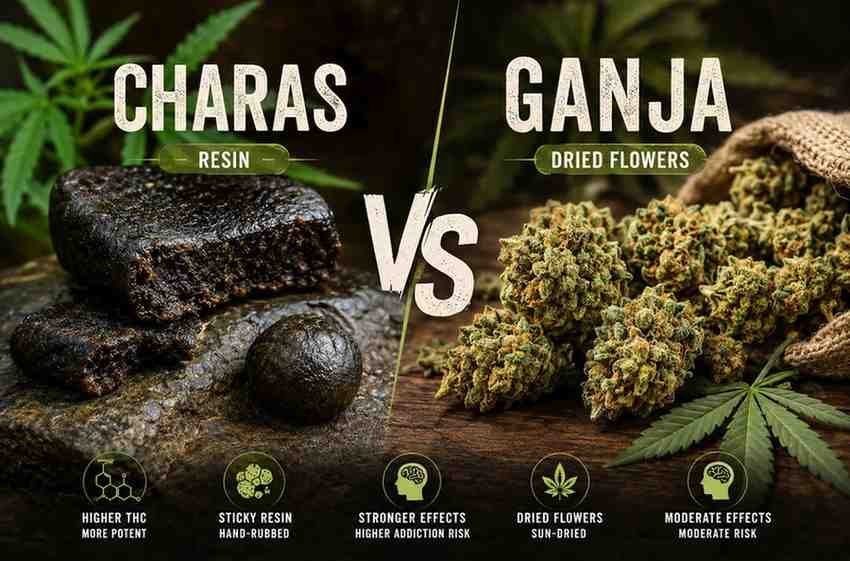
Charas refers to a concentrated form of cannabis that involves the extraction of resin from living cannabis plants. Unlike ganja, which is harvested from dried flowers of the cannabis plant, charas is manufactured through rubbing of fresh buds against one’s hands to obtain a sticky substance. Charas is known to have high THC content.
The process of manufacturing traditional charas takes place in the Himalayas, where the herb grows. Farmers and charas producers gently rub living cannabis flowers in their hands till they develop a sticky substance.
The dark sticky layer of resin obtained from this process is then collected to manufacture sticks or balls of charas. Trichomes produce cannabinoids, including THC. Because charas is obtained from fresh flowers and resin, its content of THC is higher compared to ganja and bhang. For this reason, charas may cause various psychological.
What is Ganja?
Ganja is the term used for the dried flowers or buds of the female cannabis plant. Contrary to charas, which involves using resin, ganja is dried and processed cannabis buds. Individuals also tend to think that ganja and marijuana are two different things; in reality, they are very similar.
Marijuana is an international term used in relation to various cannabis products, whereas ganja is an Indian term for dried cannabis buds. The color of ganja is greenish-brown, and the herb possesses a natural odour caused by terpenes.
The THC concentration in ganja may vary depending on the cannabis type and the quality of plants used in processing. Generally, ganja involves a lower concentration of THC than charas because it does not include concentrated resin.
Nevertheless, its regular consumption leads to side effects such as relaxation, euphoria, heightened sensory perception, increased appetite, and poor memory performance.
Difference Between Charas and Ganja
However, the differences lie in how they are prepared, their physical characteristics, potency, and the amount of chemicals in them. Charas is made by rubbing freshly harvested cannabis buds by hand. On the other hand, ganja is made through drying cannabis buds.
| Feature | Charas | Ganja |
| Made From | Resin | Flowers |
| Plant Type | Fresh/live plant | Dried plant |
| THC Strength | Higher | Moderate |
| Texture | Sticky | Dry |
| Colour | Dark brown/black | Green |
| Potency | Strong | Medium |
| Preparation | Hand-rubbed | Sun-dried |
| Addiction Risk | Higher | Moderate |
Difference Between Charas and Ganja in Pharmacognosy
Charas and ganja are made from the Cannabis sativa plant; however, they differ in composition, concentration, and preparation method.
Pharmacognosy refers to the study of natural medicinal and chemical substances produced from plants. Because of the way charas and ganja are extracted, they also differ chemically.
Ganja contains dried female flowers of cannabis, whereas charas represents concentrated resin obtained from cannabis flowers. Charas is made from resin, which contains many glands called trichomes, found on the buds of the cannabis plant.
Trichomes make cannabinoids and other aromatic chemicals that give the cannabis plant psychoactive and medicinal properties. Active ingredients found in charas and ganja include THC (tetrahydrocannabinol), CBD (cannabidiol), and terpenes.
THC is considered a main psychoactive ingredient, which makes cannabis users experience a “high.” CBD helps users relax and calm down, and terpenes contribute to the distinctive smell and effects of cannabis plants.
THC Content and Potency Comparison
Ganja consists of dried flowers of cannabis plants, and it normally contains a medium amount of THC. Charas has more potent resins, which make it stronger and more potent.
However, the exact percentage of THC varies based on the quality of cannabis plants and the method used to extract it.
| Substance | Approximate THC Strength | Potency Level |
| Bhang | Low | Mild |
| Ganja | Moderate | Medium |
| Charas | High | Strong |
Effects of Charas and Ganja on the Brain and Body
The effects depend on the level of THC present in the drug, how often it is used, and a person’s current mental state.
Short-Term Effects
Short-term effects of charas and ganja are usually evident within minutes following inhalation or ingestion. Users typically feel high, relaxed, and calm. They may also experience changes in perception and sense of time, as well as an increase in hunger and sleepiness.
Long-Term Effects
Consistent consumption of weed can negatively impact one’s psychological and physiological well-being. Using charas and ganja over an extended period of time causes memory loss, lack of concentration, decreased motivation, and poor cognitive functions.
Furthermore, certain people become addicted to cannabis to such an extent that they develop depression, anxiety, mood swings, and even suffer from constant panic attacks.
Which is More Addictive: Charas or Ganja?
Generally, Charas is seen as more addictive because of the higher amount of THC in it. Due to its production process, which involves collecting concentrated cannabis resin from living plants, charas produces more powerful effects on users than ganja.
Therefore, the increased level of THC exposure could result in a dependency on the product.
Using charas frequently or over an extended period may result in the onset of psychological addiction, leading to a dependence on the drug for relaxation, stress management, and improving one’s mood.
Users of charas can easily develop strong cravings and have a difficult time controlling their consumption of the product. They may also experience increased tolerance levels, resulting in increased consumption of the drug.
Some symptoms that indicate addiction to cannabis may include irritability, restlessness, sleep disorders, agitation, appetite loss, mood swings, trouble focusing, and difficulty relaxing. Such symptoms can be seen if a person abruptly stops using cannabis.
Expert Insight: Higher THC cannabis products may increase dependency risk.
Legal Status of Charas and Ganja in India
Charas and ganja in India are governed by the Narcotic Drugs and Psychotropic Substances (NDPS) Act, 1985. According to this legislation, the manufacture, possession, distribution, sale, and usage of narcotic drugs and psychotropic substances are strictly regulated.
In accordance with the NDPS Act, charas and ganja are illegal in India since both are derived from cannabis resin and cannabis flowering tops, respectively, containing high concentrations of THC.
Legal Definition: Charas denotes the separated resin of the cannabis plant, and Ganja denotes the flowering or fruiting tops of the cannabis plant (excluding seed and leaves when not accompanying flowering tops).
Penalties: The NDPS Act provides for severe penalties for manufacturing, possessing, transporting, or selling charas and ganja.
While most Indian states prohibit and penalise bhang since the drug is extracted from cannabis plants, some exceptions are made to accommodate local customs. Since bhang is made of cannabis leaves only and not resin, the NDPS Act does not cover bhang.
Depending on the quantity discovered (small, moderate, or commercial), various penalties will apply as provided by the NDPS Act. Punishment could take the form of lengthy jail sentences or huge monetary fines.
Important Snippet: Under India’s NDPS Act, charas and ganja are illegal, while bhang made from leaves is often exempt under state laws.
Treatment for Cannabis Addiction
Charas or ganja-based cannabis addiction can be addressed with the right professional help. Early intervention can help with recovery from dependency, withdrawal symptoms, and mental well-being.
The objective of the treatment program is to assist individuals in gaining control over their lives and preventing further misuse of cannabis.
Detoxification
This involves the first step of detoxification. It assists the body in eliminating the substance while dealing with symptoms such as irritability, anxiety, insomnia, and mood swings. Detoxification is typically conducted under medical supervision.
Therapy and Counselling
Therapy is an important aspect of recovery. Through counselling sessions, patients understand the underlying factors associated with their substance abuse and gain more insight into effective coping mechanisms. Individual counselling and group therapy are also important sources of emotional support for patients during recovery.
CBT (Cognitive Behavioural Therapy)
Through CBT, patients become aware of their negative behavioural habits and thoughts. Patients learn how to effectively manage triggers, reduce cravings, and prevent relapses.
Rehabilitation Programs
Rehabilitation programs offer patients an organised treatment plan in a safe environment. These rehabilitation programs consist of medical treatment, therapy sessions, structured routines, and other lifestyle components. These programs may be beneficial for patients who have been under the influence of cannabis for many years.
Family Therapy
The inclusion of families increases recovery success rates. Families undergo therapy sessions aimed at rebuilding trust, promoting better communication, and creating a positive recovery environment.
Relapse Prevention
Relapse prevention programs help patients identify possible triggers such as stress, social pressure, and emotional factors. This helps patients cope with their cravings.
Myths vs Facts About Charas and Ganja
Many misunderstandings surround charas, ganja, and other forms of cannabis. Misunderstandings can cause misuse, misunderstandings, and an underestimation of the dangers. It is important to know the facts to promote proper understanding of the impact on the body and mind.
| Myth | Fact |
| Cannabis is always safe | High THC cannabis products can cause dependency and mental health issues |
| Bhang is harmless | Excess use of bhang can still affect memory, mood, and overall health |
| Charas is natural so it’s safe | Natural substances can still be addictive and harmful when misused |
| Ganja has no long-term effects | Regular use can impact brain function, motivation, and mental health |
| Cannabis is not addictive | Cannabis can lead to psychological dependence in frequent users |