
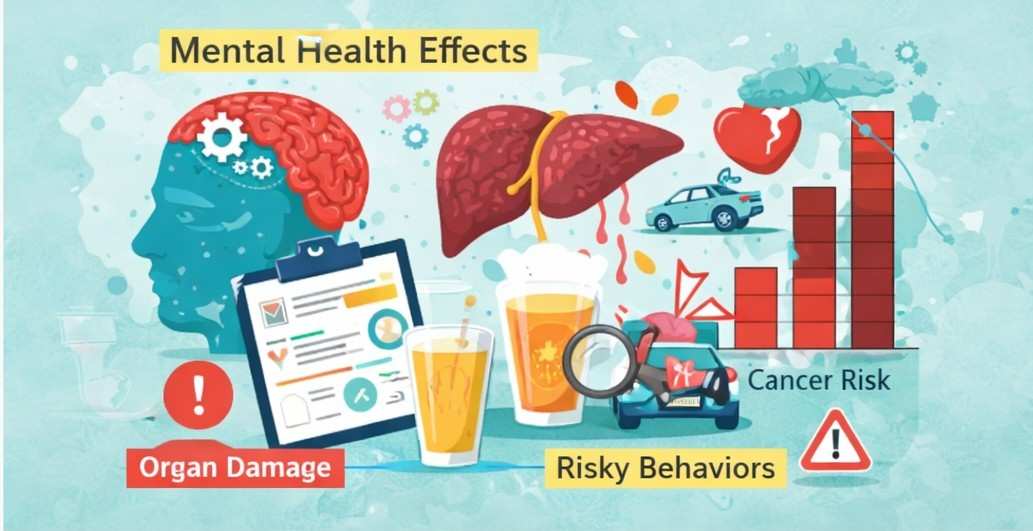
Alcohol consumption is common among people in social gatherings. At times, it may look harmless when used during celebrations or on weekends. However, when it becomes a habit, it may become dangerous.
This article will help readers understand what binge drinking is, how it affects health, the harm it causes, and the overall effect on health. Additionally, it will help readers understand when to seek help.
What Is Binge Drinking?
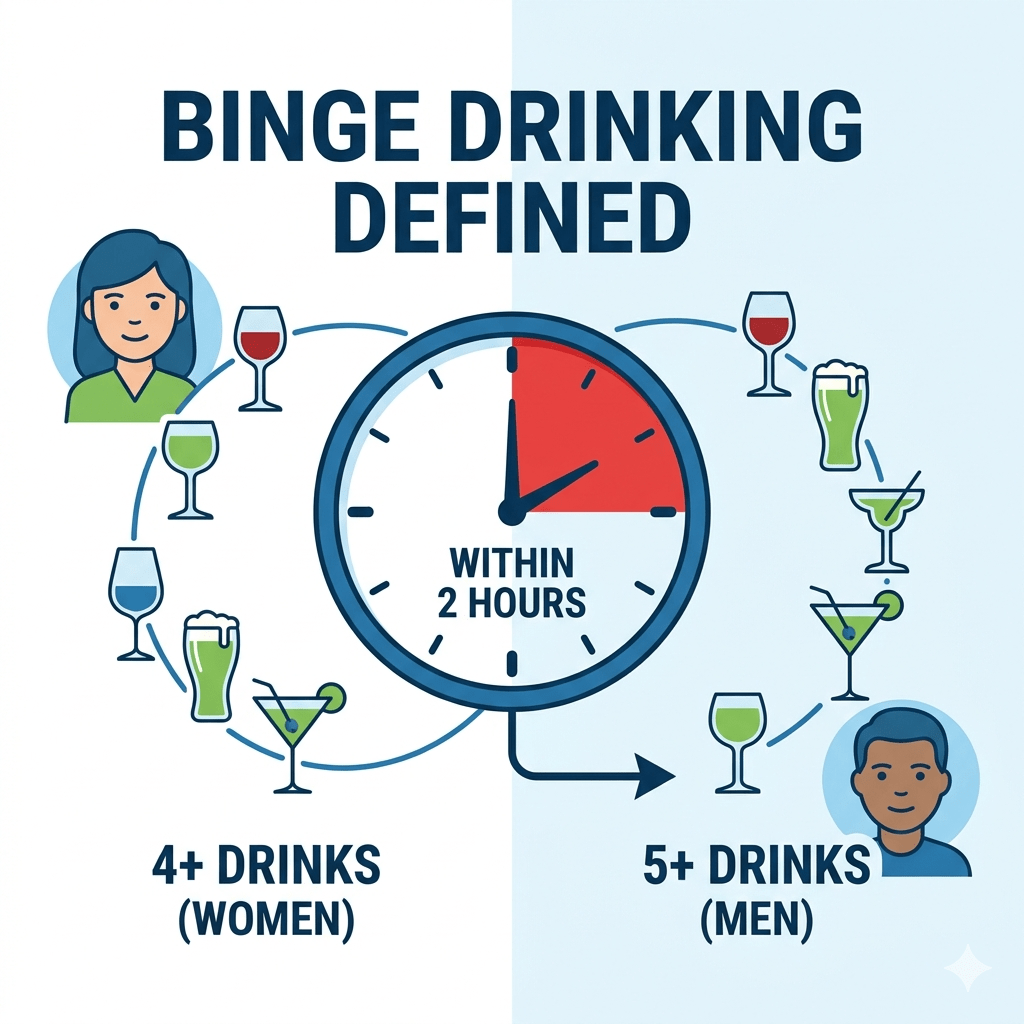
Binge drinking means consuming alcohol to bring Blood Alcohol Concentration (BAC) levels to 0.08% or higher. Usually, this occurs when:
- Men: Consume 5 or more drinks within 2 hours.
- Women: Consume 4 or more drinks within 2 hours
This drinking pattern, according to the Centres for Disease Control and Prevention (CDC), greatly increases health risks:
Unlike moderate drinking, binge drinking overwhelms the body. The liver is not able to properly metabolise alcohol, and as a consequence, alcohol is stored in the blood.
A Real-Life Example of Binge Drinking
The consumption of alcohol starts slowly, but the amount consumed rises over a short period. At the beginning, there may be feelings of relaxation and confidence. After some time, cognitive ability and coordination may be impaired.
The second day may be characterised by tiredness, dehydration, and difficulty concentrating. This process may be repeated. This is an example of binge drinking. The more the process is repeated, the higher the health risks.
Binge Drinking in India: Key Statistics
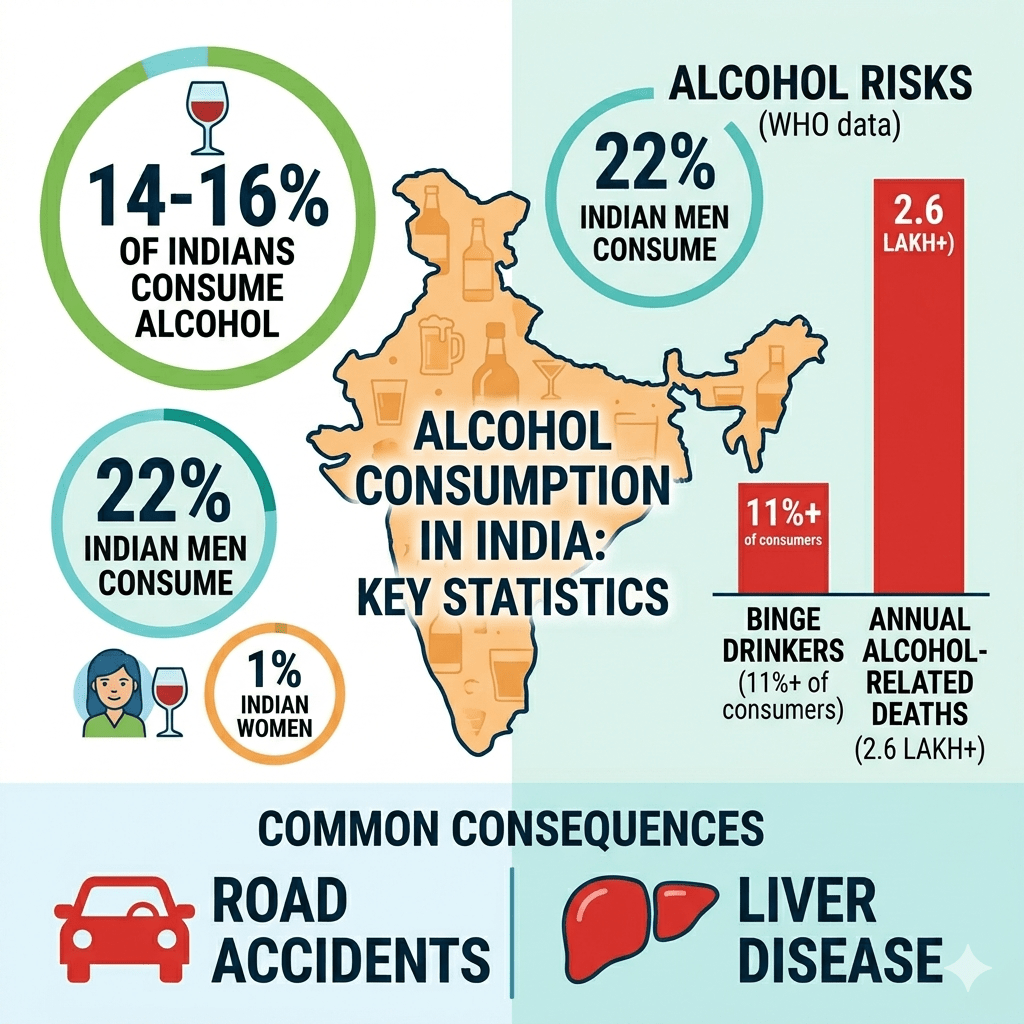
Alcohol consumption is on the rise in India. Binge drinking is also common:
- 14 to 16 % of Indians consume alcohol
- 22 % of Indian men consume alcohol
- 1 % of women in India consume alcohol
- More than 11 % of alcohol consumers suffer from binge drinking
According to the World Health Organisation (WHO), alcohol poses critical health risks to the world:
In India, alcohol consumption is responsible for over 2.6 lakh deaths. It is also responsible for road accidents and liver disease. Therefore, binge drinking is a critical health issue.
Moderate Drinking vs Binge Drinking
Here is the key difference between drinking and binge drinking:
| Moderate Drinking | Binge Drinking |
| Controlled intake | Excessive intake |
| Lower risk | High risk |
| Occasional pattern | Repeated pattern |
| Stable routine | Disrupted lifestyle |
Myths vs Facts About Binge Drinking
Myth: Weekend binge drinking is safe
Fact: Even occasional binge drinking causes harm
Myth: Only daily drinkers face risks
Fact: Binge drinking alone can cause damage
Myth: Younger individuals recover quickly
Fact: Early damage can have lasting effects
Impact of Binge Drinking on Daily Life
The effects extend into daily routines. Productivity often declines.
Work performance may suffer due to fatigue and poor concentration. Academic performance may also decline.
Financial strain can increase due to repeated alcohol expenses. Therefore, the impact of binge drinking affects multiple aspects of life.
How Binge Drinking Affects the Body
Binge drinking affects the body in stages. Effects may appear within hours.
Immediate Effects
- Poor Judgment
- Loss of Coordination
- Slurred Speech
- Increased Accident Risk
Alcohol slows down brain activity. It slows down reaction time and decision-making capabilities.
Short-Term Effects
Short-term effects appear the following day:
- Headache and Fatigue
- Nausea and Vomiting
- Dehydration
- Disrupted Sleep Patterns
These effects result from internal stress on the body.
Long-Term Effects
Binge drinking leads to long-term complications:
- Liver Disease
- Heart Disease
- Brain Damage
- Increased Cancer Risk
The National Institute on Alcohol Abuse and Alcoholism (NIAAA) explains how binge drinking affects brain functions:
Harms of Binge Drinking Beyond Physical Health
Binge drinking has effects beyond physical health. The following are the impacts caused by binge drinking:
Mental Health Impact
Alcohol changes brain chemistry, and anxiety and depression are two effects of binge drinking.
In many instances, alcohol is consumed as a way of relieving emotions. Unfortunately, it makes the problems worse.
Social and Relationship Impact
It is possible that binge drinking regularly could harm relationships. Arguments and misunderstandings are more prevalent.
In addition, trust may be lost over time. Social isolation could also be a consequence.
Risky Behaviors
Many binge drinking effects are a result of high-risk behaviours:
- Drunk driving
- Unprotected sex
- Aggressive behaviors
Is Binge Drinking Every Day More Dangerous?
Daily binge drinking is extremely harmful. The body gradually builds tolerance. Larger amounts of alcohol become necessary.
The brain may develop dependence over time. This increases the risk of addiction.
Daily binge drinking can lead to:
- Severe liver damage
- Cardiovascular disease
- Mental health disorders
According to the WHO, harmful alcohol use contributes to chronic disease and early death.
Why Do People Binge Drink?
Several factors contribute to binge drinking behaviour.
Stress and emotional pressure are common triggers. Social environments also influence drinking habits.
In many cases, alcohol is used as a coping mechanism. This creates a repeating cycle. Over time, occasional use may develop into a regular pattern.
Who Is Most at Risk?
Certain groups face a higher risk:
- Young adults
- College students
- High-stress professionals
- Individuals with mental health conditions
Genetic factors may also increase susceptibility. Family history plays a role in addiction risk. Early awareness helps reduce long-term harm.
Warning Signs That Should Not Be Ignored
Warning signs often appear gradually:
- Loss of control over drinking
- Frequent blackouts
- Strong cravings
- Neglect of responsibilities
These signs indicate increasing dependence. Early intervention is important.
When to Seek Professional Help
Professional support becomes necessary when binge drinking becomes frequent.
Help may be required in the following situations:
- Inability to control alcohol intake
- Withdrawal symptoms
- Negative impact on work or relationships
Structured treatment programs support recovery. For individuals in Maharashtra, options such as an alcohol rehab in Pune provide access to medical care and counselling.
Rehabilitation programs usually include detox, therapy, and relapse prevention strategies.
How to Reduce or Stop Binge Drinking
Behavioural changes can reduce risk:
- Set clear drinking limits
- Eat before consuming alcohol
- Alternate alcohol with water
- Avoid known triggers
Support systems improve outcomes. Counselling and therapy may also help.
Consistency plays a key role in long-term change.
Frequently Asked Questions
Consuming 4–5 drinks within two hours is considered binge drinking.
Yes, even weekly binge drinking can affect health over time.
Yes, repeated binge drinking can lead to long-term organ damage.
More than 4–5 drinks in a short period is considered excessive.
Bottom Line
Binge drinking may appear harmless initially. However, its effects can be serious and long-lasting. It affects physical health, mental well-being, and daily functioning. Over time, risks increase significantly.
Understanding the effects, harms, and impact of binge drinking supports informed decisions. Early action and professional support can prevent long-term damage. Small changes can lead to meaningful health improvements.
References
- World Health Organisation (WHO)
https://www.who.int/news-room/fact-sheets/detail/alcohol - Centres for Disease Control and Prevention (CDC)
https://www.cdc.gov/alcohol/fact-sheets/binge-drinking.htm - National Institute on Alcohol Abuse and Alcoholism (NIAAA)
https://www.niaaa.nih.gov