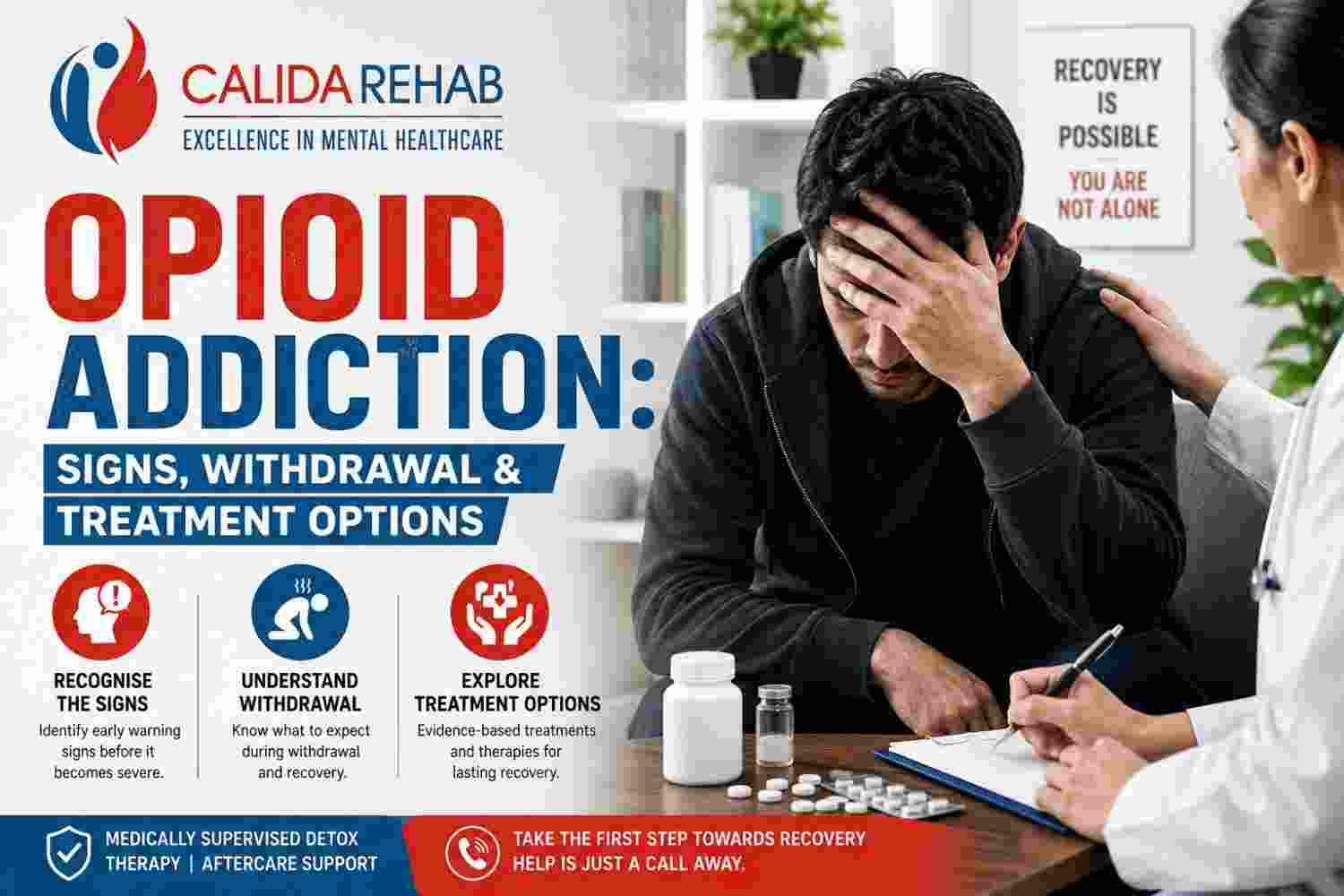

Opioids include prescription painkillers like tramadol and codeine-based cough syrups as well as illegal drugs like heroin (brown sugar). What often starts as a prescription for post-surgery pain, a back injury, or a dental procedure can quietly turn into dependence — because opioids change how the brain registers pain and reward within days of regular use, not months.
This guide covers how opioid addiction develops, what withdrawal actually feels like, and what proper medical treatment looks like — so families know what they’re dealing with and what to do next.
How Opioid Dependence Develops
Opioids work by binding to receptors in the brain that control pain and pleasure. Used briefly and under medical supervision, this is safe. But with repeated use, the brain adjusts its own chemistry to compensate — needing more of the drug to feel normal, and reacting badly when the drug is missing. This is tolerance and dependence, and it can happen even to people who started using opioids for a legitimate medical reason.
Common early indicators include:
- Taking a higher dose than prescribed, or refilling prescriptions early
- “Doctor shopping” — visiting multiple doctors or pharmacies to get more
- Drowsiness, constricted pupils, or slowed breathing
- Withdrawing from family or work to manage use in private
- Continuing use despite it causing problems at home, work, or financially
- Mixing opioids with alcohol or sedatives, which sharply raises overdose risk
Opioid Withdrawal: What to Expect
Opioid withdrawal is rarely life-threatening on its own the way alcohol or benzodiazepine withdrawal can be, but it is intensely uncomfortable — and this discomfort is one of the main reasons people relapse when they try to quit without support.
| Timeline | What Typically Happens |
|---|---|
| 6–12 hours after last use | Anxiety, restlessness, muscle aches, sweating, cravings begin |
| Day 1–3 | Peak symptoms: nausea, vomiting, diarrhoea, chills, insomnia, intense cravings |
| Day 4–7 | Physical symptoms start easing; fatigue and low mood remain |
| Week 2 onward | Physical symptoms largely resolve; psychological cravings and low mood can persist for weeks |
Because cravings often outlast the physical symptoms, unsupervised attempts to quit frequently end in relapse — and relapsing after a period of abstinence carries a real overdose risk, since the body’s tolerance has already dropped.
Why Medical Detox Matters for Opioids
Medically supervised detoxification manages withdrawal safely and reduces the urge to use again out of sheer discomfort. Depending on the case, this may include:
- Medication-assisted treatment to ease withdrawal symptoms and cravings
- Round-the-clock monitoring during the highest-risk first 3–5 days
- Nutritional and hydration support, since vomiting and diarrhoea are common
- Screening for co-occurring conditions like depression or anxiety, which often accompany long-term opioid use
Detox alone is not treatment — it’s the first step. Without therapy and a relapse-prevention plan afterward, the physical dependence can end while the underlying reasons for use remain unaddressed.
What Full Treatment Looks Like
A structured opioid addiction programme typically follows the same phases as broader substance use disorder treatment: assessment, medical detox, individual and group therapy, dual diagnosis care where needed, and a formal aftercare plan before discharge. Programmes usually run 30–90 days depending on the severity of dependence and how long the person has been using.
Cost varies by facility type, from subsidised government programmes to premium residential care — our detailed breakdown in the real cost of rehab in India covers what typically drives the price difference.
Getting Help Near Mumbai
If you’re trying to find the right place to start, our complete guide to drug rehabilitation centres in Mumbai covers cost ranges, what to look for in a genuine centre, and how the full recovery process works from admission to aftercare.
Frequently Asked Questions
Can opioid withdrawal be dangerous?
It’s rarely life-threatening on its own, but severe dehydration from vomiting and diarrhoea can become a medical concern, and the relapse-and-overdose risk afterward is real. Medical supervision is strongly recommended.
How long does opioid withdrawal last?
Physical symptoms typically peak within the first 1–3 days and ease significantly by day 7, though cravings and low mood can continue for several weeks.
Is medication-assisted treatment necessary?
Not for every case, but it significantly reduces discomfort and cravings during detox and is standard practice at medically driven treatment centres.