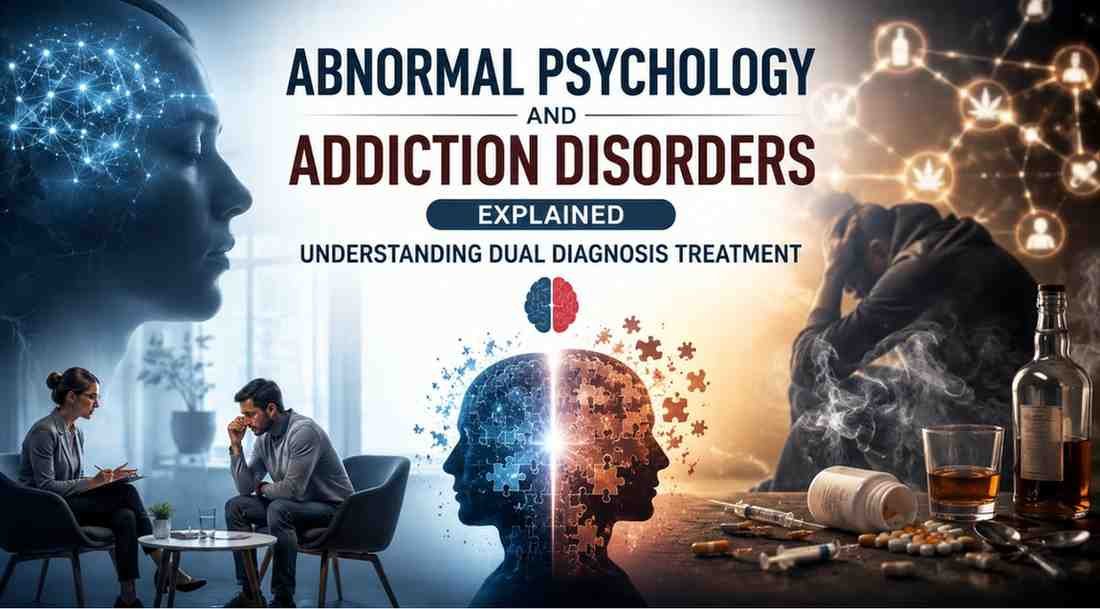

Mental health recovery starts with recognising patterns in a person and then breaking them. These thoughts, emotions, and behaviours that keep coming back act as triggers and are the real causes of addiction. Thus, psychiatric medicines and detox are not enough to treat addiction. Doctors use therapy to uncover the unwanted patterns in the patient and break them.
The branch of psychology that studies atypical patterns of behaviour, thoughts, and emotions is called abnormal psychology. In the blog below, we will dive deep into abnormal psychology and understand addiction at its roots.
What Is Abnormal Psychology?
Abnormal psychology is a particular branch of psychology. It studies thoughts, emotions, and behaviours, as well as patterns in the brain that differ from the norm. However, the study goes further in depth to identify patterns in relationships, work, education, and physical health.
The focus of the branch is to find out why some people develop mental health disorders when exposed to stressors while others don’t under the same circumstances. Disorders like anxiety, depression, personality disorders, psychotic disorders, and substance use disorder or in other words, addiction, are studied extensively for pattern identification.
Factors Affecting Mental Health Disorders
Years of research in abnormal psychology have revealed several factors other than stressors like a breakup or peer pressure affecting the onset of a disorder. For example:
- Genetics: It means that mental health conditions may be in the genes of the patient if there is a family history of psychiatric disorders and addiction.
- Environment: The living circumstances and environment, if highly stressful, may increase the risk of mental disorders and addiction significantly.
- Trauma history: Unresolved trauma from childhood often causes issues later.
- Brain chemistry: Hormones significantly influence how a person feels. Chronic imbalances in dopamine and serotonin, the two main hormones affecting mood and impulse, can be markers.
Psychiatrists check for these markers in diagnosis to distinguish temporary distress from chronic conditions. Identification of these markers significantly influences the course of treatment as well.
The Link Between Mental Disorders and Addiction
Addiction can be caused by an existing mental health disorder, which then gets worse due to the onset of substance use disorder. This creates a cycle where two conditions influence each other. Studies have shown that people often suffering from depression, anxiety, post-traumatic stress disorder (PTSD), or chronic stress seek the support of intoxicating substances for relief.
All intoxicating substances, be it drugs, alcohol, tobacco, or marijuana, numb the brain temporarily. The sudden relief from all the disturbing thoughts, combined with a dopamine hit, creates a feeling people want to return to. However, repeated use then rewires the brain, impairing it. The person stops feeling happy or relieved from anything else. Furthermore, it deepens the underlying condition, which intensifies the need for relief and thus the increasing dependency.
Addiction as Documented By Abnormal Psychology
Addiction, other than creating a dependency on one or multiple substances or sometimes even activities, impacts the behaviour and ability of the person. Here are some of the well-documented symptoms of the condition:
- Intense mood instability that includes irritability, anger, mood swings, and sometimes even violent reactions. It is caused by sleep disruption and a gradual decline in nutrition.
- Decreasing social support due to increasing isolation leaves the person vulnerable and alone.
- Financial stress caused by increased consumption of substances and decreasing focus at work often causes job loss and further fuels anxiety and depressive symptoms.
- Addiction creates neurochemical changes in the brain. It means the hormones become dependent on substance use. This impairs the brain’s natural ability to regulate emotion.
Thus, addiction cannot be treated simply with medicines or detox. If the underlying conditions are not diagnosed and treated, the risk of relapse simultaneously becomes very high, meaning the recovery won’t be sustainable.
Understanding Dual Diagnosis Treatment
Dual diagnosis, as the name suggests, is the diagnosis of mental disorders and addiction, together. Likewise, dual diagnosis treatment refers to the coordinated care and treatment that targets both conditions simultaneously in one individual. For example, if a person is diagnosed with stage 3 substance use disorder or addiction and anxiety disorder, the treatment will target both together for sustainable recovery. Since the two conditions are distinct and serious on their own, together they increase complications, making the treatment complex.
Why Integrated Care Is Complex
Diagnosing co-occurring conditions, which in the case of addiction can be anxiety, stress, depression, personality and psychotic disorders, takes time. In most cases, overlapping signs make the diagnosis very difficult for the doctor. Thus, an accurate and complete diagnosis may occur after the person goes through the detox phase of addiction, followed by a few sessions of therapy.
To understand the complexities, here are a few similarities that create confusion, making the diagnosis of mental disorders and addiction together difficult:
- Withdrawal symptoms and the symptoms of anxiety disorders are the same
- The behaviour of someone with chronic substance use closely resembles a person with depression and psychosis. Overlapping symptoms – irritability, isolation, mood swings, uncontrolled anger, disrupted sleep, weight loss or weight gain.
The standard treatment programs for addiction ignore the complexities of dual diagnosis. This ignorance delays diagnosis of the underlying condition. It not only triggers addiction again, causing a relapse, but progresses into advanced stages itself, increasing the overall complexities.
Separate Care vs. Integrated Care
The table below shows the difference between normal addiction programs and specialised integrated programs for dual diagnosis treatment.
| Aspect | Separate, Sequential Care | Integrated Dual Diagnosis Care |
| Provider communication | Limited, often disconnected | Coordinated across specialists |
| Treatment focus | One condition at a time | Both conditions simultaneously |
| Relapse risk | Higher, due to untreated symptoms | Lower, with unified monitoring |
| Recovery roadmap | Fragmented, inconsistent advice | Single, consistent care plan |
Real-World Scenarios
Abnormal psychology can explain dual diagnosis in a better way by observing common patterns in clinical practice:
Case 1: Anxiety Leading to Alcohol Dependence
A person suffers from untreated generalised anxiety disorder. In order to find relief from the brain chatter and worries, he starts drinking at night. Drinking helped him to sleep peacefully. Gradually, his body became dependent on alcohol with regular use over months.
Case 2: Trauma Leading to Drug Misuse
A person has grown up seeing violence at home and has been abused as well. While adulthood life is normal, his unresolved trauma made him use marijuana influenced by his tuition friends. Smoking marijuana made him forget all about his past memories but led to dependency on it.
Dual Diagnosis Treatment at Calida Rehab
Dual diagnosis treatment effectively targets both conditions and treats them simultaneously. At Calida Rehab, the treatment is a combination of detox, therapy, medicines, lifestyle changes, exercise, nutrition, yoga & meditation. The program is tailored to each person’s specific diagnosis, personal history, and most importantly, response.
Therapy
Therapy is an essential part of the treatment. While the exact plan depends on the diagnosis, here are a few common ones:
- Cognitive behavioural therapy (CBT): A must for addiction treatment, it helps to identify the triggers and address them by developing appropriate coping mechanisms.
- Dialectical behaviour therapy (DBT): This helps to work on emotional regulation skills. It is particularly useful for managing trauma or intense mood swings.
Medication
Psychiatric medications are used to manage symptoms of mental disorders and addiction. They also help to stabilise mood, anxiety, or psychotic symptoms. In other words, these prescription medicines help stabilise the patient, making them ready to receive therapy.
Behavioural Treatment & Relapse Prevention
Several practices help develop skills and thereby reshape the behaviour of the patient. For example:
- Group activities and therapy help with socialisation.
- Peer support groups help with relapse prevention.
- Family counselling improves relationships and the environment at home.
- Communication workshops help rebuild confidence.
- Lifestyle reset with a new routine reinforces discipline that is good for both the mind and body.
- Therapy and workshops help the patient develop coping mechanisms to change the response to triggers.
- Goals based on personal desires are set with a roadmap to change the mindset and focus.
While certain elements of the program remain the same, they are heavily tailored based on individual diagnosis, needs, and their response to treatment.
For example, some people may require more focus on nutrition and physical health recovery while others may need more support with conflict management and communication. The integrated dual diagnosis treatment at Calida Rehab for co-occurring conditions looks after overall recovery for sustainable results.
Frequently Asked Questions- FAQs
What is the difference between abnormal psychology and general psychology?
General psychology studies typical human behaviour and development. Abnormal psychology is a special branch that studies atypical or abnormal human behavioural and emotional patterns.
Can addiction exist without an underlying mental disorder?
Yes, it is not necessary for a person to have an underlying condition to develop or trigger the onset of addiction. However, co-occurring conditions needing dual diagnosis treatment are common in substance use disorder, in other words, addiction.
How long does integrated treatment typically take?
The duration of integrated dual diagnosis treatment depends on the diagnosis. It may last anywhere between a month and a year. In many cases, 6–8 months of inpatient treatment, which requires the patient to stay in rehab, is followed by 3–4 months of outpatient treatment.
Is psychiatric care covered by insurance?
Yes, most reputed insurance providers cover the cost of psychiatric care and dual-diagnosis treatment.
What happens if only one condition gets treated?
If a person suffers from co-occurring conditions but gets treated for a single disorder, then the treatment remains incomplete. It also often causes relapse of the treated condition, causing zero effect on the patient despite treatment. Furthermore, delay in diagnosis and treatment of a mental health condition causes it to advance, making the treatment more complex.