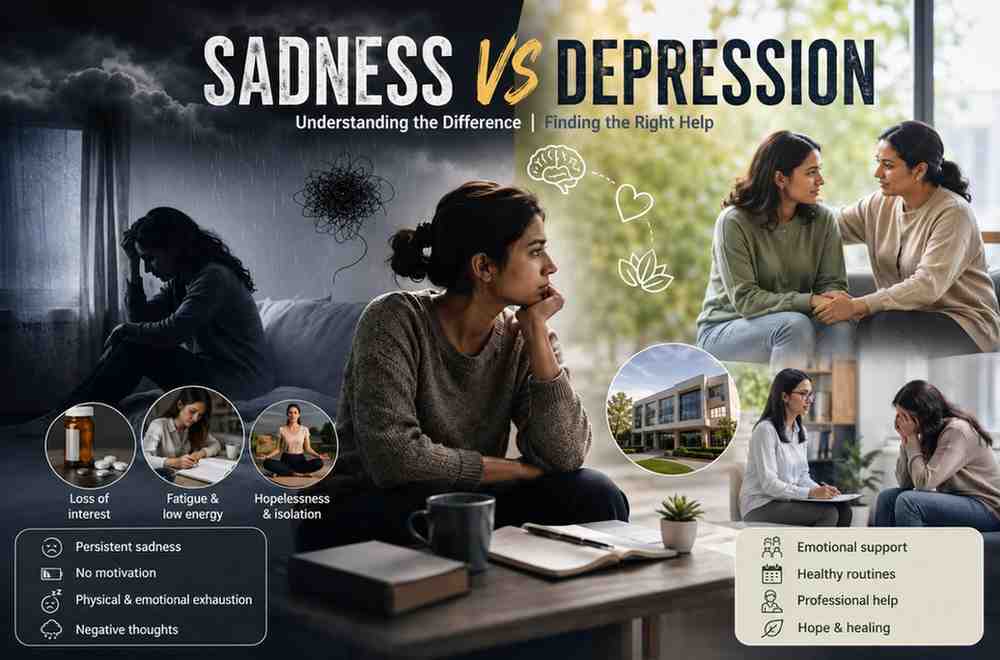

What is the difference between sadness and depression? People often use these terms interchangeably. ‘Depression’ is often used to express sadness because both express a sense of withdrawal, both feel emotionally overbearing, feeling low. But both of these terms are completely different based on their nature, duration and their impact on life.
Sadness is a very natural and common human emotion which people feel in times of distress, specific loss, specific events, disappointment or conflict. The feeling of sadness often fades as the circumstances change and with time.
Depression, on the other hand, is a clinical mental health problem. Without adequate treatment, it can linger for weeks, months, and sometimes even years. It is a condition in which patients experience chronic feelings of hopelessness, emptiness, and loss of interest in life.
It is critical to comprehend this distinction not just academically, but also in order to receive the appropriate medical care on time, before the disease worsens further, because the first step in treatment is accurate diagnosis. Now, let’s talk more about depression and sadness, and explore how both can be managed and treated.
What is Sadness?
Sadness is a very common human feeling experienced by everyone at least once in their lives. It is a universal emotion. It is a direct emotional response to something disappointing or painful.
Examples of sadness commonly include loss of anything, the end of a relationship, the death of a loved one, or as small as a bad day at work or school. Sadness basically signals that something or someone that holds meaning in your life has been affected.
Typical characteristics of universal sadness are:
- It can be triggered by some specific event or situation in life
- Sadness is temporary, and it gets over with time
- The person can still feel occasional moments of joy and pleasure while being sad
- This state of mind does not affect a person’s ability to function every day
- Emotional expressions like crying, talking about it, or using small grounding techniques often bring relief
Sadness is healthy; it is an emotion that makes us human. Without experiencing sadness, happiness cannot be felt. It builds empathy and makes us stronger emotionally to life’s inevitable changes. When we experience sadness, it is actually a sign that we are alive emotionally and we feel more connected to the world.
What is depression?
Depression is a serious mood disorder wherein people are persistently sad, lose interest in routine activities and in severe cases, lose hope and may have active or passive suicidal thoughts.
According to the WHO, depression affects over 280 million people worldwide and is one of the leading causes of suicide globally. Typical characteristics of depression are:
- Continuously low mood for 14 days or more
- Loss of interest and pleasure in activities once enjoyed, also known as anhedonia
- Fatigue
- Lack of energy every day
- Change in appetite – either eating too much or too little
- Insomnia or oversleeping
- Feeling of worthlessness and excessive guilt
- Difficulty concentrating, making decisions or remembering things
- Headaches or digestive issues
- Active/passive suicidal thoughts or death
Depression can strike anyone irrespective of their age, gender or background. Depression is a mental health problem and not a sign of weakness. It requires professional care and treatment.
Depression vs Sadness
| Basis | Sadness | Depression |
| Duration | Sadness is often short-lived. It comes in waves and gradually heals with time, or as the person processes their feelings or as the situation causing sadness improves. | Depression is not short-lived. It persists for at least two weeks or more, often much longer. There can be multiple causes of depression, and it can be healed with professional help and care. |
| Cause | Sadness has identifiable triggers: a bad breakup, loss of a job, argument with a loved one, bad grades, etc. | Depression has no clear single factor. It is caused by a multitude of reasons: interplay of genetics, brain chemistry, hormonal factors and life experiences. |
| Impact on daily life | Someone can feel sad but continue going about their day doing their work, socialising, and occasional bursts of joy. | Depression can make everyday tasks like getting out of bed, showering, and eating feel impossible. |
| Physical symptoms | Sadness is primarily emotional. | Depression comes with physical symptoms like chronic fatigue, unexplained aches and pain, weight gain or loss, insomnia or oversleeping; all these are common with depression. |
| Ability to experience positive emotions | A sad person can still laugh at a joke, or enjoy a meal, feel comforted by a hug or maybe after talking to friends. | People with depression cannot feel the occasional joys of laughter or humour, and this is called anhedonia. Nothing feels enjoyable or meaningful. |
| Thoughts of self-harm or suicide | Intense sadness rarely involves thoughts of self-harm or suicide.But if a sad person is feeling this way, then that person should seek immediate professional help. | Depression can include thoughts os self halm and/or suicide. |
Risk Factors of depression
To identify early depression, it is important to understand what can increase a person’s vulnerability. Some common risk factors include:
- Family history of depression or mental health conditions
- Chronic illness
- Long-term pain
- History of trauma, neglect or abuse
- Significant changes in life, like job loss, bereavement, divorce, and death
- Substance abuse
- Social isolation or lack of a support network
- Hormonal changes(eg: postpartum depression, menopause, pcod, pcos)
- Certain medications that affect mood
When should one seek professional help?
If you are someone who is experiencing any one of the following, it is time to reach out to a mental health professional:
- A feeling of hopelessness or emptiness that lasts more than two weeks
- Inability to function at work, school or in relationships
- Withdrawal from family, friends and other activities
- Relying on alcohol or drugs to help with feelings
- Thoughts of self-harm
- Active/passive suicidal thoughts
- Feeling ‘numb’ rather than just sad
Early intervention is the most effective way to deal with depression; the quicker the intervention, the quicker the treatment. It is an important determining factor for the outcomes of depression. Waiting too long to seek help can allow the condition to worsen and become harder to treat.
Treatment options for depression
Depression requires professional help and professional treatment to resolve, unlike sadness, which subsides on its own. Depression is a highly treatable mental health condition. The most effective approaches include:
- Psychotherapy(talk therapy): CBT(Cognitive Behavioural Therapy) is the most widely used and proven treatment for depression. It helps individuals identify and challenge negative thought patterns.
- Medication: antidepressants like SSRIs and SNRIs can help rebalance brain chemistry. Medication is often used in combination with therapy.
- Lifestyle changes: Regular exercising, a balanced diet, adequate sleep and reduced alcohol consumption.
- Support groups: Connecting with others who understand what you are going through can reduce feelings of isolation.
- Residential or inpatient therapy: for severe cases, structured inpatient programs provide intensive care in a safe environment.
Why choose Calida Rehab?
Calida Rehab provides medically supervised solutions for managing withdrawal symptoms and reducing the risk of relapse. Treatment regimens are tailored to each patient’s emotional, psychological, and physiological needs. The centre takes a compassionate, scientifically supervised approach that emphasises long-term healing and total mental health.
Individuals at Calida Rehab receive structured treatment regimens as well as aftercare assistance, as disorders such as depression can recur if not treated and supported.
Rehabilitation addresses several elements of mental health using evidence-based therapies and holistic support approaches such as Cognitive Behavioural Therapy (CBT), mindfulness-based therapies, group therapy, trauma-informed care, and individual counselling.
Bottom Line
Sadness and depression are not the same. Sadness is a normal human feeling that everyone feels at some point in their lives. Depression, on the other hand, is a mental health disorder that may necessitate professional help and therapy.
While both might exhibit similar emotional symptoms, depression is typically more persistent and can have a substantial impact on a person’s everyday life. Early detection and intervention can make recovery more bearable.
Calida Rehab’s skilled mental health specialists provide structured and tailored treatment plans based on each individual’s needs, assisting them in achieving long-term emotional well-being and rehabilitation.
Common Questions Answered
Depression is a persistent mental health condition that lasts for weeks or longer and involves feelings of hopelessness, numbness, and significant impact on daily functioning. It often requires professional treatment. Sadness, on the other hand, is a temporary emotional response to life events and usually improves with time and support.
Yes, depression is a highly treatable condition. With the right combination of therapy, lifestyle changes, support systems, and self-care, individuals can manage symptoms effectively and lead a healthy, fulfilling life.
While there is no instant cure, small steps can help improve mood quickly. Acknowledge your feelings, talk to someone you trust, go for a walk, listen to calming music, or engage in activities you enjoy. Journaling and practising gratitude can also help. If symptoms persist or worsen, seeking professional support is strongly recommended.
Common signs of depression include:
• Persistent low or sad mood
• Loss of interest in activities
• Fatigue or low energy
• Sleep disturbances
• Changes in appetite or weight
Sadness can be experienced in different stages, especially during grief:
• Shock
• Denial
• Anger
• Depression
• Acceptance
• Emotional processing
• Healing over time
These stages vary for each individual, and understanding them can help in emotional recovery.