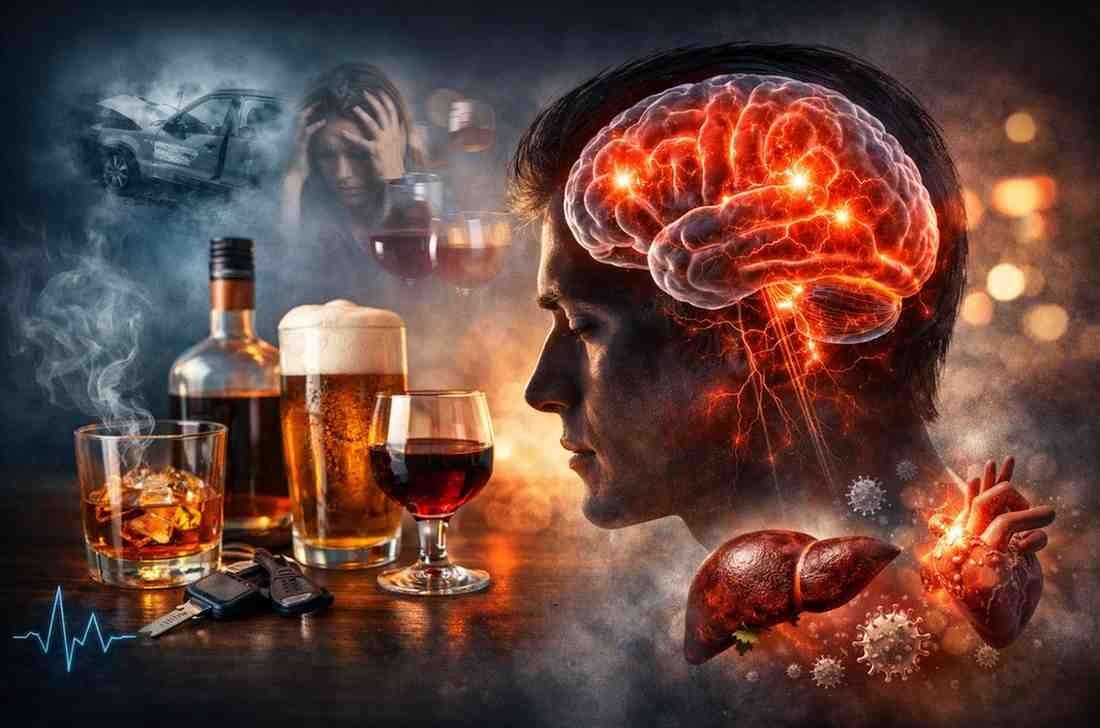

Alcohol is a psychoactive drug that is most widely consumed in the world. However, the effect it has on the brain is highly underestimated. Within minutes of consumption, the brain chemistry alters. Communication becomes impaired and neurotransmitters face disruption. What initially feels like relaxation and calmness is actually a sign of slow brain activity and reduced inhibition.
The brain is a highly complex and sensitive organ that relies on precise signals. Areas responsible for reasoning, coordination, judgement, memory, equilibrium and emotional quotient are severely impacted. Therefore, understanding how alcohol influences the brain is essential to not only recognise its immediate effects but also to be aware of its long-term consequences.
Over time, repeated alcohol use can lead to dependency, requiring structured care at a rehabilitation centre where medical and psychological support is provided.
Read on to learn more about how alcohol affects which part of the brain the most and why.
How Alcohol Affect The Brain?
Alcohol has a major impact on the human brain. Alcohol disrupts the flow of communication between the brain cells by interfering with the neurotransmitters. These chemicals transmit signals throughout the body.
The two neurotransmitters directly affected are GABA and Glutamate.
- While GABA helps the brain to relax, making a person feel at ease and less anxious in life, glutamate stimulates brain activity. However, alcohol suppresses the functions of these neurotransmitters, leading to reduced promptness and slower thinking.
This disruption negatively affects how the brain processes information, how to react in various situations and controls behaviour. Therefore, even moderate consumption of alcohol alters mood, decision-making ability and coordination.
Additionally, alcohol also interferes with the body’s ability to absorb essential nutrients like magnesium and thiamine. These two nutrients help the brain perform essential brain functions. Deficiency of either of these nutrients can negatively affect cognitive health over time.
Which part of the brain is affected by alcohol?
The three most severely impacted parts of the brain immediately upon consumption of alcohol are:
- Cerebral Cortex, specifically the Prefrontal Cortex: The Cerebral Cortex controls decision-making and impulse control.
- Cerebellum: The cerebellum manages balance, coordination and motor control of a person. Speed of reflexes, coordination, steadiness of movement and judgement of tasks is controlled by the cerebellum.
- Hippocampus: The hippocampus is essential for forming new memories and controlling memory.
Other parts of the brain that are affected after 3-4 hours of consumption of alcohol are:
- Amygdala: Amygdala processes emotions like happiness, fear, aggression and pleasure. It controls exaggerated emotional responses, increases impulsivity and governs the predictability of moods.
- Hypothalamus: Body temperature, hormonal balance and stress responses are all controlled by the hypothalamus. Any disturbance to the hypothalamus can disturb the sleep pattern, appetite, sexual behaviour and the body’s ability to maintain internal balance.
- Anterior Cingulate Cortex: Emotion, attention and decision-making prowess are all controlled by the anterior cingulate cortex. This part of the brain calculates the consequences of an action and manages conflicting thoughts.
Otherwise, alcohol also adversely alters the size of the brain. Substance abuse can severely reduce brain volume, particularly the frontal lobes.
How does alcohol affect what part of the brain?
Alcohol can have a long-lasting effect on the body. Here is how alcohol affects the body in the first few hours of consumption:
- Once the alcohol enters your system, the effect on the various parts of the body is rapid. Alcohol passes through the lining of the stomach and the small intestine.
- It enters the bloodstream immediately, circulates in the entire body quickly and reaches different tissues.
- Within just five minutes, alcohol reaches the brain and effects begin to appear within 10 minutes of consumption. The liver starts breaking down after 20 minutes of consumption.
- On average, the liver processes about one ounce of alcohol per hour. If consumed faster than normal for the liver to metabolise, alcohol accumulates in the bloodstream.
Emotional Regulation and Alcohol Consumption
Emotional regulation is controlled by a coordinated network of the prefrontal cortex and the limbic system. Alcohol consumption compromises and disrupts both of these systems. Here is how it goes:
- The prefrontal cortex manages rational thinking and helps control emotional impulses.
- The amygdala detects threats and triggers emotional responses.
- The hypothalamus regulates physical reactions like stress and manages hormone release.
- The anterior cingulate cortex further evaluates emotions.
The process begins when the amygdala detects a stimulus. Consequently, the prefrontal cortex then assesses the stimulus and decides how to respond. Eventually, the hypothalamus activates bodily changes such as increased heart rate and prepares the body to react accordingly.
The above-mentioned 4 parts of the brain balance logic and feeling and maintain the behaviour of a person.
Blood Alcohol Consumption Vis-à-Vis Brain
Blood Alcohol Concentration or BAC is the level of alcohol concentration in the human body. A BAC of 0.08 is considered the illegal limit for driving in many countries. In case a person’s BAC is 0.08, it can take almost 5 hours for alcohol to fully leave the body. Nevertheless, traces of alcohol can be detected in the urine for up to 80 hours.
Negative Effects of Alcohol on the Brain
With a BAC between 0.08 and 0.25, a person is considered legally intoxicated. Here is what happens when a person’s intoxication level is above 0.08:
- The occipital lobe, responsible for vision, may cause blurred sight.
- The temporal lobe, which is linked to hearing and memory may cause blurred speech and difficulty in understanding sounds.
- The frontal lobe which helps in decision-making and gives self-control, becomes impaired. A person’s judgmental powers deteriorate, leading to the exhibition of impulsive behaviour.
- The parietal lobe, which is responsible for sensory inputs gets affected which leads to poor coordination and slower reaction times. An intoxicated person often vomits, gets emotionally unstable and feels nauseous at this stage.
- In case the BAC levels exceed 0.45, alcohol poisoning may lead to death. The brain will no longer be able to perform critical functions like breathing and maintain a stable heart rate. This stage can be fatal for a person if medical attention is provided immediately.
Long-Term Effects of Alcohol on the Brain
One of the worst effects alcohol can have on a person is deterioration of mental health.
- Any individual who is already suffering from a mental health disorder will experience symptoms getting more severe. This can lead to an increased risk of inflicting self-harm or feeling suicidal.
- People who consume alcohol to feel less stressed or escape their sadness may feel worse in the long run. They are not able to internalise their emotions which builds up the weight of emotions gradually.
- Alcohol disrupts brain chemistry which raises the likelihood of depression, anxiety and exhibition of impulsive behaviour. Frequent or heavy drinking can gradually contribute to emotional instability.
- Repeated and long-term exposure to alcohol can lead to disruption of chemical processes and emotional regulation.
- Disruption of sleep patterns is often caused by alcohol. People tend to fall asleep faster after consuming alcohol. However, alcohol is metabolised during sleep. Therefore, people do not experience deep sleep as they suffer from intermittent nighttime awakenings.
Bottom Line
The effect of alcohol on the brain is immediate and progressive. Whether it is sudden consumption of alcohol or gradual consumption over a long period of time, alcohol will have a detrimental effect on the body. While short-term effects can be manageable, repeated consumption of alcohol can cause long-lasting damage to the organs. Therefore, it is essential to understand how alcohol impacts the brain. The aim is to empower a person to make safer choices and maintain a healthy cognitive and fully functional brain for a long period of time.
Frequently Asked Questions
For the brain, alcohol can lead to memory loss, poor cognition, and increased risk of disorders like dementia. It also affects major organs such as the liver, heart, and weakens the immune system.
Immediate effects include slow reaction time, poor judgment, blurred vision, reduced communication between brain cells, and impaired thinking, movement, and emotional control.
Alcohol disrupts neurotransmitters, impairs memory, reduces concentration, and increases the risk of depression and anxiety over time.
Both have harmful effects. Sugar can lead to obesity and diabetes, while alcohol directly impacts brain function and causes faster neurological damage.
Alcohol alters brain chemistry, leading to emotional instability, increased irritability, anxiety, and worsening of existing mental health conditions.